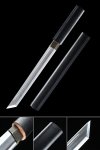
What makes 1095 carbon steel different from stainless in a tanto?
1095 high-carbon steel contains roughly 0.95% carbon, which allows it to respond to heat treatment in ways stainless steel cannot. During quenching, the differential cooling between the edge geometry and the spine produces a visible hamon — the wavy temper line that collectors consider a primary indicator of authentic forge work. Stainless alloys, while more corrosion-resistant, do not form a true hamon and tend to lack the grain texture that gives 1095 its visual depth. For display and study purposes, 1095 offers a much richer surface story than stainless alternatives.
How is the black finish on these tanto blades achieved?
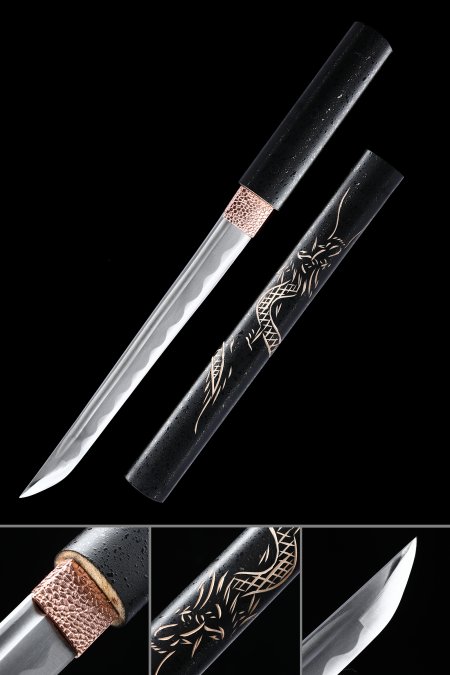
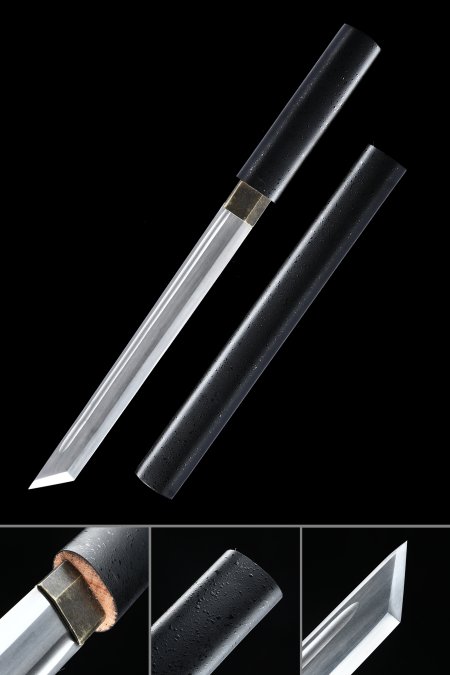
The dark surface on black 1095 tanto blades comes from a controlled oxidation process applied during finishing, sometimes combined with burnishing or chemical patination stages. This is fundamentally different from spray coatings or anodizing — the color is integrated into the steel's surface layer rather than sitting on top of it. The result is a matte, low-reflectance finish that is far more durable than paint and actually provides a modest barrier against minor surface oxidation. It also accentuates the blade's geometry and any visible hamon, making it a popular choice for collectors who want high visual contrast in a display setting.
What is the difference between hamidashi and shirasaya tanto fittings?
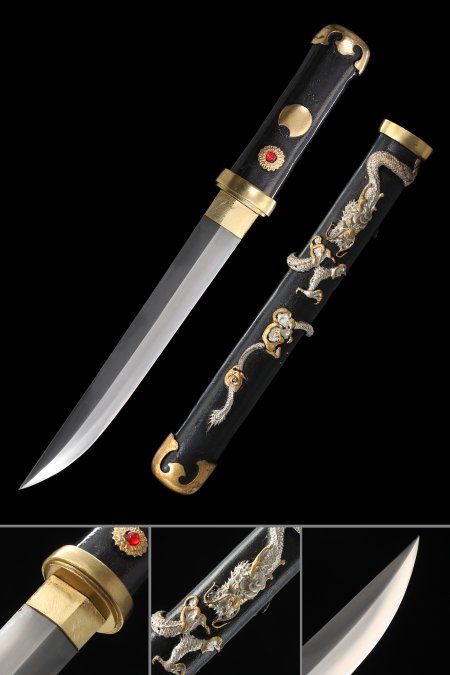
Hamidashi is a fitting style featuring a very small, almost vestigial hand guard — a tsuba just barely larger than the handle collar — giving the piece a compact, integrated look while retaining the traditional structural separation between handle and blade. Shirasaya, by contrast, uses no guard at all: the blade fits into a plain wooden handle and matching saya as a single uninterrupted form. In Japanese tradition, shirasaya was associated with long-term storage and the work of polishers or appraisers who needed clean, unobstructed access to study a blade. For collectors, the choice between the two is largely aesthetic — hamidashi reads as classical koshirae-influenced, while shirasaya communicates scholarly restraint.
How should I store a black 1095 carbon steel tanto long-term?
Carbon steel requires active moisture management in storage. The most effective approach is a paulownia wood box, which naturally buffers humidity fluctuations without trapping moisture against the blade. Before storing, apply a thin, even coat of choji oil or pharmaceutical-grade mineral oil along the entire blade surface, then wrap loosely in a soft cloth — never synthetic materials that can hold heat. In humid climates, a small silica gel packet inside the box adds an extra layer of protection. Revisit the oil application every three to six months, and always handle the blade with cotton or microfiber gloves to keep skin oils from etching the patina over extended display periods.
Are dragon-carved saya tanto pieces suitable as display gifts?
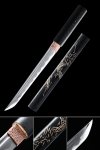
Tanto with hand-carved dragon relief saya are among the most visually striking options for a display gift, precisely because the scabbard becomes a decorative object independent of the blade. The dragon motif carries layered symbolism in East Asian tradition — strength, transformation, and protection — making it appropriate for milestone gifts to collectors, martial arts enthusiasts, or anyone drawn to Japanese artistic tradition. For gifting, pairing the tanto with a paulownia storage box and a brief card explaining the blade's construction and finish history elevates the presentation considerably and gives the recipient practical guidance for long-term care.