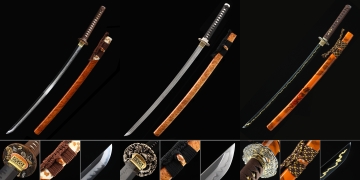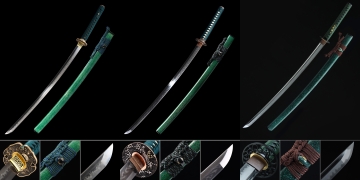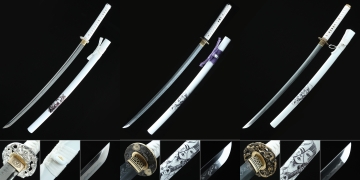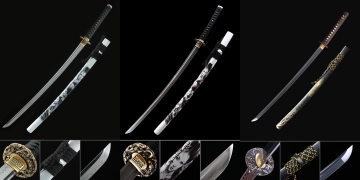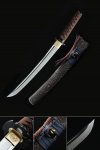
Brown T10 Carbon Steel Tanto

Crafted for serious collectors and discerning enthusiasts, each Brown T10 Carbon Steel Tanto in this collection features authentic clay tempering, a genuine hamon line, and hand-wrapped brown ito that reflects traditional Japanese blade artistry. T10 high-carbon steel delivers the fine grain structure and edge retention that distinguishes a true collector's piece from an ordinary display tanto. Every sword ships with free standard delivery and is backed by our hassle-free return policy.
Showing 3 Products

Related Collections

Frequently Asked Questions

What makes T10 steel a preferred choice for tanto collectors?
T10 is a high-carbon tool steel with a carbon content of approximately 1.0%, which places it at the upper end of the hyper-eutectoid range. What sets it apart for collectors is its fine carbide network — distributed evenly through the steel during forging — which responds to clay tempering with exceptional clarity. The resulting hamon is sharper in definition and more visually complex than what lower-carbon steels like 1045 or 1060 typically produce. T10 also holds a refined surface finish well, meaning the polished areas of the blade reflect light with a depth that enhances display presentation. For a collector focused on both visual authenticity and metallurgical quality, T10 represents a meaningful step above entry-level carbon steels.
How does folded T10 differ from standard T10 in a tanto?
Standard T10 tanto blades are forged from a single billet, relying on the steel's inherent carbon distribution for character. Folded T10 goes a step further: the smith repeatedly folds and welds the steel during forging, which refines the grain structure and distributes carbon more evenly throughout the billet. The visible result is a subtle layering pattern — sometimes called masame or itame — on the polished blade surface, a detail that serious collectors recognize as a mark of additional hand labor. Folded construction does not fundamentally alter the hamon produced by clay tempering, but it adds a second layer of visual complexity that distinguishes a forged collector's tanto from a standard production piece. If surface grain patterning matters to your display criteria, folded T10 is worth prioritizing.
What should I know about the hamon on these clay-tempered tantos?
The hamon on each blade in this collection is a genuine metallurgical feature, not a cosmetic etch or acid treatment applied to the surface. During clay tempering, the differential cooling rates between the clay-coated spine and the exposed edge create distinct microstructural zones — martensite at the edge, pearlite toward the spine — and the boundary between these zones is what you see as the hamon. Because the clay is applied by hand, no two hamon lines are identical; collectors can expect natural variation in width, activity (nie and nioi), and the presence of scenic features along the temper line. When displaying the tanto, indirect lighting from slightly below the blade surface will reveal the most hamon detail. Direct overhead light tends to flatten the appearance of the temper line.
How should I store and maintain a brown ito tanto on display?
Brown ito — particularly when wrapped over genuine samegawa — is more sensitive to humidity fluctuations than synthetic alternatives. For display storage, maintain relative humidity between 40% and 55%; levels below 30% can cause the silk or cotton ito to contract and loosen over time, while excessive moisture encourages mold growth in the samegawa beneath. The T10 blade itself should be wiped lightly with a neutral, acid-free oil (choji or a food-grade mineral oil) every two to three months, paying particular attention to the area near the habaki where moisture tends to accumulate. Avoid touching the blade surface with bare hands, as skin oils accelerate surface oxidation on high-carbon steel. Store the tanto horizontally in its saya with the edge facing upward, which follows traditional Japanese convention and distributes the blade's weight evenly.
Is a tanto a good display companion to a katana or wakizashi set?
A tanto pairs naturally with a katana or wakizashi in a tiered display arrangement — historically, the daisho (paired long and short sword) sometimes included a tanto as a third piece for specific formal occasions. For a visually cohesive display, matching the ito color and fitting material across all three pieces creates a unified aesthetic. The Brown T10 Carbon Steel Wakizashi collection on this site uses the same steel, clay-tempering process, and brown color palette as these tantos, making cross-collection pairing straightforward. When mounting multiple blades on a horizontal rack, the conventional Japanese arrangement places the longest blade at the top with the edge facing away from the viewer, descending in length. A tanto positioned at the base of such a display draws the eye effectively and adds historical context to the overall presentation.

Customer Reviews

William Crouch Florida, United States

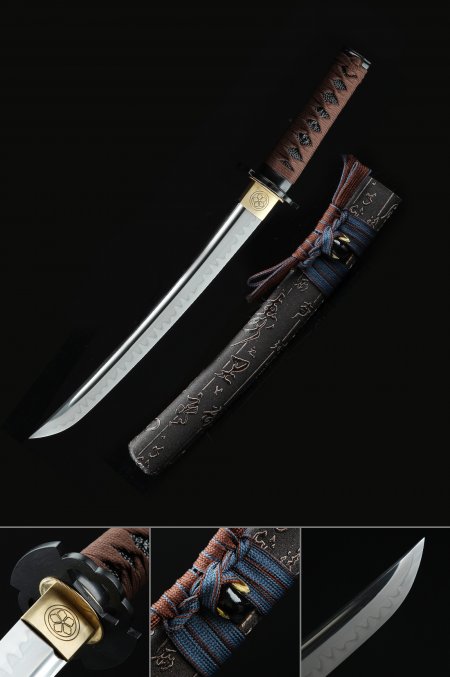
The ito is semi-tight. The blade itself is very well done. Habaki is nicely done. The kahira and fuchi are very plain nothing special but the do their job. Sageo is definitely one of the nicer ones i have seen for a blade of this price.The Tsuba design is nice and the saya has a really cool design. Overall a nice collectors piece. I am happy with the selection.

T10 Folded Clay Tempered Tanto Sword with Real Hamon in Brown Ito and Kanji-Carved Leather Saya T10 Folded Clay Tempered Tanto Sword with Real Hamon in Brown Ito and Kanji-Carved Leather Saya