4 Reviews
ON SALE 30% OFF
$549.00$779.00

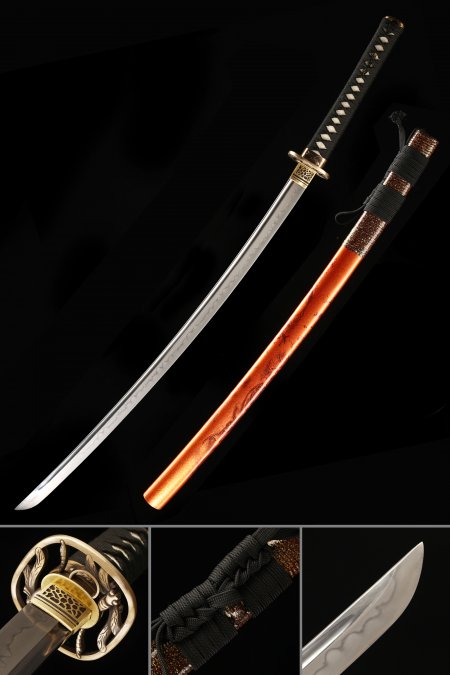
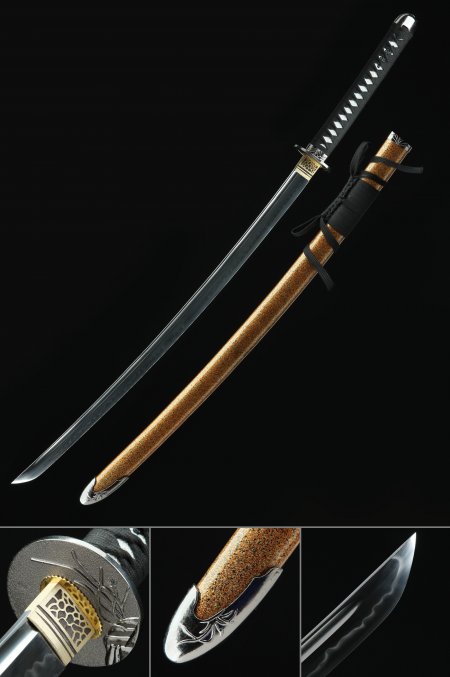
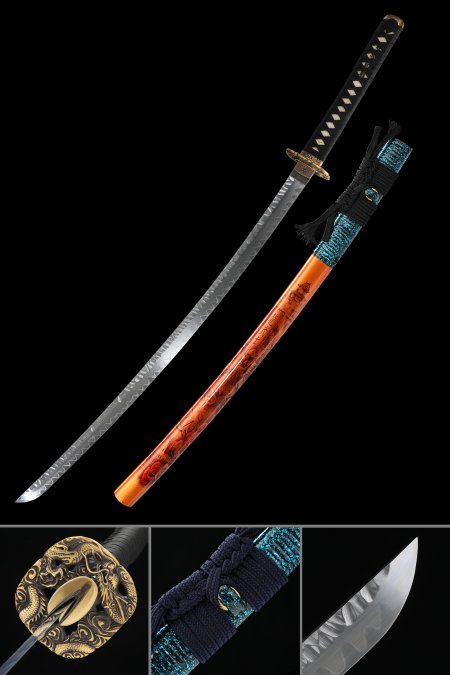
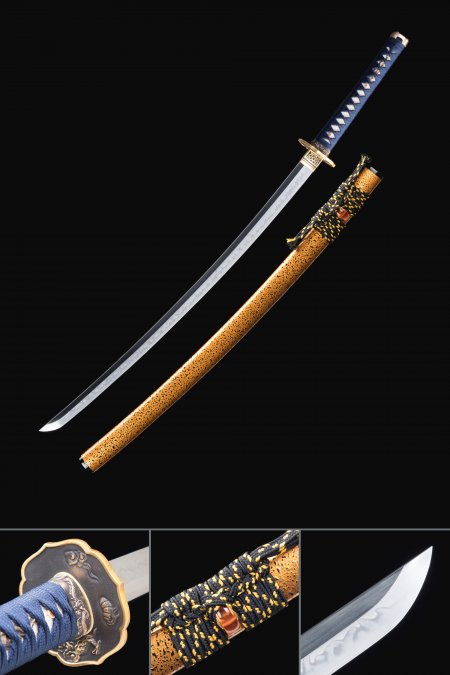
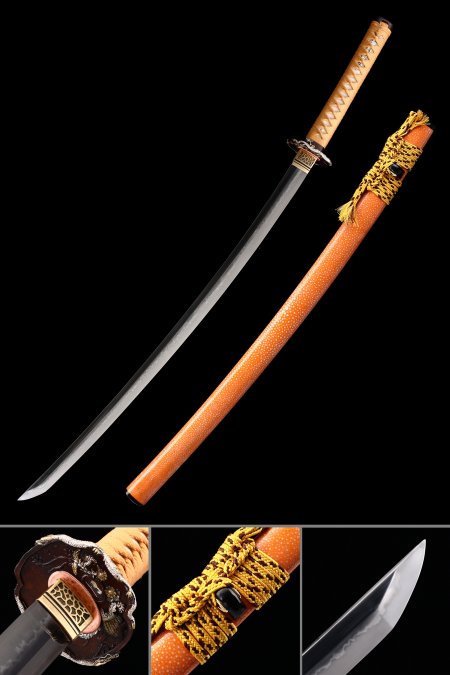
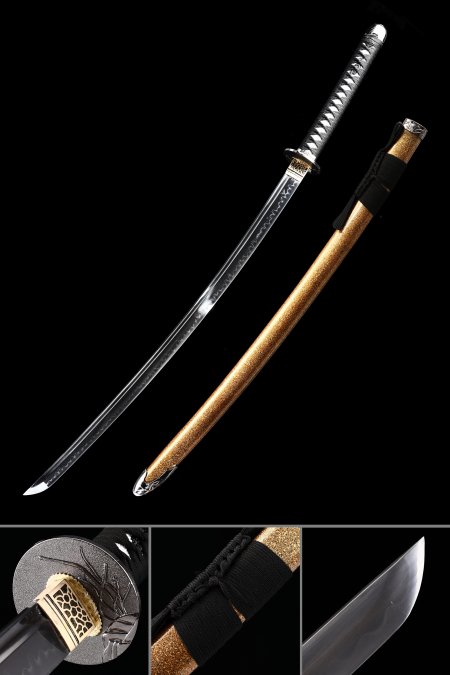
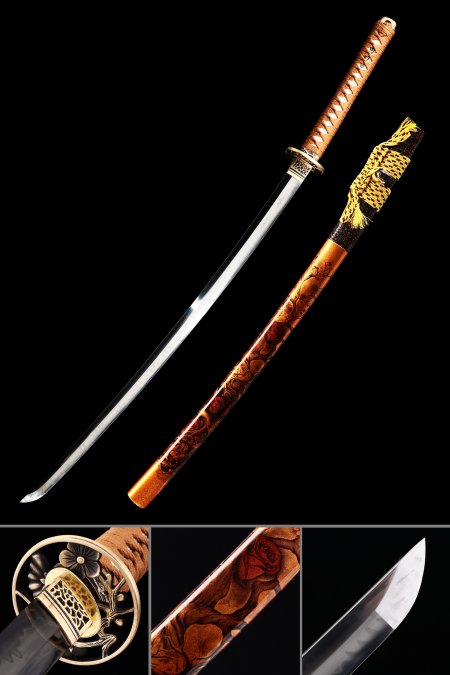
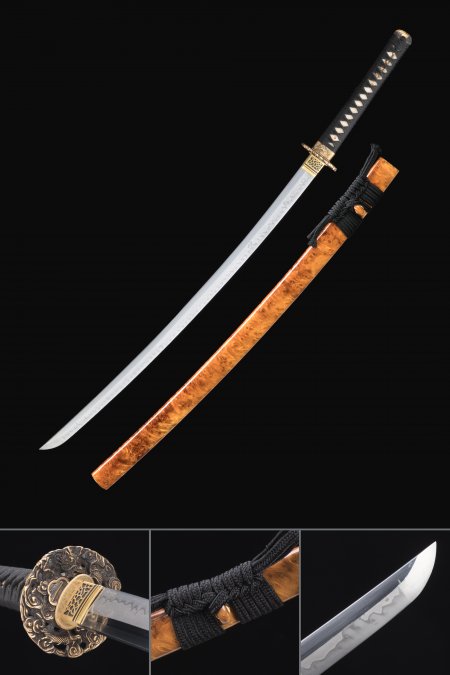
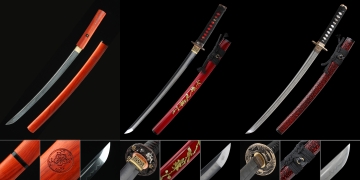
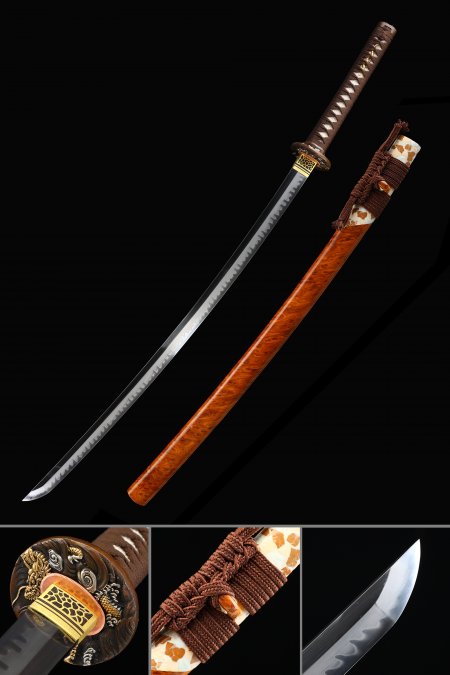
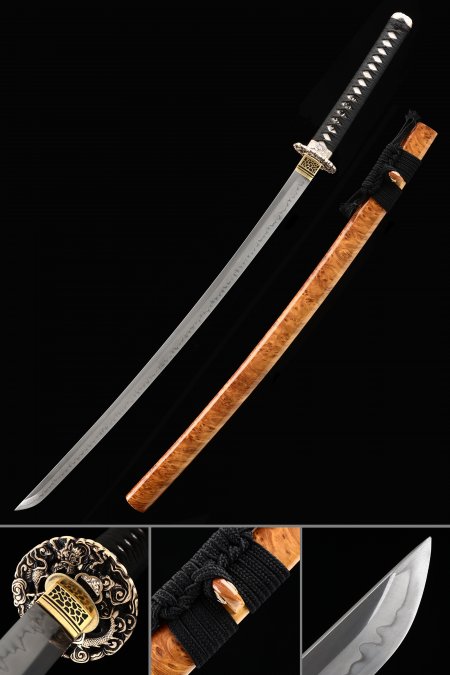
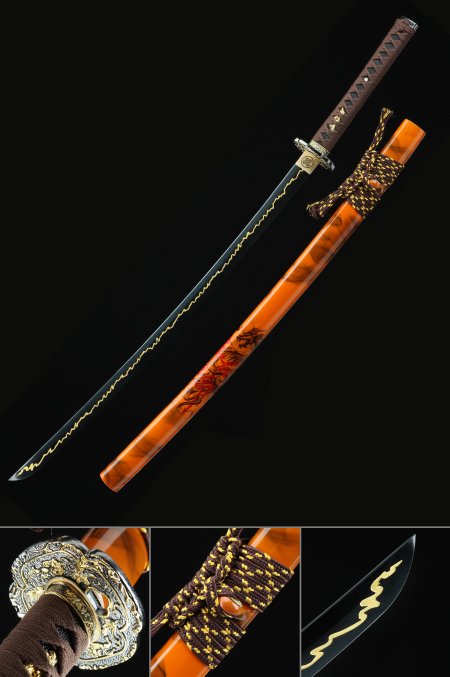
T10 carbon steel is prized among serious collectors for its fine grain structure and exceptional edge retention, and these orange-saya katana bring that metallurgical quality together with bold, distinctive aesthetics. Every piece in this collection features a clay-tempered blade with a genuine hamon activity line, full-tang construction, and hand-wrapped ito - details that reflect authentic Japanese sword-making tradition. Each sword is crafted individually by skilled artisans, making it a meaningful display piece, a centerpiece for any collection, or a thoughtful gift for the discerning enthusiast. Enjoy free shipping on your order and hassle-free returns.
The katana itself is glorious, absolutely glorious. A worthy piece of craftsmanship. However, when I ordered a “full-tang” blade, I thought the sword would he fucntionally sharpened. It’s essentially a blunt-edged blade, no cutting ability whatsoever.
 |
Clay Tempered T10 Carbon Steel Katana with Lightning Hamon in Orange Dragon Saya - Brown Ito Handle |
Only knocking off a star because it got "lost" for a bit and took a trip up the west coast. I'm pretty sure that UPS should take the blame for that.r
As far as the katana, 5 stars for sure. 🌟🌟🌟🌟🌟r
It arrived in perfect condition. It's absolutely gorgeous. Even more than expected r
And most of all, my son LOVES it.
|
Clay Tempered T10 Carbon Steel Katana with Lightning Hamon in Orange Dragon Saya - Brown Ito Handle |
Love it. Great quality and weight. Came very sharp.
|
Clay Tempered T10 Carbon Steel Katana with Lightning Hamon in Orange Dragon Saya - Brown Ito Handle |
The sheath of the katana does not fit the blade, because the blade wobbles inside.
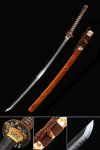 |
T10 Carbon Steel Katana with Clay-Tempered Hamon, Dragon Tsuba in Orange Hardwood Saya |
tiny paint chips at the bottom of the hilt but nothing to cause trouble for, looks AMAZING
|
Clay Tempered T10 Carbon Steel Katana with Lightning Hamon in Orange Dragon Saya - Brown Ito Handle |
I'm very satisfied with my purchase.
I even made a second purchase - because of quality and items sales price with discount.
|
Clay Tempered T10 Carbon Steel Katana with Lightning Hamon in Orange Dragon Saya - Brown Ito Handle |
Great sword it’s a work of art. Fantastic company with the best communication.
|
T10 Carbon Steel Katana with Clay-Tempered Hamon, Dragon Tsuba in Orange Hardwood Saya |
Was a gift to my girlfriends father, and he absolutely loves it. He put it up with the wall display I bought as well that night immediately. It’s so beautiful I really am considering buying one for myself as well
|
Clay Tempered T10 Carbon Steel Katana with Lightning Hamon in Orange Dragon Saya - Brown Ito Handle |