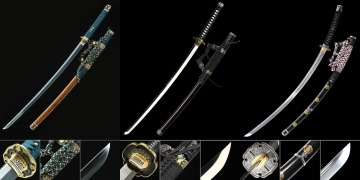
What makes 1095 carbon steel a good choice for collectible katanas?
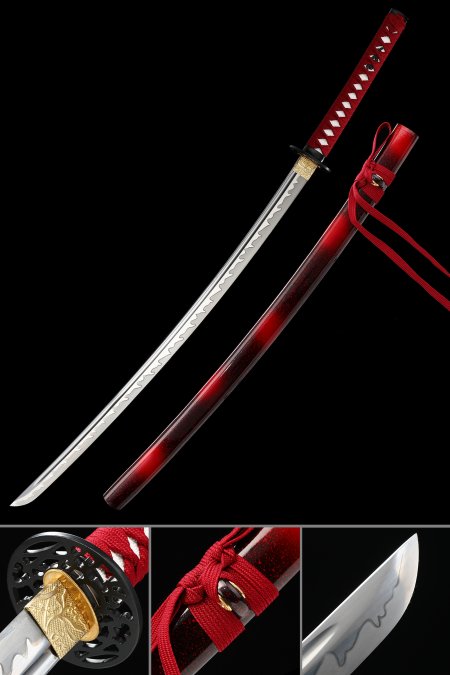
1095 carbon steel contains roughly 0.95% carbon, which places it in the high-carbon category and gives it excellent response to heat treatment. When a blade is clay tempered and quenched, the differential hardness between the edge and spine produces the visible hamon - the temper line that collectors recognize as a mark of authentic craft process. The steel holds detailed geometry well during forging and polishing, allowing craftsmen to produce a refined surface finish appropriate for display. Unlike stainless alloys, 1095 does require basic maintenance (periodic oiling) to prevent surface oxidation, but this is a normal part of owning a hand-forged collectible and contributes to the long-term relationship between collector and piece.
How is a real hamon different from an etched or acid-washed hamon?
A real hamon is the direct visual result of differential clay tempering during the heat treatment process. Before quenching, a clay mixture is applied along the spine, leaving the edge area exposed. The unprotected edge cools faster, hardening into martensite, while the clay-covered spine cools slowly and remains tougher. The boundary between these two zones is the hamon. An etched or acid-washed hamon, by contrast, is applied after the fact with chemicals to simulate this appearance on a blade that was not clay tempered at all. On a genuine clay-tempered blade, the hamon will appear as a milky, active line with natural variation - nie (crystalline particles) and nie activity visible under good light - rather than a uniformly sharp, symmetrical line. Several pieces in this collection are explicitly noted as carrying real hamon, which is the correct term for this authentic tempering artifact.
What should I know about storing a red lacquer saya long-term?
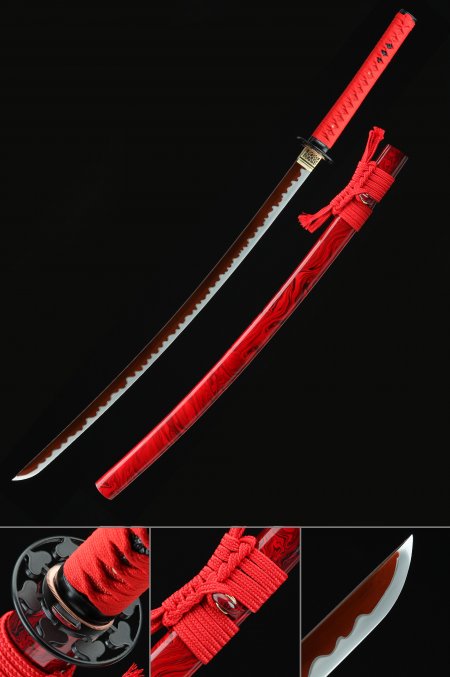
Red lacquer sayas are durable display surfaces, but they benefit from specific storage conditions. Prolonged exposure to direct sunlight is the primary risk - UV light gradually breaks down the pigment compounds in urushi or synthetic lacquer, shifting the red toward an oxidized brown-orange tone over years. Store or display the piece away from south-facing windows or use UV-filtering glass if mounting near natural light. Humidity fluctuation can also cause the underlying wood to expand and contract, which over time may stress the lacquer surface. A stable indoor humidity range of roughly 45-55% is ideal. When cleaning the saya, a soft dry cloth is sufficient for dust; avoid alcohol-based cleaners, which can strip lacquer gloss. The blade inside should be lightly oiled before long-term storage to prevent any moisture transfer to the steel.
How do Red 1095 katanas compare to Red-Black 1045 katanas as collectibles?
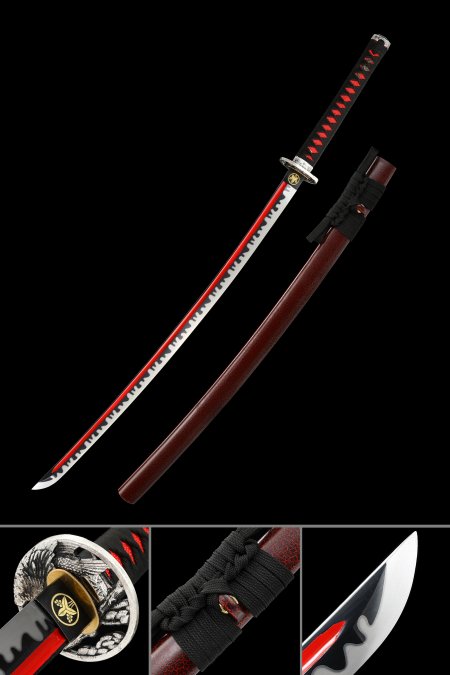
The primary difference is in the steel specification and tempering character. 1095 carbon steel has a higher carbon content than 1045, which allows it to respond more distinctly to clay tempering and produce a defined, authentic hamon. This makes 1095 pieces more interesting to collectors focused on blade metallurgy and tempering craft. 1045 steel, used in the Red-black 1045 Carbon Steel Katana collection, is a mid-carbon steel that is more commonly used in entry-level forged blades - it can be hardened but does not typically produce the same hamon activity as 1095 with differential tempering. For collectors prioritizing visual blade detail and craft authenticity, 1095 pieces generally offer more to study. For collectors whose primary interest is the overall koshirae aesthetic - the red-and-black color combination, tsuba design, and lacquerwork - both categories offer strong display value.
Are these katanas suitable as display gifts for sword enthusiasts?
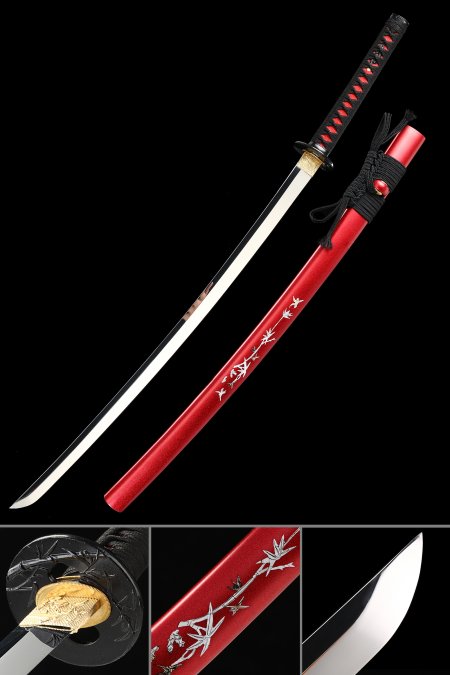
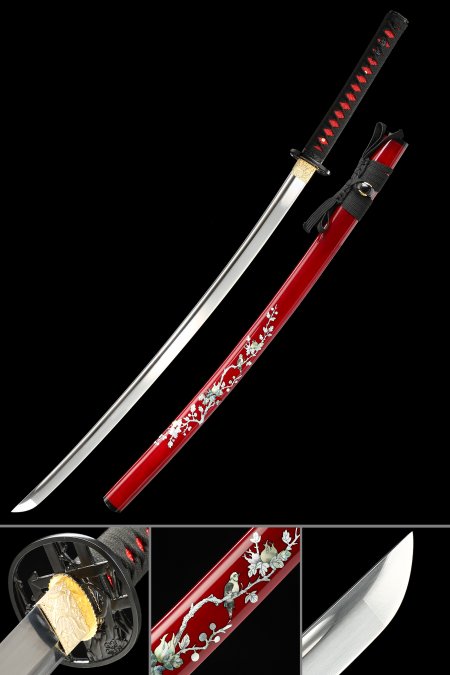
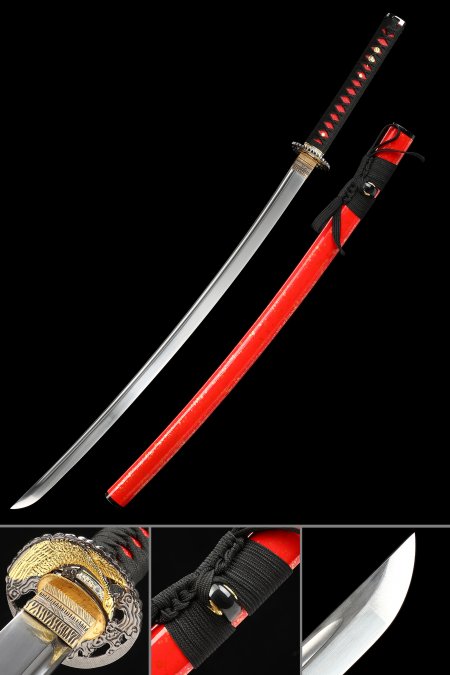
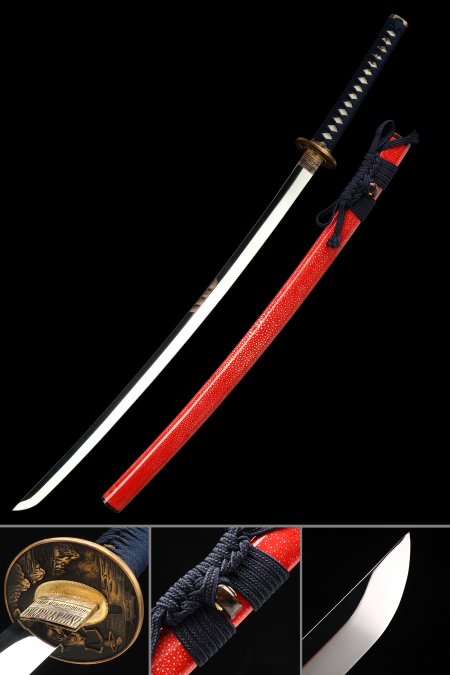
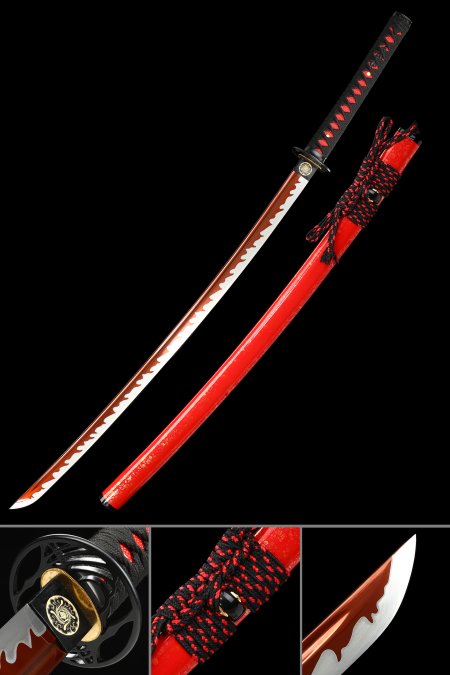
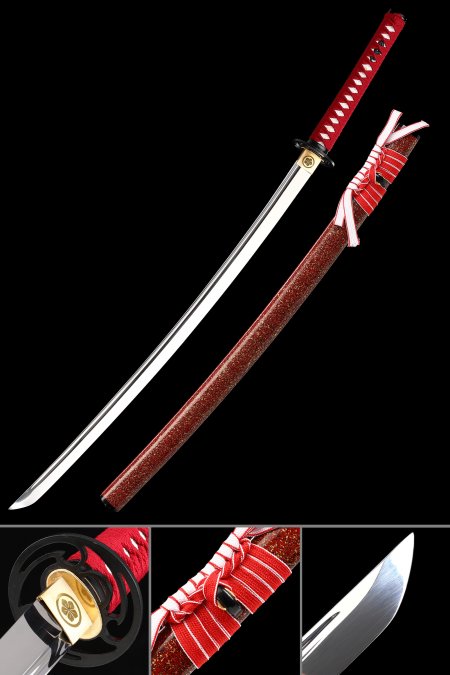
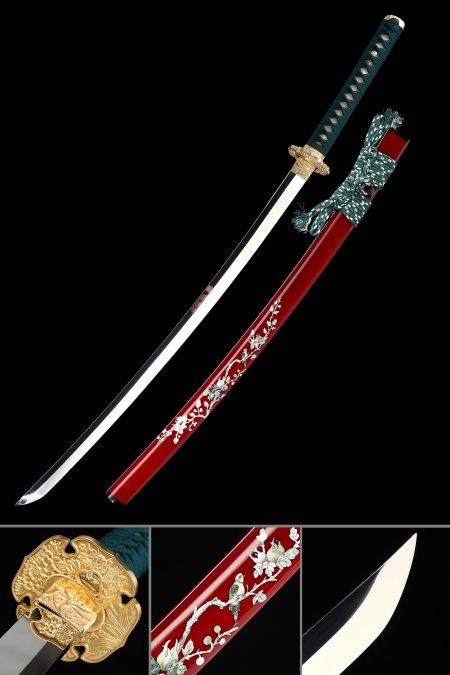
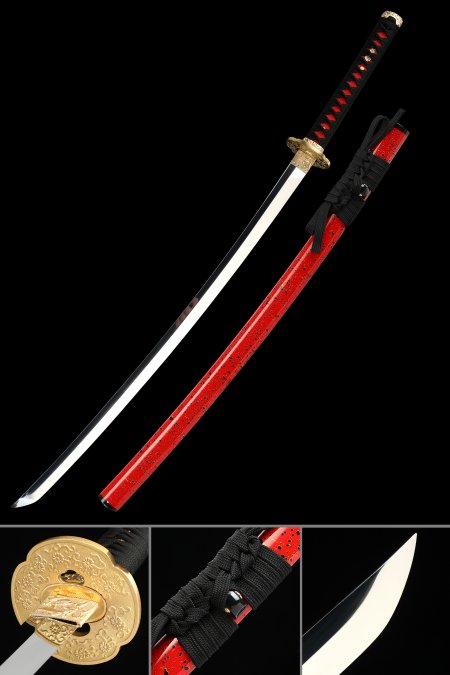
Red 1095 katanas make a distinctive gift for collectors because each piece combines a specific blade character (real hamon, full-tang construction, hand-forged 1095 steel) with a curated aesthetic - hand-painted floral sayas, crane or dragon tsubas, coordinated ito wrapping. This means the recipient receives something that holds genuine craft interest rather than a purely decorative object. For gifting, pieces with hand-painted saya designs or named motif tsubas (phoenix, gold chrysanthemum, samurai) tend to be the most visually memorable. A horizontal display stand or wall mount paired with the sword is a practical complement. These collectibles are most appreciated by enthusiasts who already have some familiarity with Japanese sword furniture and can recognize the difference between ornamental hardware and thoughtfully selected koshirae components.