Blue 1095 Carbon Steel Katana

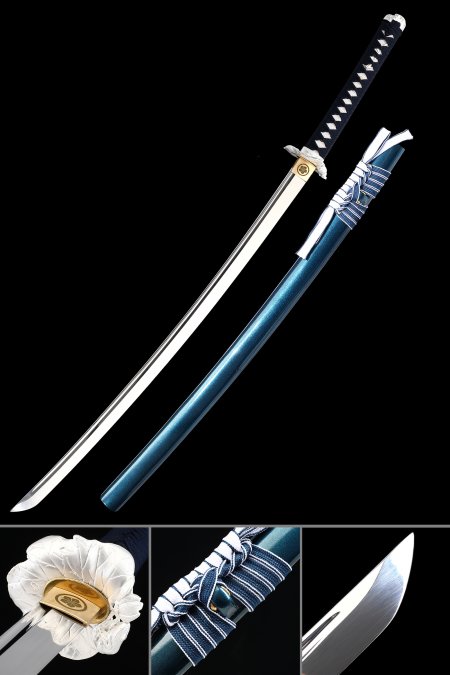
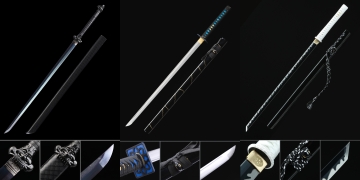
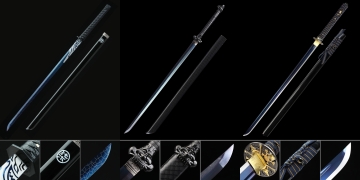
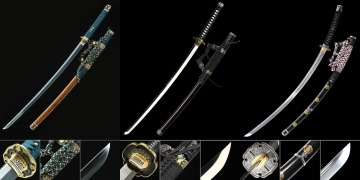
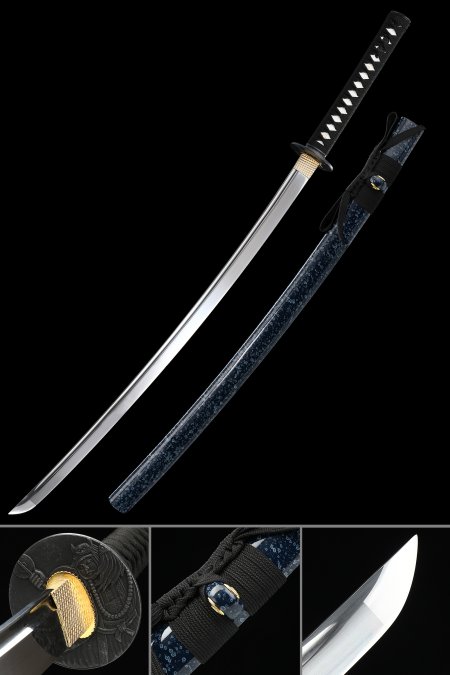
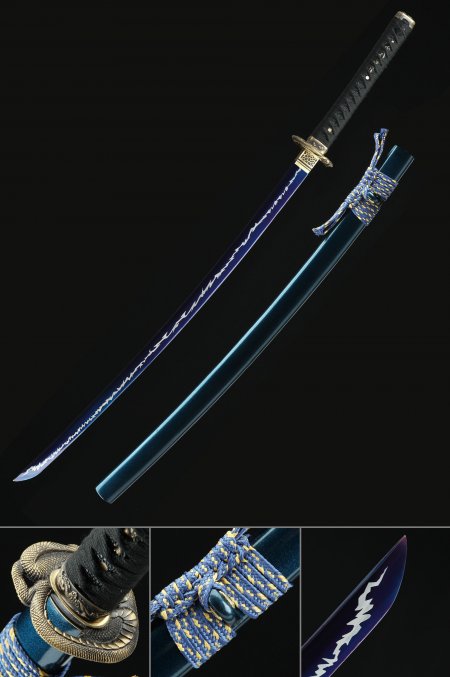
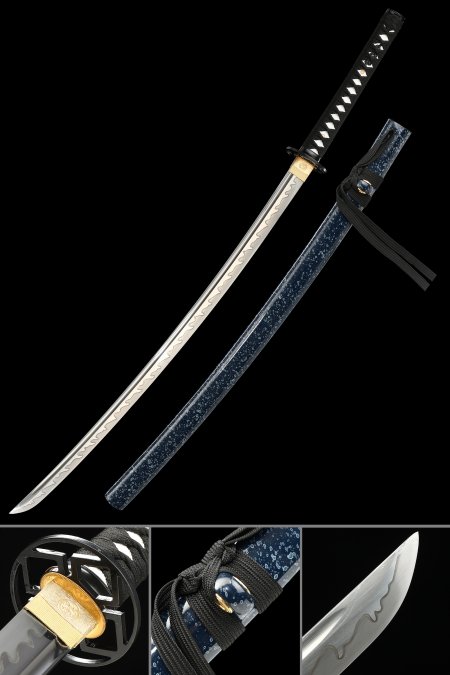
Blue 1095 carbon steel katanas occupy a distinct place in serious Japanese sword collecting - the steel's high carbon content produces a tight, responsive grain structure that takes clay tempering exceptionally well, often revealing a vivid, naturally formed hamon along the blade's edge. Each piece in this collection is hand-forged and full-tang, finished with period-inspired fittings ranging from dragon tsuba to hand-wrapped silk ito. Whether displayed on a stand or added to a growing collection, these katanas reward close inspection at every detail. Enjoy free standard shipping on all orders, plus hassle-free returns.
Showing 4 Products

Related Collections

Frequently Asked Questions

What makes 1095 carbon steel a preferred choice for collectible katanas?
1095 carbon steel contains roughly 0.95% carbon, placing it at the upper range of plain carbon steels. This carbon level is ideal for differential clay tempering - the traditional Japanese process that produces a real, metallurgically formed hamon along the blade. The resulting edge zone develops a martensitic microstructure that holds a clean, defined sharpness, while the softer spine remains resilient. For collectors, 1095 offers an authentic connection to historical sword-making technique that lower-carbon steels simply cannot replicate. The hamon on each blade is unique, making every piece genuinely one-of-a-kind rather than a visually uniform production item.
How is the hamon on a 1095 katana different from an etched hamon?
A real hamon forms during the clay tempering and quenching process, where differential cooling rates create two distinct steel microstructures in a single blade. The visible line between the hardened edge zone and the softer spine is a physical feature of the steel itself - not a surface treatment. An acid-etched or wire-brushed hamon, by contrast, is purely cosmetic: it sits on the surface and can be polished away, and the steel beneath is uniform throughout. On a properly made 1095 katana, the hamon can be observed shifting in appearance under different lighting angles, showing activities like nie (fine crystalline particles) and nioi (a misty transition zone) that are markers of authentic clay tempering. This is one of the primary quality indicators experienced collectors examine first.
What should I know about displaying a carbon steel katana long-term?
Carbon steel is reactive to moisture and airborne contaminants, so display environment matters. Ideally, store or display your katana in a low-humidity space - below 55% relative humidity is a reasonable target. Avoid placing the sword near exterior walls, heating vents, or areas with temperature fluctuation. A light, even coat of camellia oil (traditional) or a refined mineral oil applied with a soft cloth every three to four weeks will protect the blade surface from oxidation. When placing the sword on a display stand, horizontal mounts with the edge facing upward follow traditional Japanese convention. Inspect the habaki (blade collar) and tsuka (handle) periodically to ensure fittings remain snug, as wood and cord components can shift with seasonal humidity changes.
How do the blue-lacquered sayas in this collection compare to natural wood finishes?
Lacquered sayas offer both aesthetic and functional advantages over unfinished wood. A high-quality urushi-style lacquer layer seals the wood grain, significantly reducing moisture absorption and making the saya more dimensionally stable across changing seasons. Visually, the deep blue and teal finishes in this collection create a strong contrast with the polished steel of the blade, which is why lacquered sayas were historically associated with formal and ceremonially important swords. Natural or oil-finished wood sayas have their own appeal - they show grain character and feel more understated - but for display-focused collectors who want visual impact, a well-applied lacquer saya elevates the entire presentation of the piece considerably.
Is a Blue 1095 Carbon Steel Katana a good gift for a serious sword enthusiast?
For a collector who appreciates the craft behind Japanese swords, a hand-forged 1095 katana with genuine clay tempering and traditional fittings is a far more meaningful gift than a decorative wall piece made from stainless or low-grade steel. The distinguishing features to look for - full-tang construction, authentic hamon, quality ito wrapping, and a fitted wooden saya with proper koiguchi throat - are all present in this collection. The blue aesthetic also makes these pieces visually distinctive enough to stand out on a display wall or in a cabinet without blending into a generic sword collection. For someone new to collecting, pairing a katana with a companion piece like a 1045 Carbon Steel Tanto creates a coordinated set that reflects traditional samurai carry practice.