What does clay tempering add to a collectible katana?
Updated Mar 2026
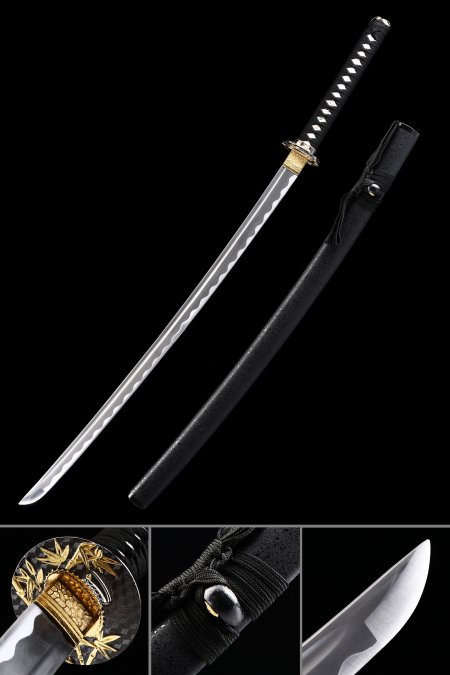
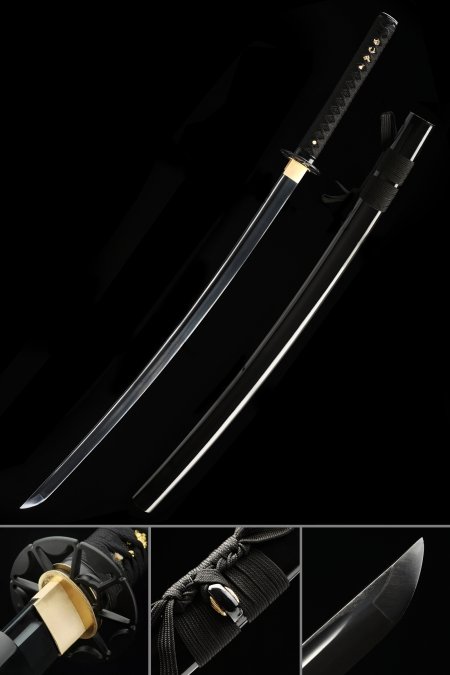
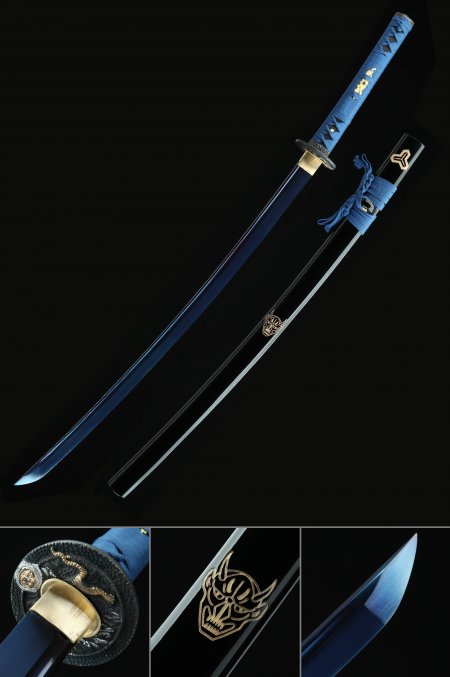
Clay tempering — known as tsuchioki — is a traditional Japanese process in which clay is applied along the spine of the blade before the final quench. Because the clay insulates the spine during cooling, that area cools more slowly and remains relatively soft, while the exposed edge cools rapidly and hardens significantly. The boundary between these two zones, called the hamon, appears as a misty or wave-like line running the length of the blade. On blue-finish blades, the hamon is particularly legible because the color contrast between the hardened ha and the softer ji is amplified. For collectors, the hamon is one of the most important visual signatures of authentic Japanese-style metallurgy, and no two clay-tempered blades produce an identical hamon pattern.