What makes T10 steel a preferred choice for collectible katana?
Updated Mar 2026
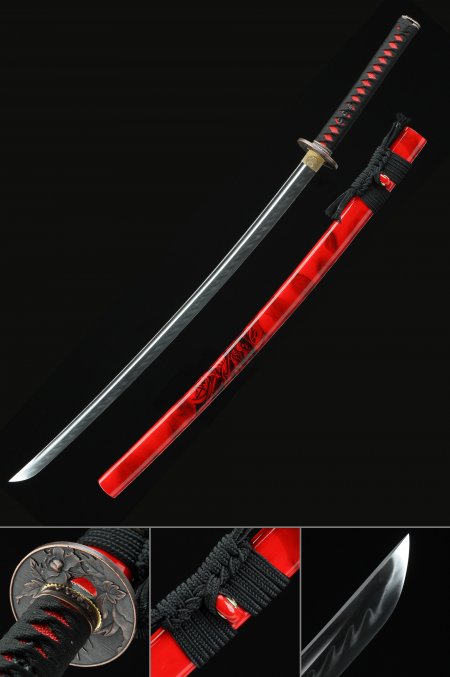
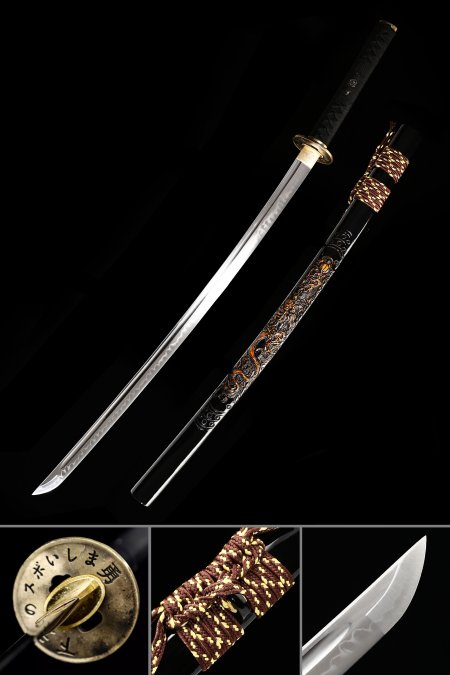
T10 tool steel contains approximately 1.0% carbon along with a small amount of silicon, making it harder and more wear-resistant than lower-carbon grades like 1045 or 1060. Its most important trait for collectors, however, is how beautifully it responds to clay tempering. During this process, a layer of refractory clay is applied to the spine before quenching, causing the edge and spine to cool at different rates. The result is a martensitic, harder edge zone and a tougher spine — and, critically, a genuine hamon that shows real metallurgical activity including nie (crystalline particles) and nioi (misty transition zones). Acid-etched hamons on lower-grade steel mimic the look but lack this internal character. For collectors who examine pieces closely, the difference is immediately apparent and significantly affects a piece's display and archival value.