Does Damascus steel in a display katana develop a pattern over time?
Updated Mar 2026
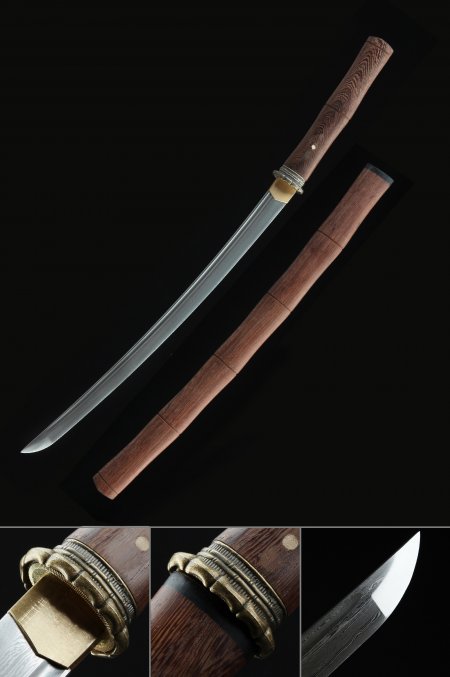
Damascus (folded and forge-welded) steel does not create new pattern over time on its own, but the existing pattern can become more or less visible depending on how the blade is maintained. The grain contrast between the layers - typically high-carbon and low-carbon steel alternating - is revealed through an acid etching step during finishing. Over time, if the blade is exposed to moisture or fingerprint oils without proper maintenance, light surface oxidation can actually deepen the visual contrast of the layers, making the pattern more dramatic. Conversely, over-polishing can begin to flatten the contrast. For collectors who want to preserve the pattern's clarity, a light coat of choji or camellia oil applied with a soft cloth every few months is ideal. Store the blade in a cool, dry environment with the saya slightly open to allow airflow.