What historical or cultural traditions does the straight blade profile on a katana reference?
Updated Feb 2026
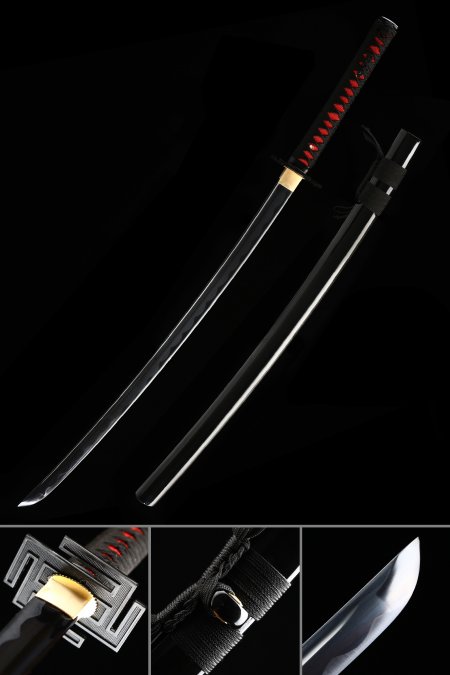
The straight blade profile references several overlapping traditions within Japanese and broader East Asian sword making. The most direct reference is the chokuto, the oldest documented Japanese sword form that predates the curved katana by several centuries. Chokuto were straight, single-edged swords influenced by Chinese and Korean blade-making traditions that entered Japan before native swordsmiths developed the differential hardening techniques that naturally produce blade curvature. The straight profile also references the ninjato tradition of straight ninja blades, though the historical evidence for standardized straight ninja swords is more debated among historians than the well-documented chokuto. Beyond Japanese traditions, the straight single-edged blade appears across Chinese, Korean, and Southeast Asian sword-making cultures, giving straight katana a cross-cultural resonance. In this collection, the straight profile combined with black aesthetic creates a contemporary design statement that honors these ancestral straight-blade traditions while expressing them through a modern visual lens.