Does the straight blade profile affect the steel options or construction differently than curved kat
Updated Feb 2026
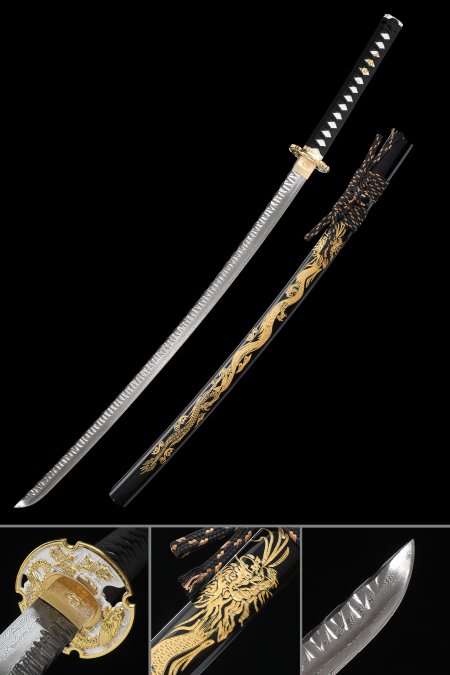
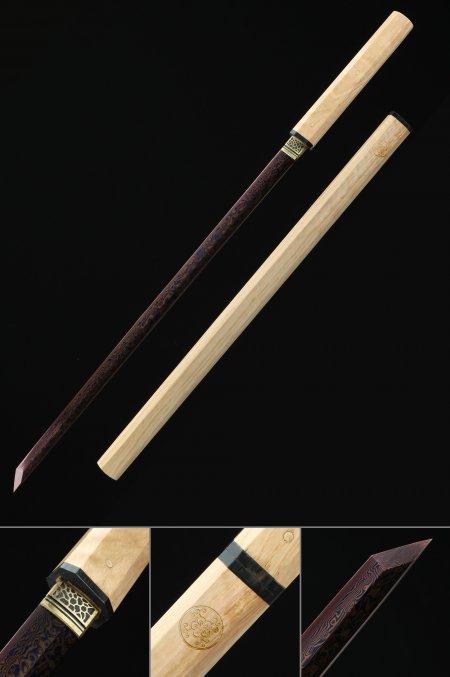
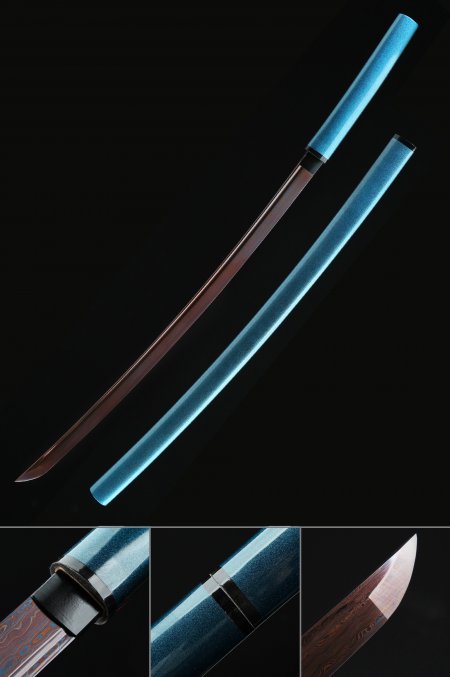
Straight blades are forged and heat-treated differently than curved blades in one significant respect: differential clay tempering, which naturally induces curvature, is either not applied or applied in a way that prevents curvature from developing. This means straight blades typically have more uniform hardness throughout the cross-section rather than the hard-edge-soft-spine differential that curved katana achieve. The steel options themselves remain the same — T10, 1095, Damascus, spring steel, and manganese are all available. The practical effect is that straight blades tend not to display hamon temper lines because the differential tempering process that creates hamon is the same process that creates curvature. For collectors who value hamon as a visual element, curved blades are the better choice; for those who prefer clean, uniform blade surfaces, straight geometry delivers exactly that.