What hamon patterns are found in folding katana from this collection?
Updated Feb 2026
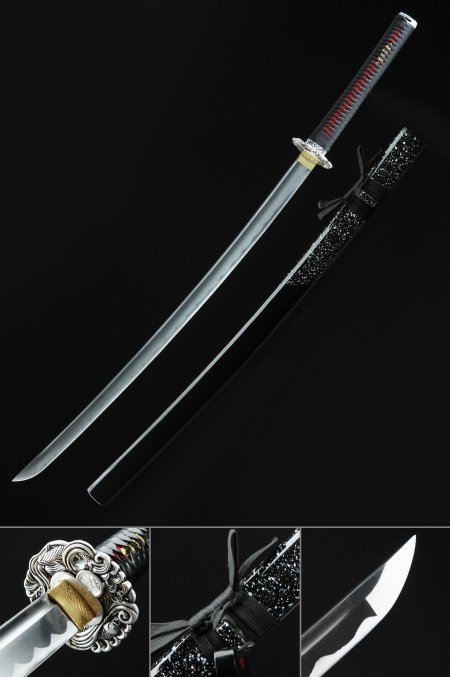
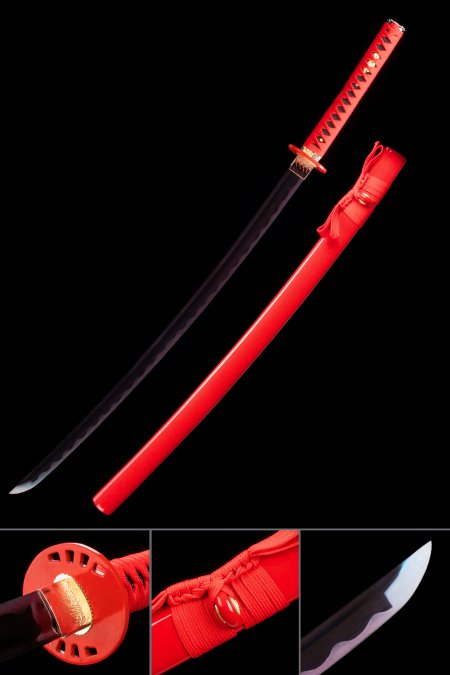
Hamon patterns in folding katana from this collection vary from piece to piece because each hamon is individually created by the clay application technique used on that specific blade. The most common hamon patterns include suguha - a straight or nearly straight hamon running parallel to the blade edge - which is the simplest and most classical pattern, associated with restraint and traditional swordsmanship. Notare hamon feature gentle, flowing wave-like undulations that give the temper line an organic, fluid quality. Gunome hamon have a more regular, tooth-like or notched wave pattern that repeats along the blade length. Choji hamon feature clove-shaped or irregular projections from the main hamon line, considered among the most visually elaborate traditional patterns. Within each pattern type, the specific nie and nioi activity - the crystalline and misty zones visible at the hamon boundary under magnification or raking light - varies from blade to blade, making each folding katana individually unique in its hamon character.