How do I verify that a katana is built from genuine high-carbon steel?
Updated Feb 2026
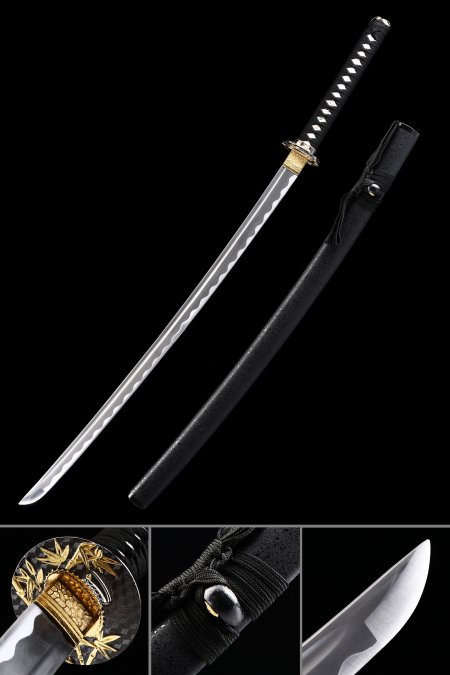
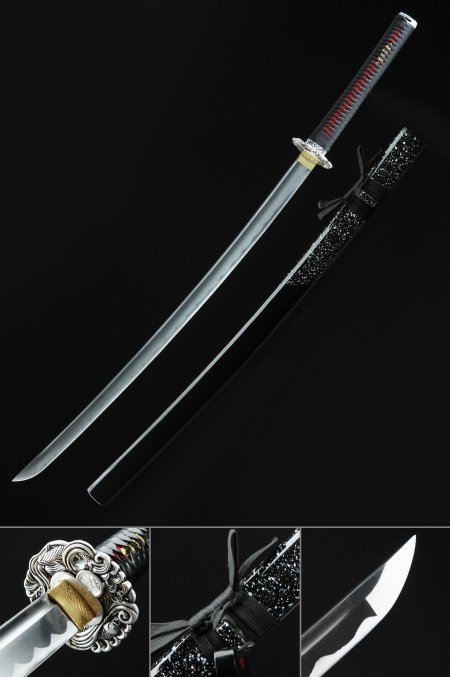
Verifying that a katana is built from genuine high-carbon steel involves examining several physical characteristics that distinguish real steel construction from decorative alternatives. The most direct verification is the mekugi retention pin inspection: a full-tang katana will have one or more mekugi pins passing through the handle and tang, and these can be tapped out to allow the handle to be removed and the tang inspected directly. A genuine full-tang piece will show the full width blade steel running through the handle. The blade weight is also informative: genuine high-carbon steel katana have a specific heft that reflects the density of the steel - a blade that feels significantly lighter than expected for its length is likely hollow or made from lower-density alloy material. For clay-tempered grades, the presence of a genuine hamon along the blade is a strong indicator of proper construction: a real hamon cannot be faked in stainless or alloy steel as it requires the differential heat treatment possible only in high-carbon grades. The surface patina response over time - genuine carbon steel develops a light patina if left without oil, while stainless remains unchanged - is another indicator that distinguishes real high-carbon steel construction.