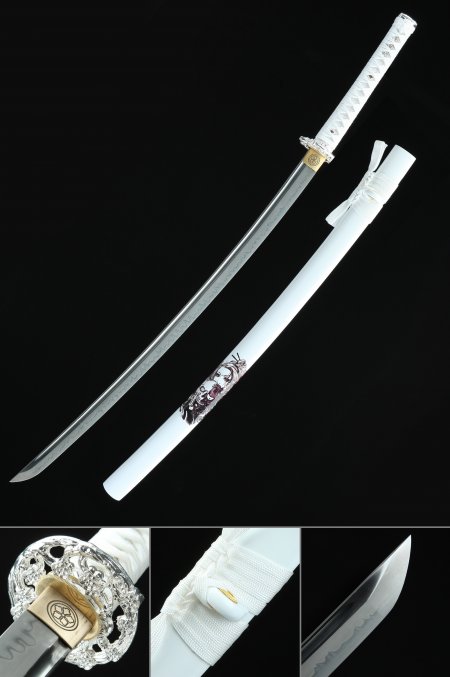
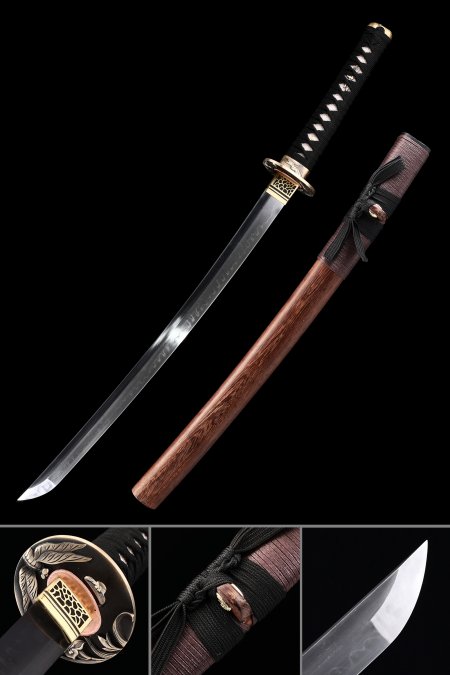
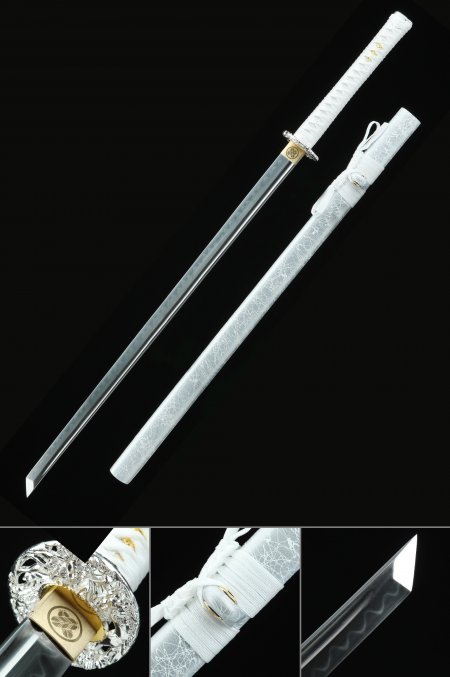
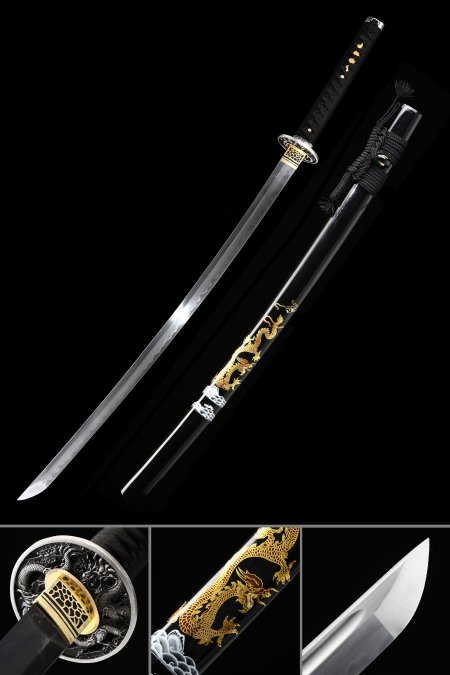
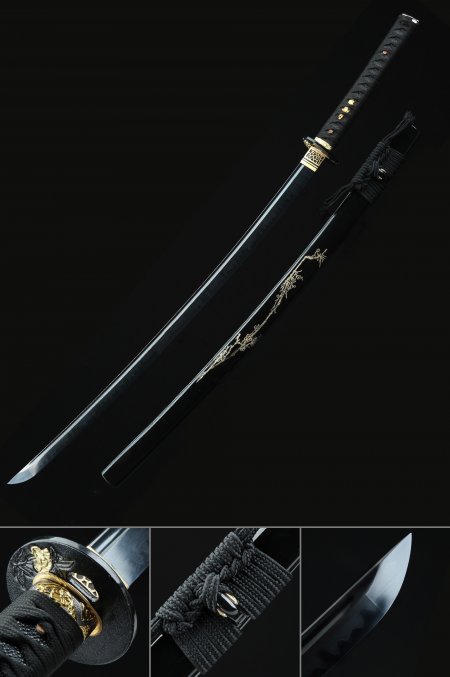
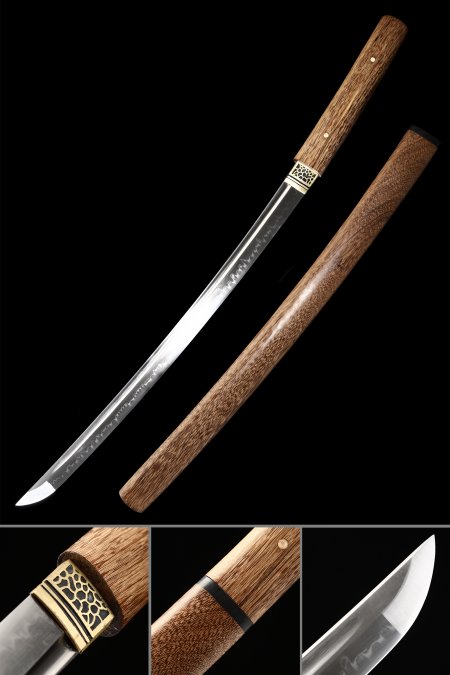
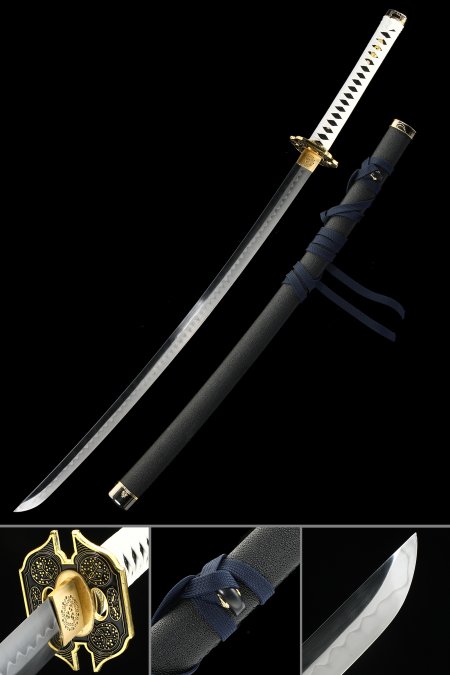
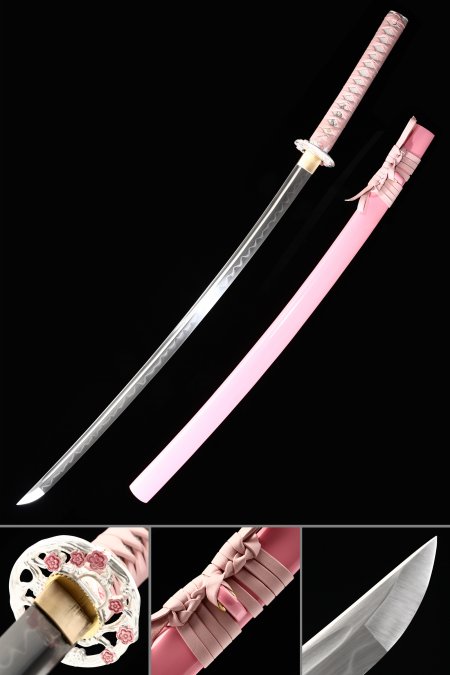
How does clay tempering affect the T10 blade on these katana?
Updated Feb 2026
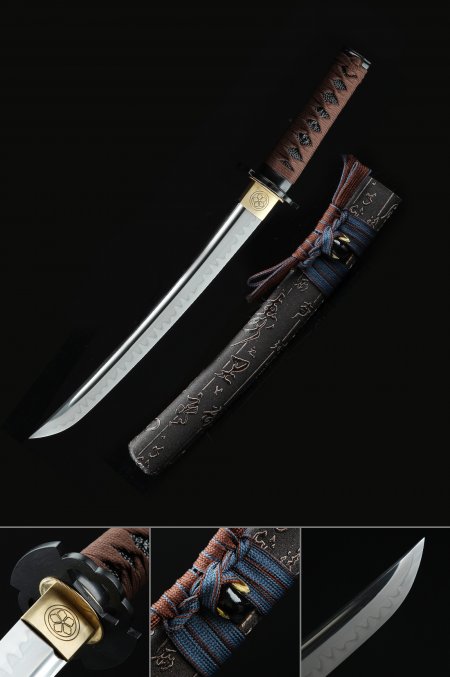
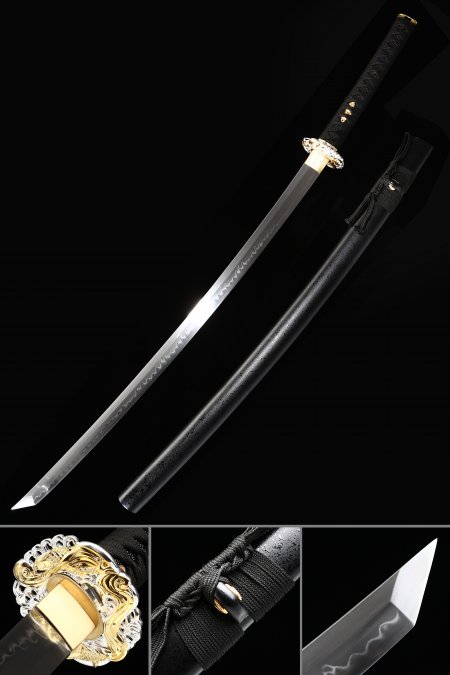
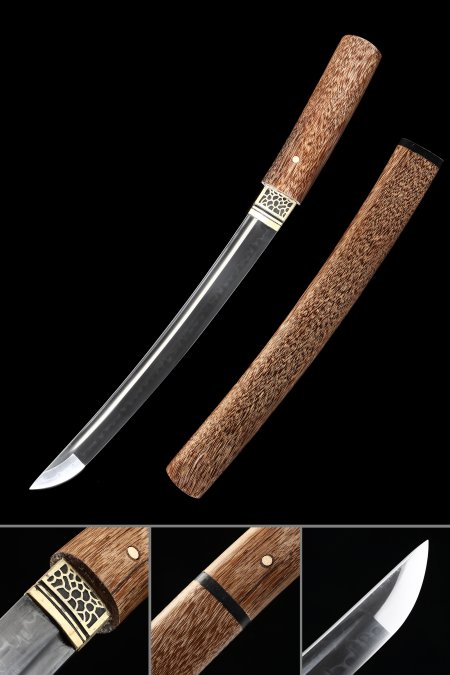
Clay tempering — known in Japanese as tsuchioki — is a differential heat treatment applied before quenching. A mixture of refractory clay is coated thickly along the spine and thinly or not at all along the edge. When the blade is quenched, the thinly coated edge cools rapidly and hardens into a high-Rockwell martensitic structure, while the clay-insulated spine cools more slowly, retaining a tougher, more flexible pearlitic or bainitic structure. The boundary between these two zones produces the hamon: the visible temper line that runs along the blade. On T10 carbon steel, which has a carbon content of approximately 1.0%, this process yields a well-defined hamon with natural activity — variations in the line's texture and shape that are a direct product of the metallurgy, not etching. Collectors specifically seek this combination because the hamon serves as a readable record of the forging and heat-treatment process.