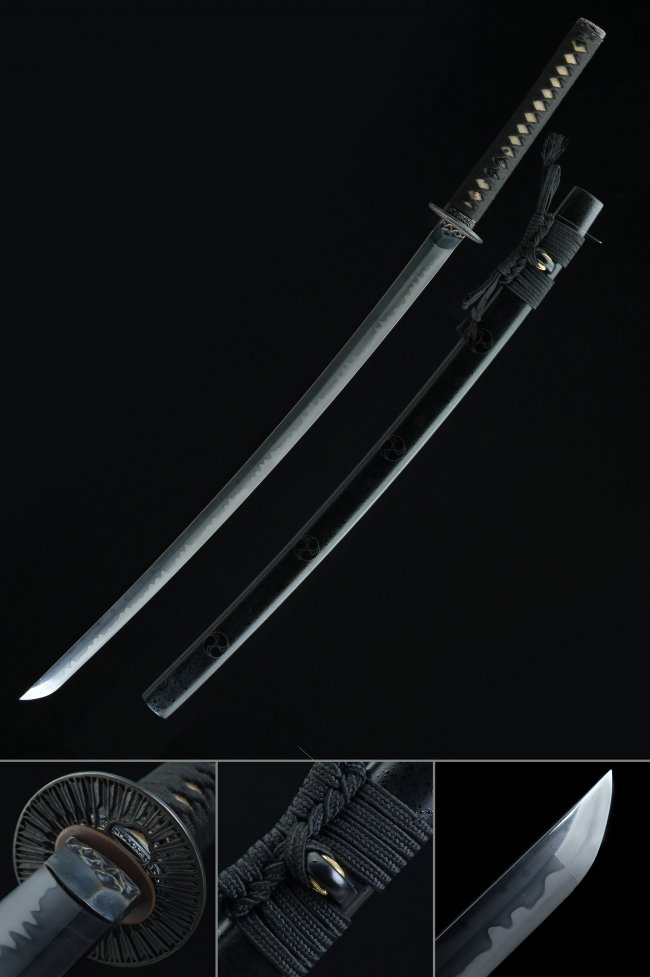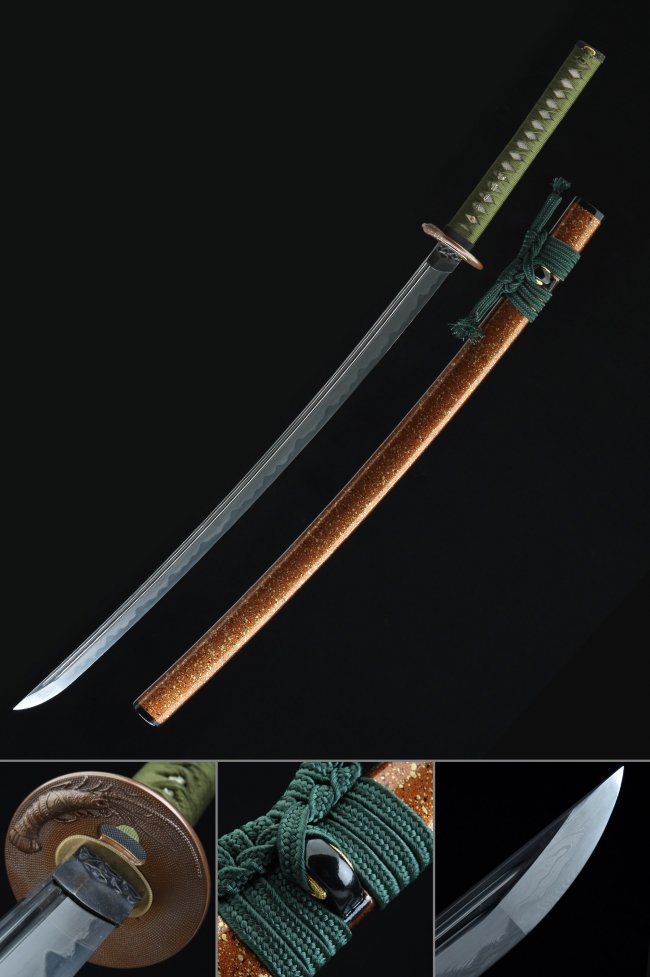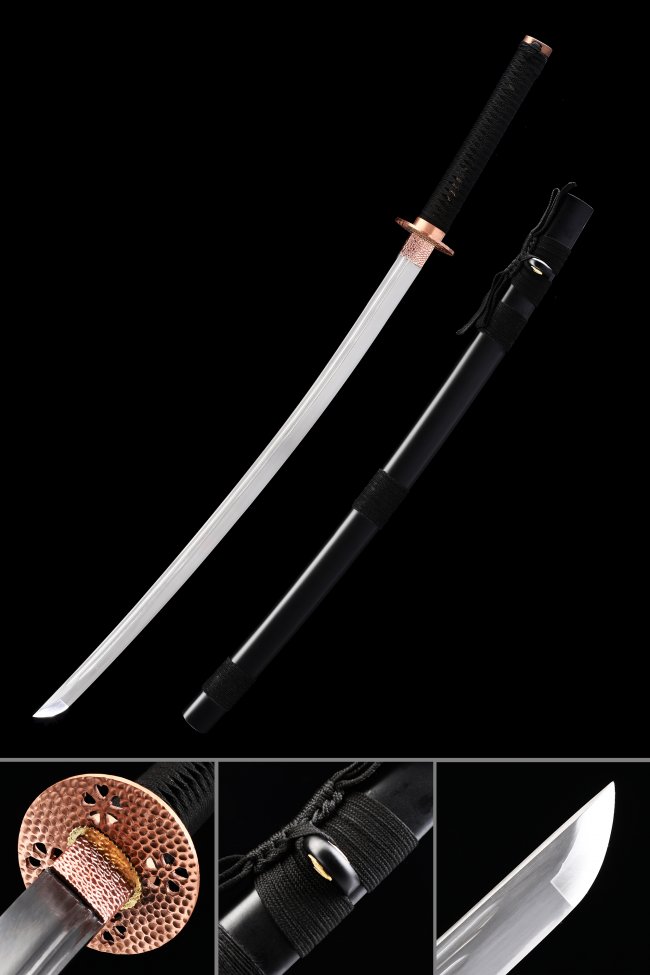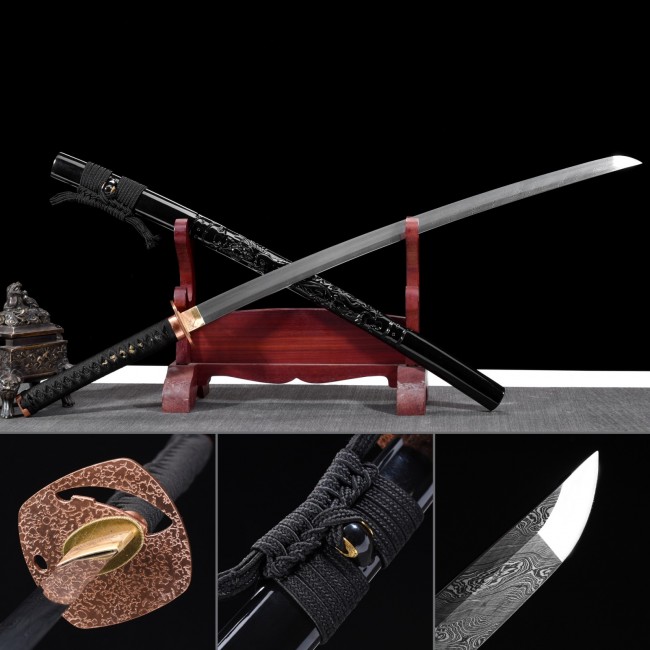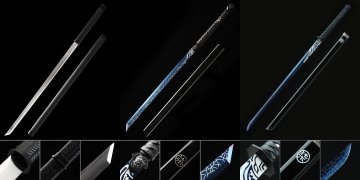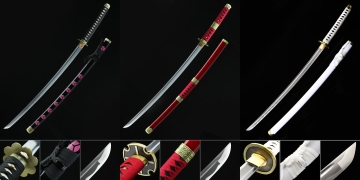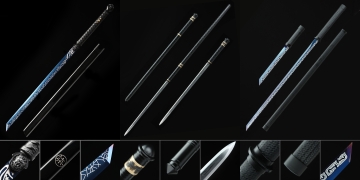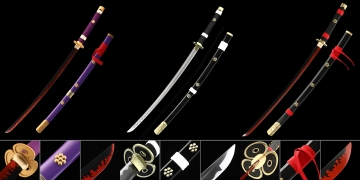
Copper Tsuba Katana

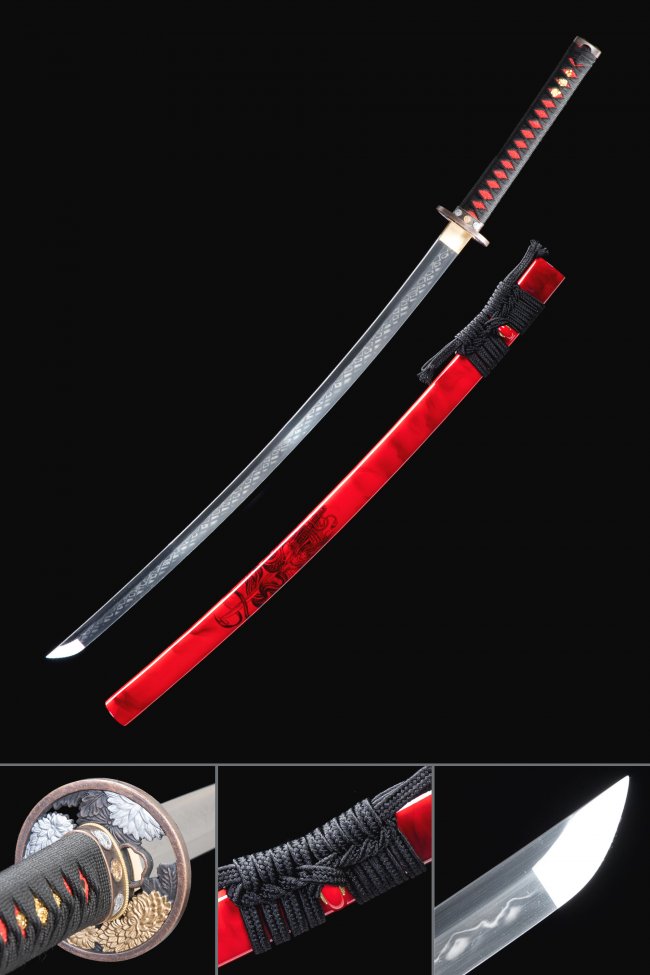
Copper tsuba katana combines the warmth of hand-finished copper fittings with the precision of clay-tempered T10 carbon steel blades — a pairing that serious collectors recognize immediately. Each piece in this collection features a distinctly crafted guard, from floral engravings to dragon and crane motifs, set against lacquered hardwood saya in black, dark red, or natural finishes. Built full-tang and finished with genuine hamon activity, these katana are crafted for display, study, and the appreciation of traditional Japanese sword-making artistry. Enjoy free shipping on your order, backed by our hassle-free return policy.

Showing 5 Products

Related Collections

Tanto Blade79 items


382 Reviews

Dragon Tsuba Wakizashi24 items


39 Reviews

Dragon Tsuba Tanto26 items


34 Reviews

Geometric Tsuba Ninjato29 items


104 Reviews

Frequently Asked Questions

What makes copper a preferred material for katana tsuba?
Copper and copper alloys have been used in Japanese sword fittings for centuries, valued for properties that go beyond aesthetics. The material is relatively soft compared to iron, which makes it well-suited for detailed engraving, chasing, and repoussé work — techniques used to produce the dragon, crane, and floral motifs seen across this collection. Copper also develops a natural patina over time as it oxidizes, gradually deepening in tone from bright reddish-gold toward warmer amber and brown hues. For collectors, this aging process is desirable rather than problematic: it signals authenticity and gives each piece a living, evolving character that plated or painted metals cannot replicate. The warm tone of copper also creates a visually cohesive pairing with lacquered hardwood saya, grounding the overall aesthetic in the organic material palette traditional to Japanese sword furniture.
How does clay tempering affect the T10 blade on these katana?
Clay tempering — known in Japanese as tsuchioki — is a differential heat treatment applied before quenching. A mixture of refractory clay is coated thickly along the spine and thinly or not at all along the edge. When the blade is quenched, the thinly coated edge cools rapidly and hardens into a high-Rockwell martensitic structure, while the clay-insulated spine cools more slowly, retaining a tougher, more flexible pearlitic or bainitic structure. The boundary between these two zones produces the hamon: the visible temper line that runs along the blade. On T10 carbon steel, which has a carbon content of approximately 1.0%, this process yields a well-defined hamon with natural activity — variations in the line's texture and shape that are a direct product of the metallurgy, not etching. Collectors specifically seek this combination because the hamon serves as a readable record of the forging and heat-treatment process.
How should I store a copper tsuba katana for long-term display?
Copper fittings and high-carbon steel blades have different but complementary care requirements. For the blade, apply a light coat of choji oil or food-grade mineral oil every few months, or more frequently in humid environments. Store the katana horizontally on a dedicated sword stand with the edge facing upward to follow traditional Japanese mounting convention. Keep the piece away from direct sunlight, which can fade lacquer saya finishes over time, and away from high-humidity areas, which accelerate both blade oxidation and copper patina development faster than ideal. The copper tsuba itself requires no oil, but if you handle it frequently, fingerprints containing skin oils and salts can cause uneven spotting; a soft cotton cloth wipe-down after handling is sufficient. Avoid chemical metal polishes on the tsuba — they strip the natural patina and reduce the character that makes aged copper fittings collectible.
What is the difference between a copper tsuba and a copper alloy tsuba?
Pure copper tsuba are cast or worked from unalloyed copper, producing the characteristic reddish-warm tone and relatively soft surface that takes fine engraving detail well. Copper alloy tsuba — such as those made from shakudo (copper with a small percentage of gold), shibuichi (copper and silver), or bronze (copper and tin) — alter the base metal's color, hardness, and patina behavior. Shakudo, for example, develops a deep blue-black patina when treated with a traditional Japanese chemical solution called rokushō, producing the dark grounds often seen on high-end historical tsuba. Shibuichi yields a soft grayish tone. Bronze is harder than pure copper and holds fine detail with slightly less surface softness. In this collection, tsuba described as gold alloy or copper alloy reference these blended compositions, while pieces listed as real copper tsuba use the unalloyed metal. Both categories are legitimate collectible formats with distinct visual and aging properties.
Are copper tsuba katana a good choice as a display gift for collectors?
Copper tsuba katana are well-regarded as collector gifts because they offer visible, immediately appreciable craftsmanship at every point of the piece — the engraved guard, the lacquered saya, the ito-wrapped handle, and the hamon-active blade each communicate care and intentionality. For someone who collects Japanese edged objects or East Asian decorative arts, a full-tang T10 clay-tempered katana with a thematically coherent copper guard carries more substantive interest than a purely ornamental piece. Presentation is also a consideration: the combination of a polished piano lacquer saya and a warmly toned copper tsuba photographs and displays well. If the recipient has an existing collection, dragon or crane tsuba motifs tend to pair naturally with a range of adjacent pieces without competing visually. A sword stand is a practical and appreciated accompanying gift for anyone new to displaying katana.

Customer Reviews

Cart 0 Items

Your cart is empty