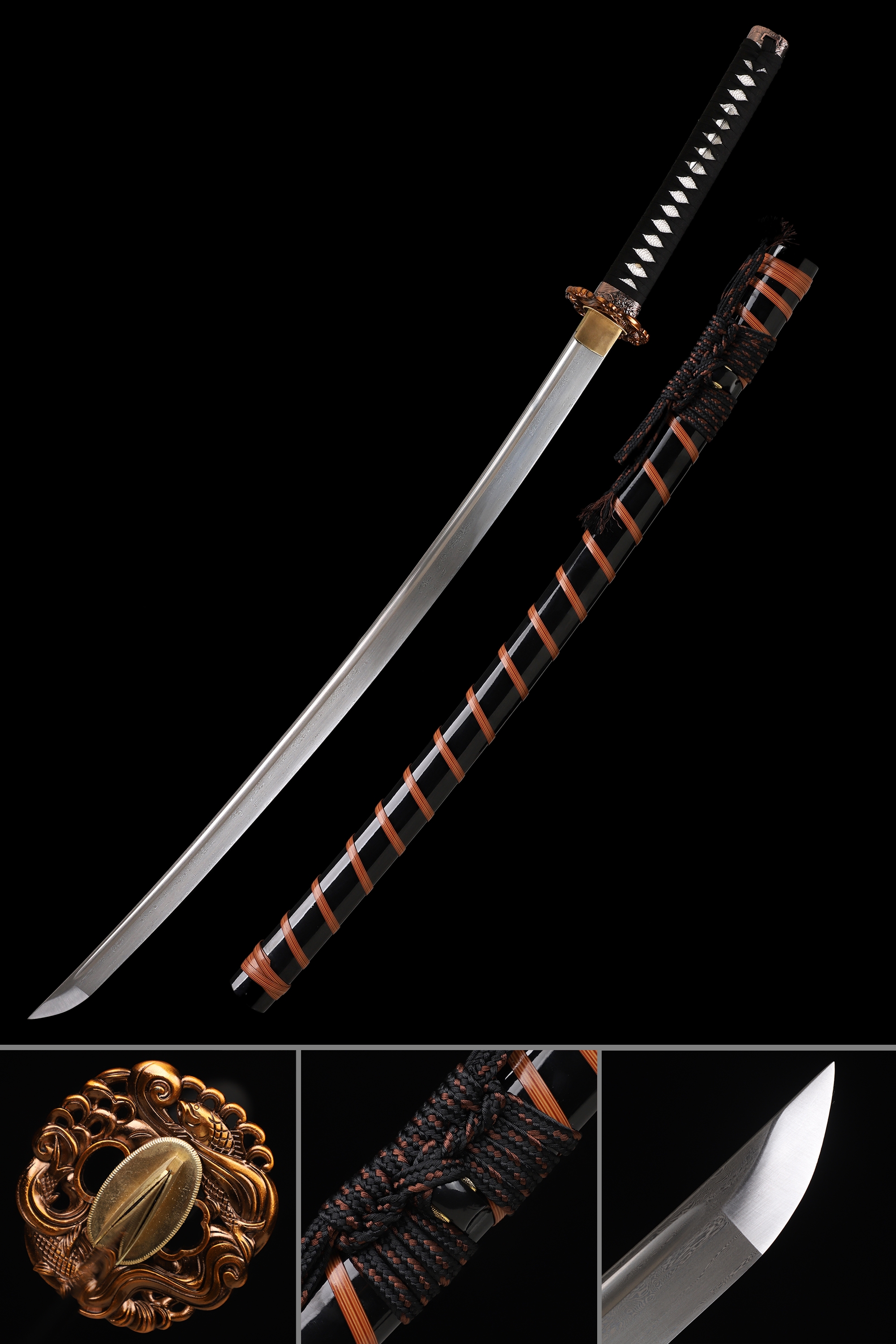
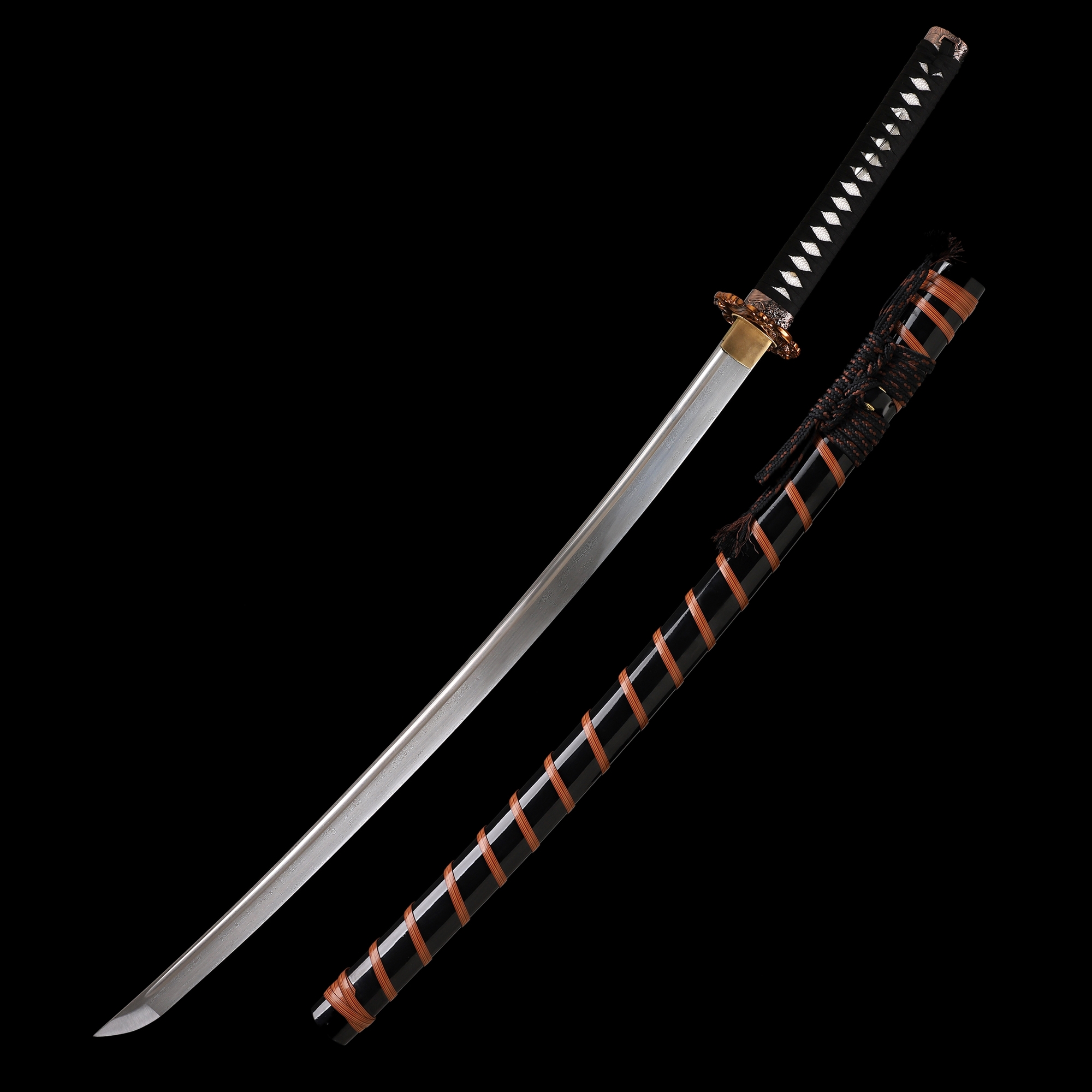
Folded Melaleuca Steel Katana with Gold Koi Tsuba - Black & Orange Lacquered Saya
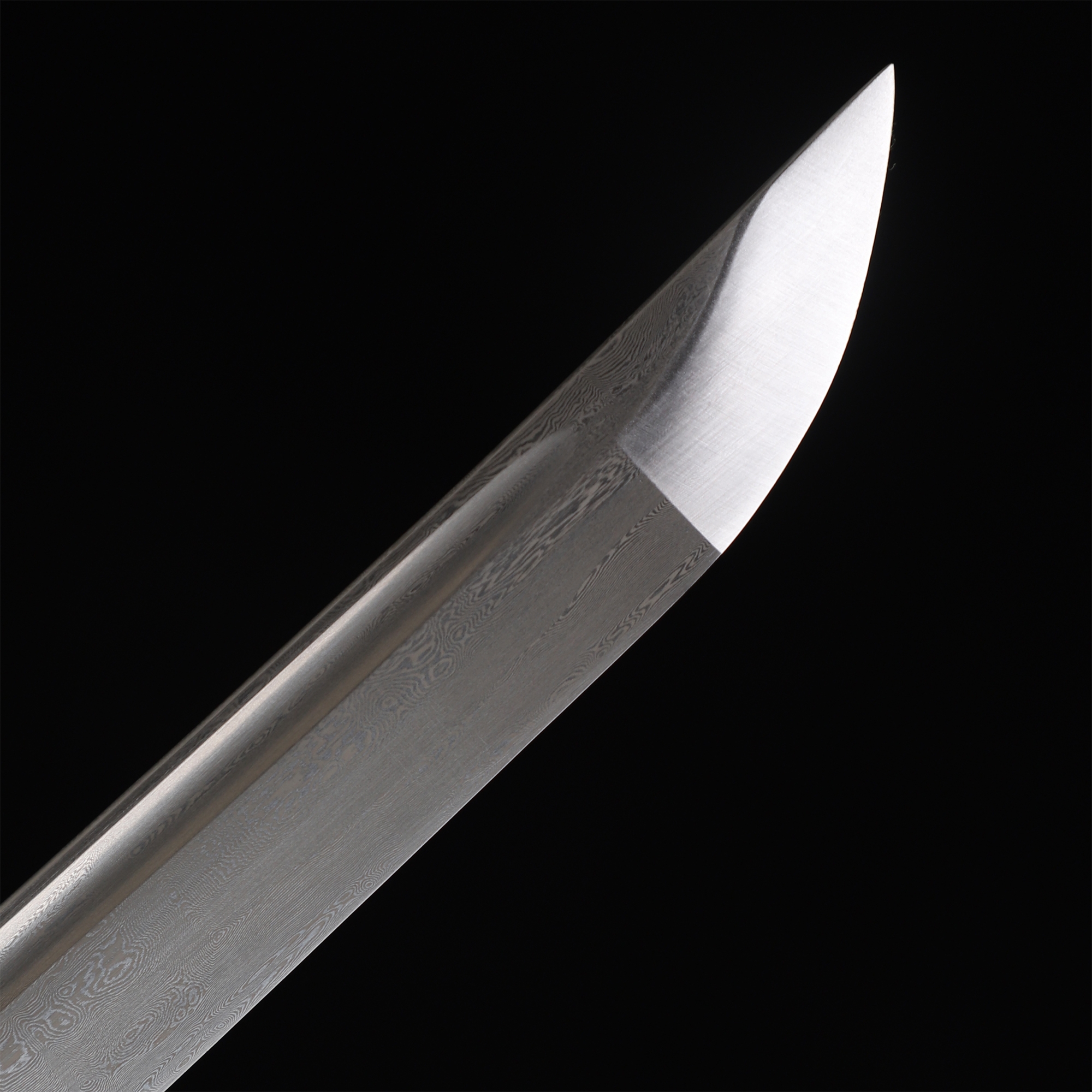
- Folded melaleuca steel blade features a visible hamon line and layered grain patterns unique to each piece, delivering refined edge geometry and sharp-edged precision across its 40.55-inch length.
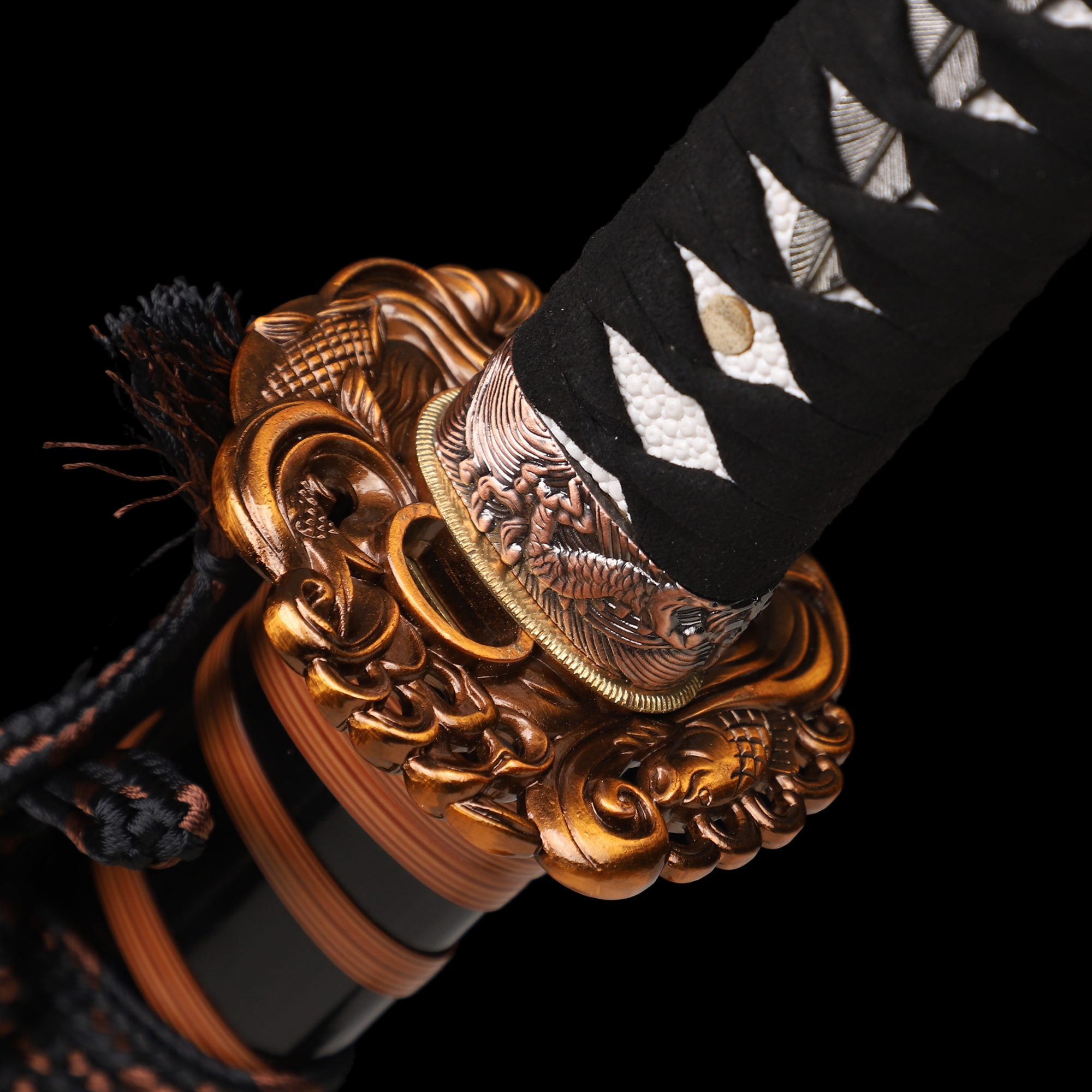
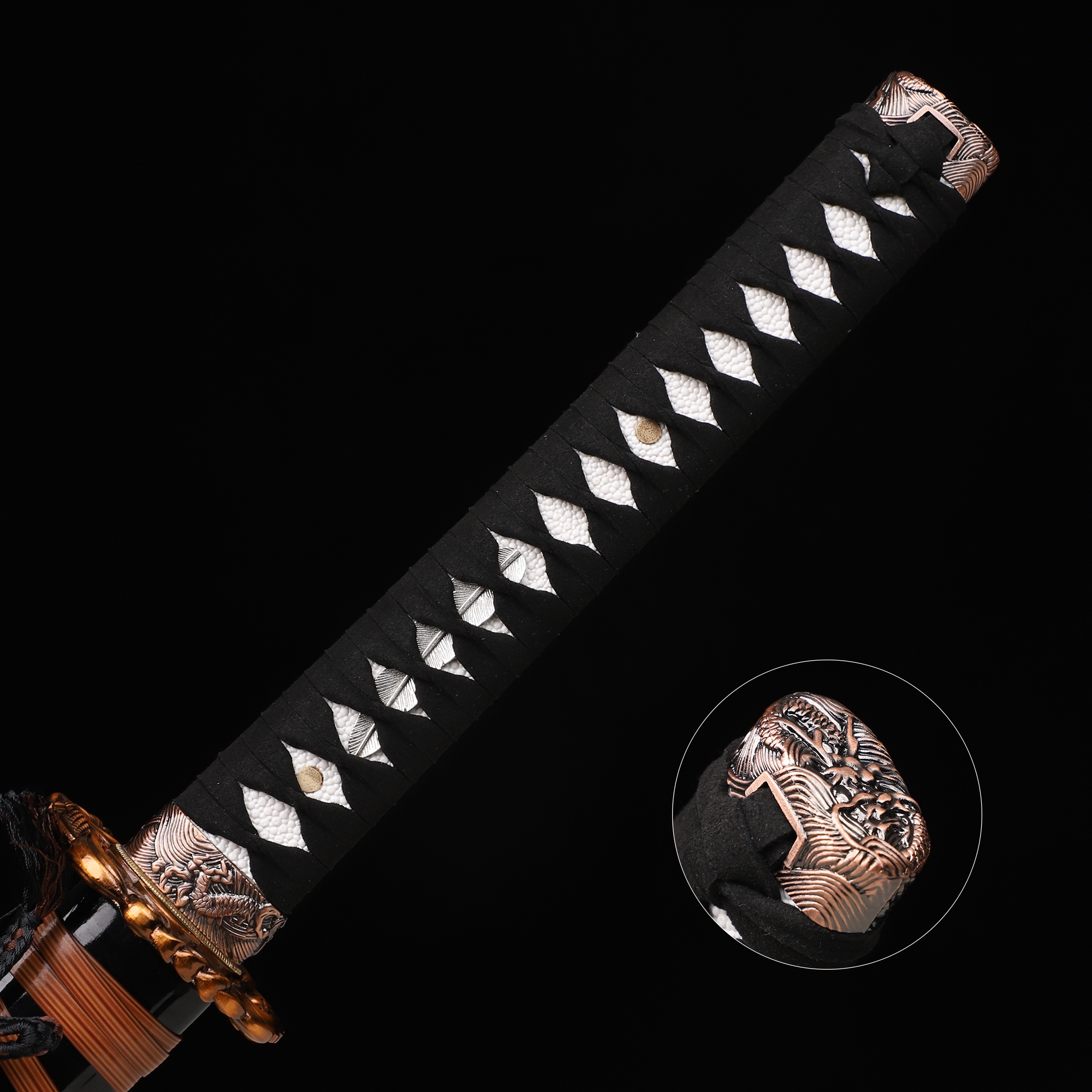
- Handle wrapped in PU white samegawa under black cord ito, creating a classic diamond pattern with strong visual contrast - weighing in at 2.8 lb for a balanced feel in hand.
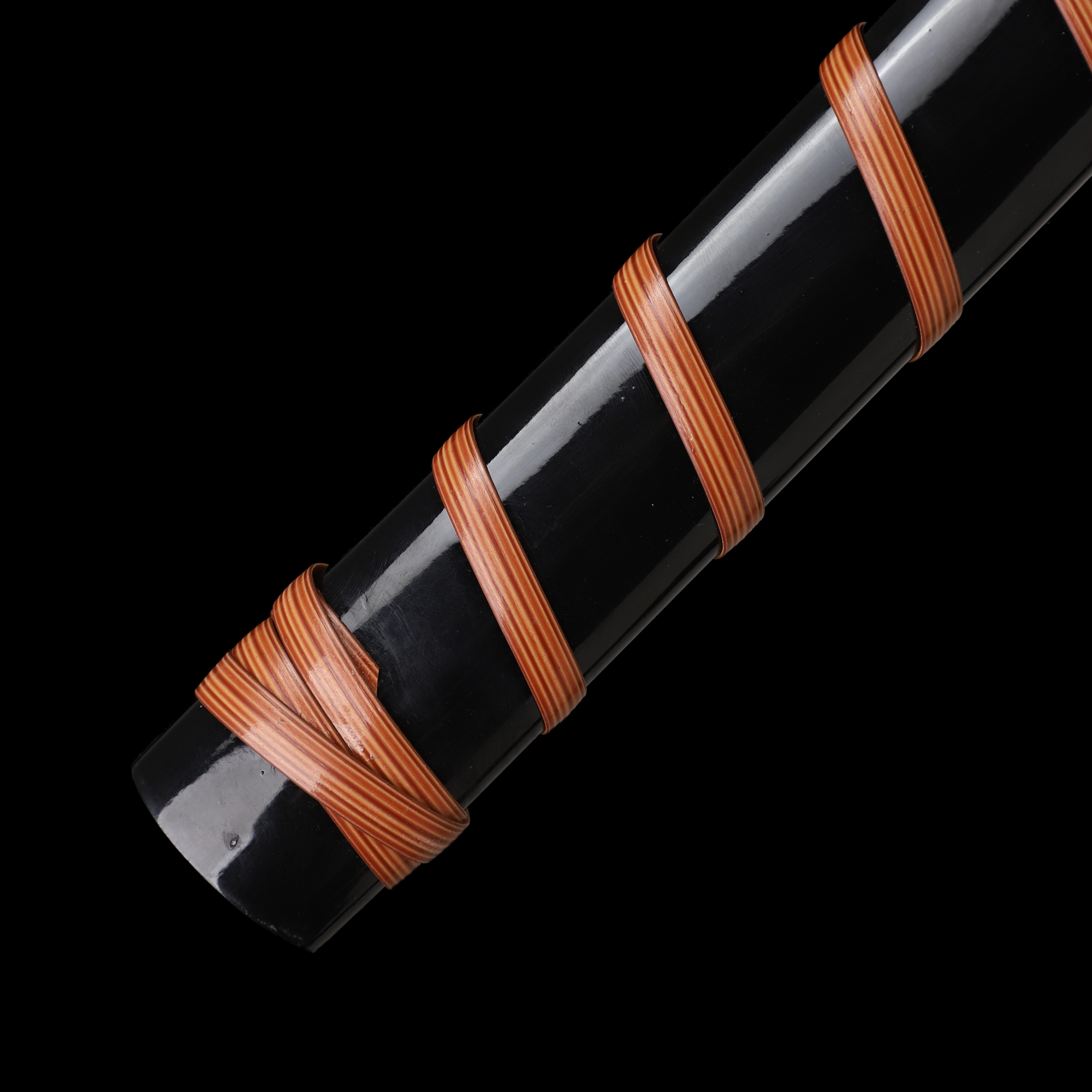
- Black hardwood lacquer saya accented with burnt-orange sageo and horizontal orange banding - a bold two-tone finish that stands out on any display.
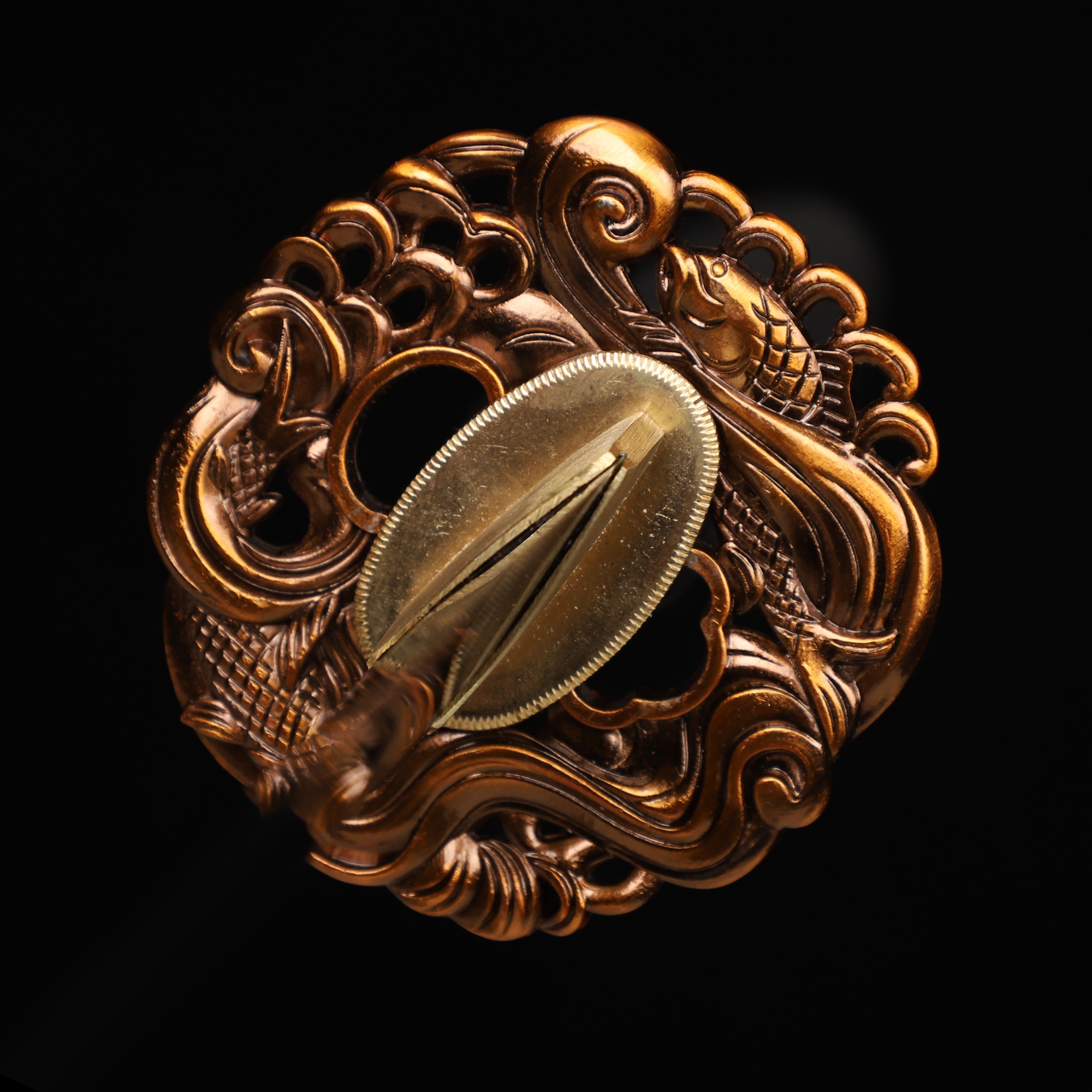
- Gold alloy tsuba features an intricate koi carp motif in raised relief - the carp symbolizes perseverance and good fortune in Japanese tradition, adding cultural depth to the koshirae.
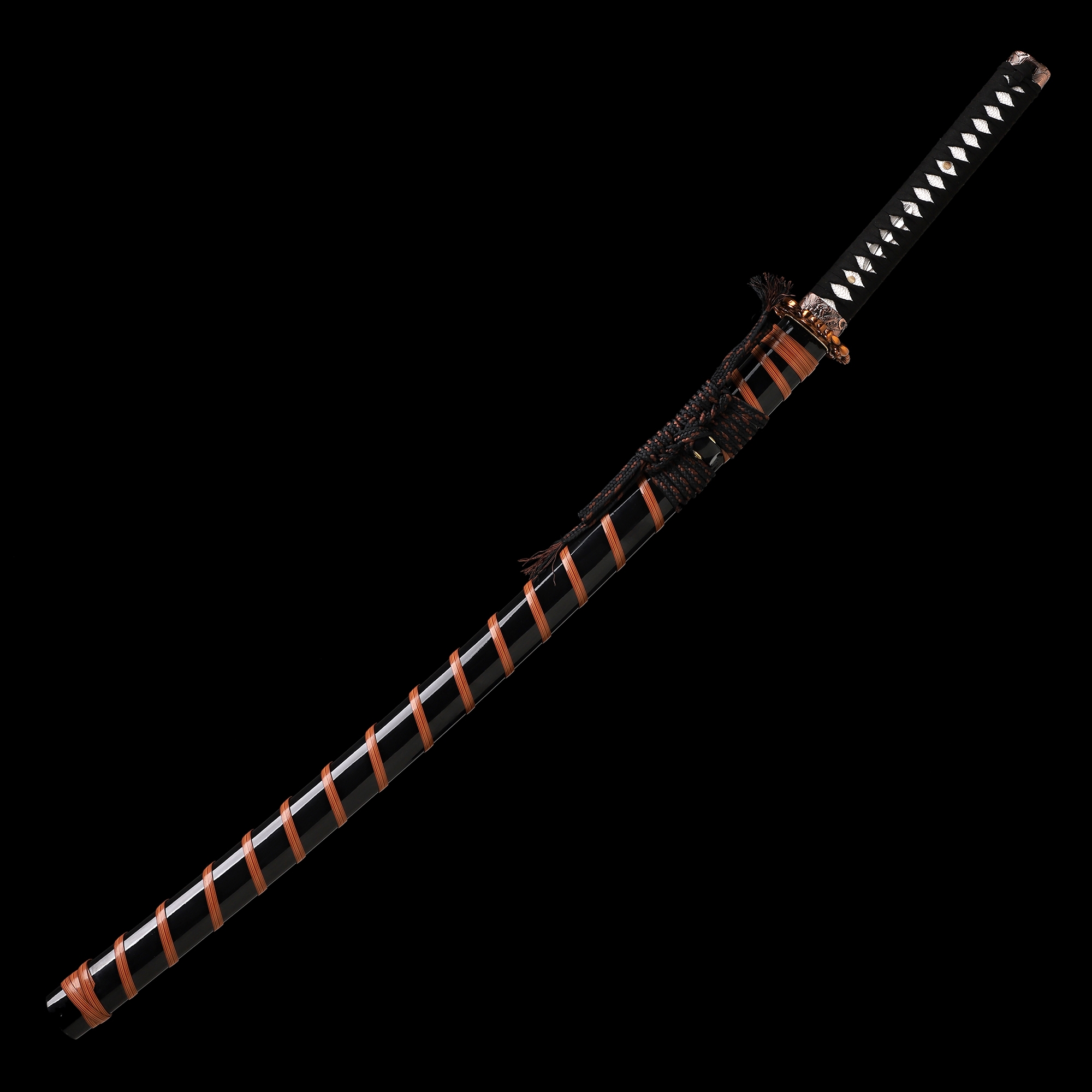
- Full koshirae assembly includes matching black-orange sageo cord, gold habaki collar, and complete fittings - sword stand not included.
 | Handmade by seasoned sword-smiths. |
 | Free U.S. express shipping. |
 | 30 day money back guarantee! |
 | SSL end-to-end encrypted secure payments. |
 | Trusted by 150,000+ purchased customers. |
Product Details
The blade is forged from folded melaleuca steel, a layered construction method that produces a distinctly patterned grain running the full 40.55-inch length. Each fold cycle redistributes the steel's structure, resulting in a visible hamon line along the edge and a surface with natural variation that no two blades share exactly. At 1.259 inches wide and 0.275 inches thick at the spine, the geometry balances mass and handling across the 2.8 lb total weight.
The tsuka is wrapped over PU white samegawa, a textured ray-skin-style underlayer that provides grip foundation beneath the black cord ito. The alternating diamond windows in the wrap expose the white samegawa at regular intervals, creating sharp contrast against the dark cord - a traditional koshirae pattern executed cleanly on this piece. For collectors interested in the broader range of construction styles, the Folded Steel Katana collection offers comparable blade options across multiple fittings.
The gold alloy tsuba centers on a koi carp motif cast in raised relief, with detailed scale texture and flowing fin lines worked into the circular frame. In Japanese iconography, the koi represents perseverance through adversity and the pursuit of achievement - a fitting symbol for a sword of this construction. The gold finish pairs with the brass habaki collar to unify the metalwork across the fittings.
The saya is built from hardwood and finished in glossy black lacquer, with horizontal burnt-orange banding applied at even intervals down the length. The black-orange sageo cord ties into the same palette, connecting handle wrap and scabbard into a cohesive color story. This two-tone finish gives the piece strong shelf presence without relying on heavy ornamentation.
Overall length runs 40.55 inches with a shipping weight of 3.3 lb. The complete Decorative Katana lineup includes comparable koshirae builds for collectors looking to display multiple pieces together. Sword stand is not included.
Part of our Steel Katana collection.
- Folded melaleuca steel blade features a visible hamon line and layered grain patterns unique to each piece, delivering refined edge geometry and sharp-edged precision across its 40.55-inch length.
- Handle wrapped in PU white samegawa under black cord ito, creating a classic diamond pattern with strong visual contrast - weighing in at 2.8 lb for a balanced feel in hand.
- Black hardwood lacquer saya accented with burnt-orange sageo and horizontal orange banding - a bold two-tone finish that stands out on any display.
- Gold alloy tsuba features an intricate koi carp motif in raised relief - the carp symbolizes perseverance and good fortune in Japanese tradition, adding cultural depth to the koshirae.
- Full koshirae assembly includes matching black-orange sageo cord, gold habaki collar, and complete fittings - sword stand not included.
Specification
| Item Number | TK-JP-G11099 |
|---|---|
| Primary Color | Mix-color |
| Primary Material | Melaleuca Steel |
| Sharpness | Standard Sharp |
| Saya Color | Black-orange |
| Saya Material | Hardwood Lacquer |
| Tsuka Color | Black |
| Nagasa Color | Chrome |
| Sageo Color | Black-orange |
| Tsuba Color | Gold |
| Tsuba Theme | Koi |
| Nagasa Hamon | Yes |
| Style | Koshirae |
| Dimensions | 40.6 x 1.3 x 0.3 Inches |
| Weight | 2.8 Pounds |
| Packing Size | 42.9 x 3.9 x 3.5 Inches |
| Shipping Weight | 3.3 Pounds |