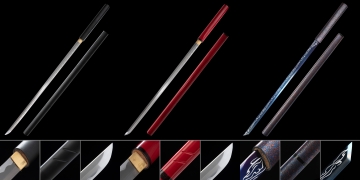
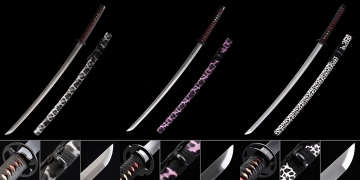
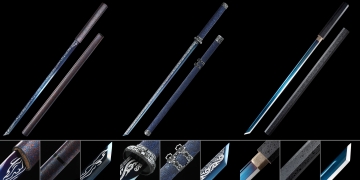
What makes 1060 carbon steel a good choice for a tanto collectible?
1060 carbon steel contains roughly 0.60% carbon, placing it in a mid-range that balances surface hardness with structural toughness. For a collectible tanto, this matters because the steel takes a high-polish or satin finish exceptionally well without becoming brittle at the tip - a real concern with higher-carbon grades like 1095 when used in shorter blade geometries. The result is a blade that photographs cleanly, holds its finish under normal display conditions, and presents a consistent surface character that collectors and enthusiasts can appreciate on close inspection.
How does a tanto differ from a wakizashi in a display collection?
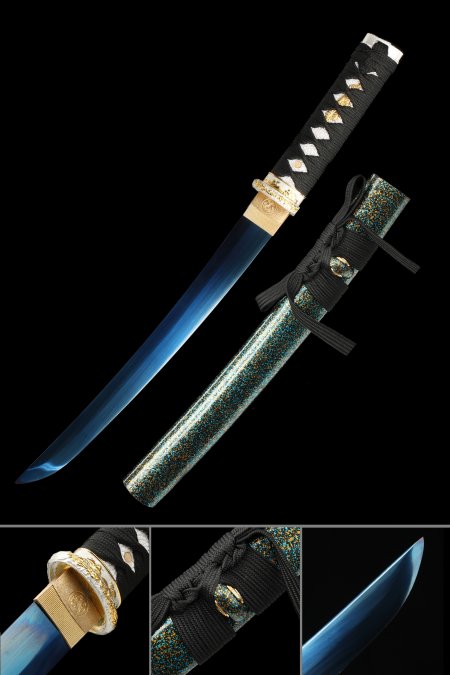
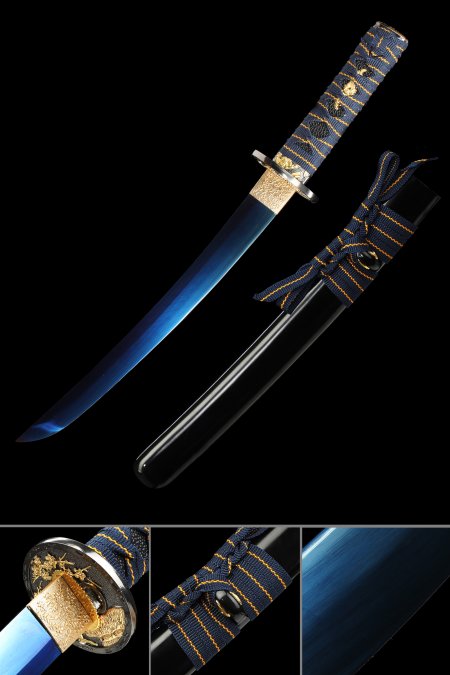
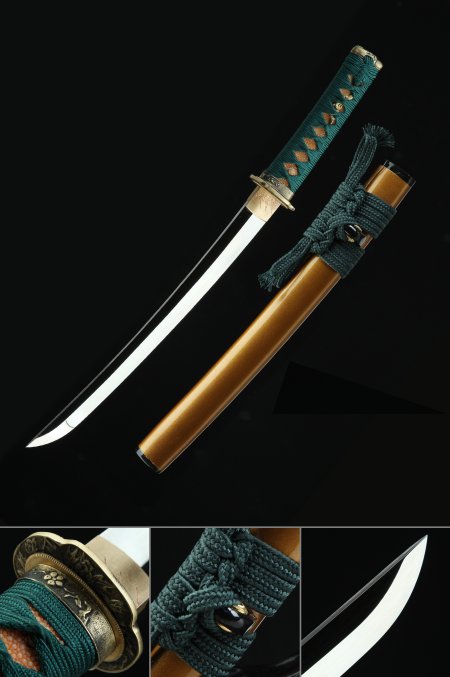
The distinction is primarily one of blade length and visual proportion. A tanto typically measures under 12 inches in blade length, while a wakizashi ranges from roughly 12 to 24 inches. In a display context, the tanto's compact form concentrates visual attention entirely on the fittings - the tsuba, the handle wrap, and the saya finish - because there is less blade surface to carry the composition. A wakizashi allows the blade geometry and hamon line to play a larger role. Collectors who appreciate koshirae detail and tight craftsmanship often find tanto pieces more rewarding at close range, while wakizashi and katana displays read better across a room.
What do the different saya finishes mean for long-term display?
Saya finish directly affects both the visual character of the piece and its practical care requirements. Black lacquer saya offer a high-contrast, formal presentation that suits traditional display arrangements and resists minor surface moisture reasonably well. Gold or teal hardwood lacquer finishes introduce warm tones that complement cord-wrapped handles and gold-tone tsuba, creating a more layered aesthetic palette. For long-term display, all lacquered saya benefit from stable humidity levels - ideally between 45% and 55% relative humidity - and should be kept from direct sunlight to prevent lacquer fading or micro-cracking over time.
How should I care for the blade to maintain its polished finish?
1060 carbon steel is reactive to moisture and skin oils, so routine maintenance is straightforward but essential. After handling, wipe the blade with a clean, lint-free cloth to remove fingerprints. Apply a thin coat of choji oil or a neutral mineral oil every few months using a soft cloth or dedicated uchiko powder ball - this creates a light protective film that slows oxidation. Store the tanto in its saya when not on display, and avoid environments with high humidity or temperature fluctuation. If any surface patina begins to develop, a very light application of oil is usually sufficient to stabilize it without disrupting the polished finish.
Can a tanto be part of a matched display set with a katana?
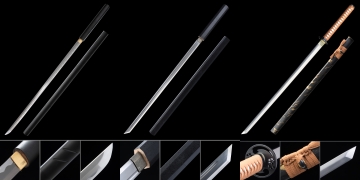
Yes, and this is one of the more satisfying approaches to Japanese blade collecting. Historically, a samurai might carry a katana and a tanto together as a practical pairing - distinct from the formal daisho of katana and wakizashi, but equally coherent as a display concept. When selecting pieces to display together, matching the tsuba material and finish, the cord color, and the saya lacquer style creates visual unity across different blade lengths. Our 1060 carbon steel katana pieces are built to compatible fitting standards, making it practical to assemble a thematically unified two-piece display without mismatched hardware tones or inconsistent construction quality.