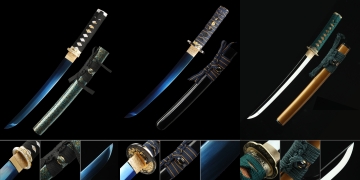
What makes 1060 carbon steel a good choice for display ninjato?
1060 carbon steel sits at a medium-high carbon content - roughly 0.60% carbon - which gives it a well-balanced grain structure that holds polishing and surface treatments exceptionally well. For display-oriented collectibles, this matters because the steel accepts color treatments, engravings, and polish finishes without the brittleness risks associated with higher-carbon grades like 1095. The result is a blade that looks refined under display lighting, holds its geometry over years of stationary display, and has enough mass to feel substantial when handled during repositioning or photography. Collectors who have worked with both low-carbon and medium-carbon blades consistently note that 1060 strikes the right balance between visual finish quality and overall durability for long-term display use.
How is the blue finish on these ninjato blades actually created?
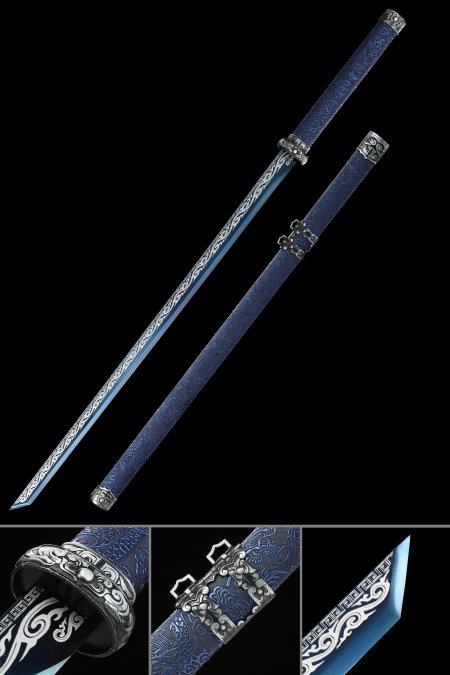
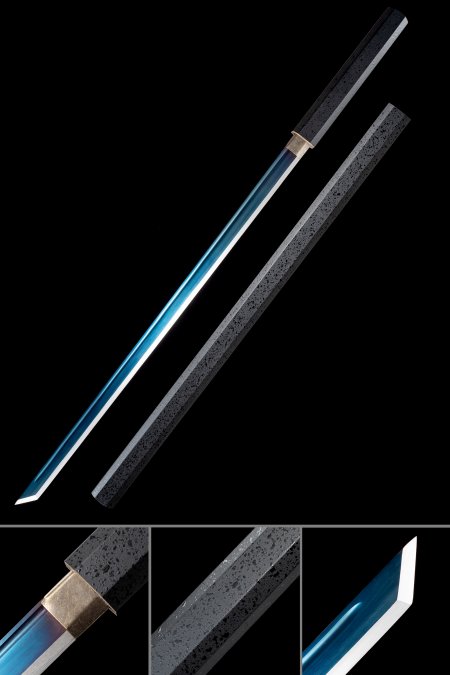
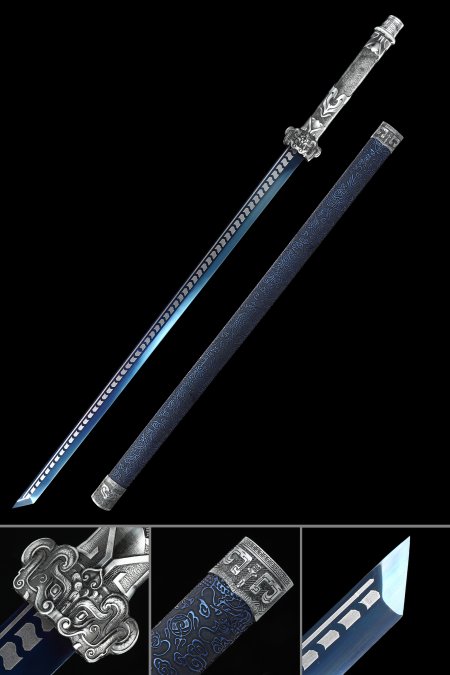
The blue blade finish is produced through a controlled chemical coloring or heat-oxidation process applied after the blade has been ground and polished to its final profile. Unlike painted or powder-coated finishes, this treatment chemically interacts with the steel surface itself, creating a blue-to-dark tonal layer that is bonded to the metal rather than sitting on top of it. The exact hue - ranging from a cool steel blue to deeper blue-black depending on lighting - is an inherent quality of the treated surface. This means the finish has texture and depth when viewed from different angles, which is one reason blue-blade pieces are particularly sought after for display arrangements where varied lighting is involved. It does require occasional light oiling to maintain its visual quality over time.
How does a ninjato differ from a katana as a collectible?
The most immediately visible difference is blade geometry. A traditional katana features a pronounced curve developed through differential hardening, while the ninjato typically presents a straighter, more compact blade profile. The ninjato's tsuba is also characteristically squared or rectangular rather than the rounded or oval guards common on katana. From a collector's perspective, this makes the ninjato a visually distinct piece that contrasts well in multi-sword display arrangements - its straight lines and compact proportions read differently on a wall mount or sword stand than the elegant arc of a katana. Many collectors acquire both forms specifically because they complement rather than duplicate each other aesthetically.
What is the best way to display and maintain a blue-blade ninjato?
For display, a horizontal sword stand or wall-mounted bracket that supports the saya at two contact points is ideal. Avoid standing the ninjato vertically for extended periods, as uneven pressure on the saya over months can cause minor warping in wood components. Position the piece away from direct sunlight, which can fade lacquer finishes and gradually affect the blue blade treatment. For maintenance, apply a thin coat of camellia oil or high-quality mineral oil to the blade surface every two to three months using a soft cloth - this creates a micro-barrier against humidity-driven oxidation that would otherwise dull the blue finish. Wipe down the fittings with a dry microfiber cloth periodically to remove dust from engraved areas.
Are dragon-themed fittings common across Japanese sword collectibles?
Dragon motifs have appeared in Japanese sword ornamentation for centuries, particularly on tsuba, menuki, and kashira. In traditional Japanese iconography, the dragon - or ryu - represents strength, wisdom, and elemental power, making it a natural thematic choice for sword fittings intended to convey prestige. On collectible ninjato, dragon-themed silver alloy tsuba and engraved fittings translate this historical design language into modern display pieces. The silver alloy used in contemporary collectible fittings allows for finer engraving detail than cast iron, resulting in scale textures and dragon forms that are visually crisp and hold up well under close inspection. Collectors interested in thematically cohesive displays often pair dragon-fitted pieces with coordinating saya colors, such as the dark blue options available in this collection.