What makes 1060 carbon steel a good choice for a display katana?
1060 carbon steel sits at a practical midpoint in the carbon steel spectrum, containing approximately 0.60% carbon by weight. This composition allows it to be hardened to around 58–60 HRC during heat treatment, giving it enough structural integrity to hold a well-finished edge and resist flexing under its own weight when displayed horizontally. Unlike lower-carbon alloys, it develops a subtle surface character over time that many collectors find visually appealing. It is also easier for skilled smiths to hand-forge without the brittleness risks associated with ultra-high carbon steels, which means the blade geometry and profile are more consistently executed across individual pieces. For a collector who values knowing that their display piece is grounded in real metallurgical tradition rather than purely decorative construction, 1060 is a highly credible foundation.
How does the leopard saya differ across models in this collection?
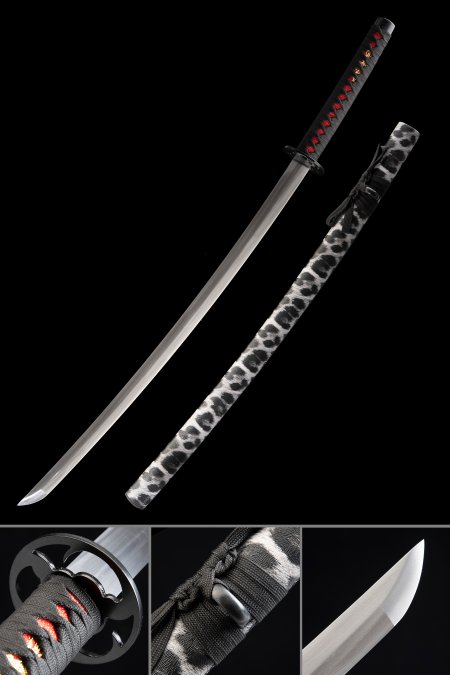
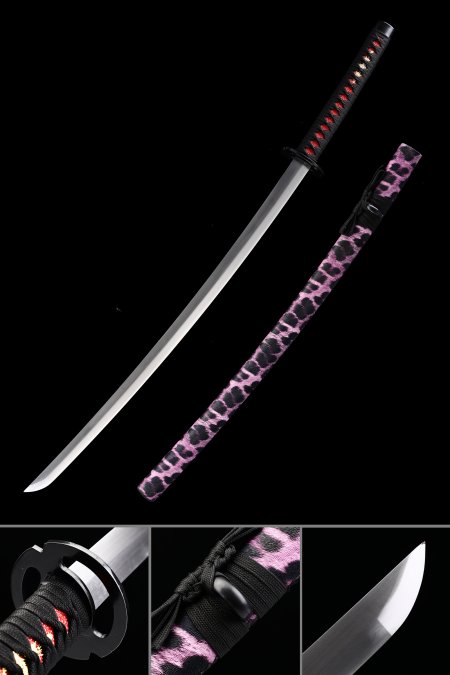
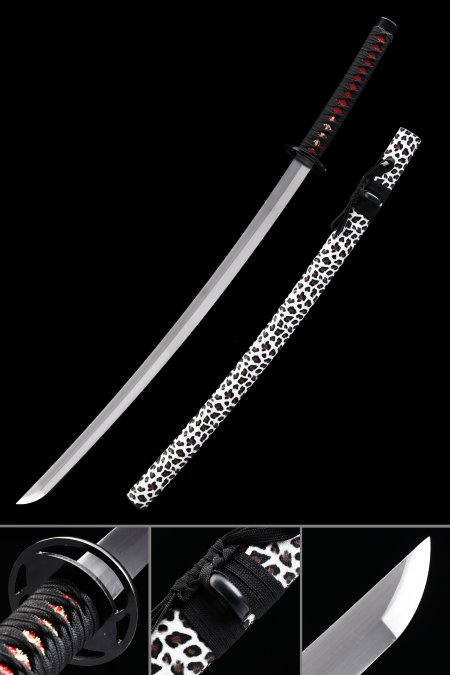
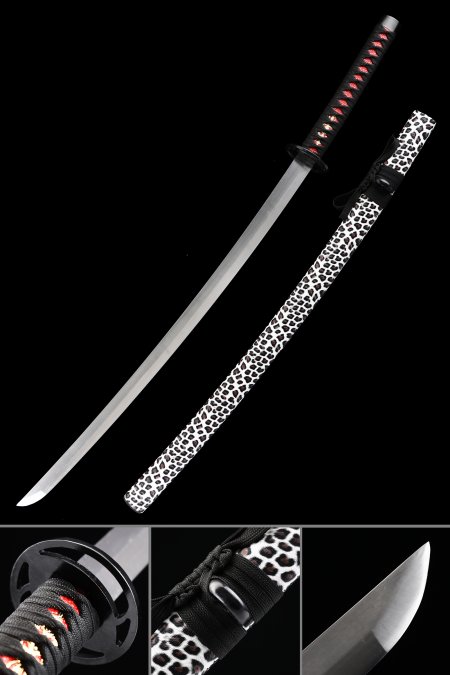
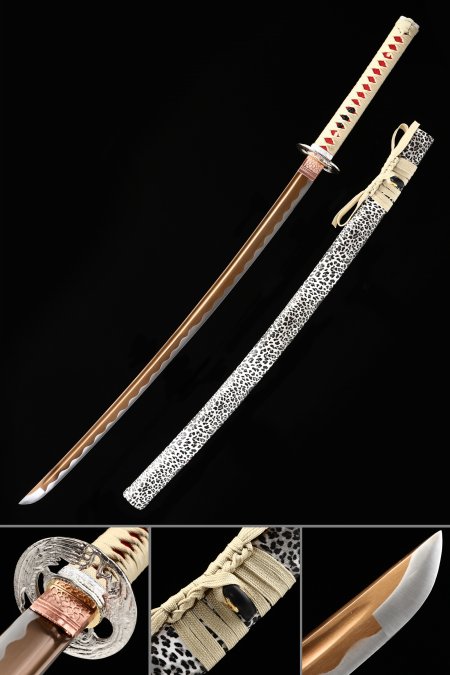
The saya design varies in both material and colorway depending on the specific model. Several pieces feature a lacquered wood saya with a leopard print surface treatment applied under a protective coat, available in black-dominant or red-and-black contrast schemes. One model uses a genuine rayskin-wrapped saya finished with a leopard-patterned outer layer, adding tactile texture that distinguishes it from purely printed surfaces. A separate variant uses PU leather in a pink leopard colorway, which appeals to collectors looking for a softer, more contemporary aesthetic. Each saya is fitted with a matching koiguchi and kojiri, keeping the overall presentation cohesive from tip to mouth regardless of which finish is chosen.
How does 1060 steel compare to 1090 or T10 for collectors?
The three steels represent different points on the same carbon steel continuum. 1060 offers a forgiving combination of toughness and surface hardness, making it well-suited to display pieces where visual consistency and structural reliability are the priorities. 1090, with higher carbon content, achieves greater hardness and edge sharpness potential but can be slightly more demanding to maintain, as higher-carbon surfaces are more reactive to humidity. T10 tool steel introduces silicon and trace elements that refine the grain structure, producing a denser, more wear-resistant blade surface and allowing for differential hardening techniques like hamon formation. For a collector focused on the visual drama of a leopard-patterned saya and bold fittings, 1060 is a natural match — it performs its role without requiring the additional maintenance attention that higher-carbon steels demand.
How should I care for the blade to keep it display-ready?
Carbon steel requires proactive but straightforward care to stay in excellent display condition. Begin by wiping the blade clean with a soft, lint-free cloth after any handling, as skin oils accelerate surface oxidation on 1060 steel. Every two to three months — or more frequently in coastal or high-humidity environments — apply a very thin, even coat of mineral oil or choji oil using a clean cloth or dedicated nugui-gami paper. Avoid over-oiling, as excess oil can attract dust and pool near the habaki. When placing the katana in its saya for storage, insert it edge-up to follow traditional storage convention and reduce contact pressure on the blade's flat. Keep the piece away from direct heating vents or air conditioning outflow, both of which can cause the wood saya to dry out and the lacquer to crack at the seams.
Is this collection a good gift option for someone new to Japanese swords?
It is an excellent entry point precisely because the visual impact is immediate and the conversation it starts does not require advanced collector knowledge to appreciate. The leopard saya is bold enough to work as standalone wall art, while the 1060 carbon steel blade and traditional fitting layout — genuine tsuba, wrapped tsuka, full-tang construction — give a knowledgeable recipient something substantive to recognize and respect. For a first gift in this category, the contrast-wrap models in black and red are the most universally appealing, while the gold-blade dragon tsuba variant suits someone with a taste for more ornate display aesthetics. Each piece arrives ready for immediate display, requiring no additional setup or assembly, which removes a common barrier for recipients who are new to the hobby.