Cloud Saya Ninjato
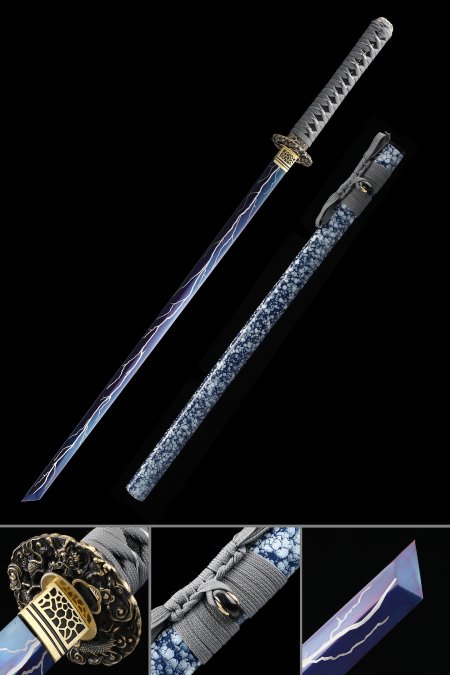
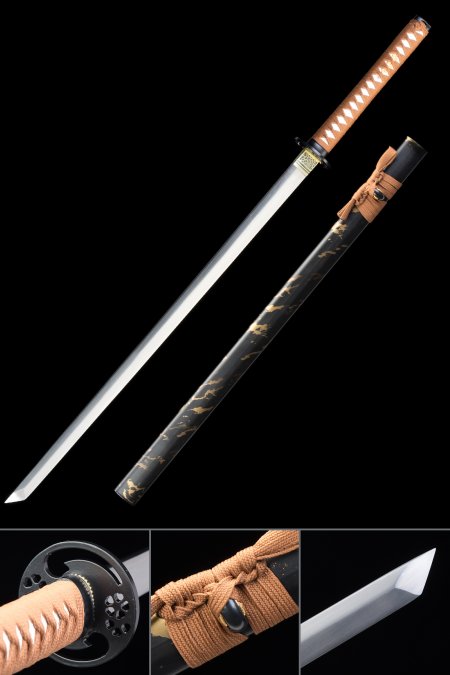
The Cloud Saya Ninjato collection brings together straight-bladed Japanese swords finished with hand-lacquered cloud-pattern sheaths — a visual tradition rooted in classical Japanese aesthetics. Each piece is crafted with full-tang construction and finished with tightly wrapped cord handles, making them substantial display centerpieces for the serious collector. Every order ships free with hassle-free returns, so adding to your collection is always risk-free.
Related Collections
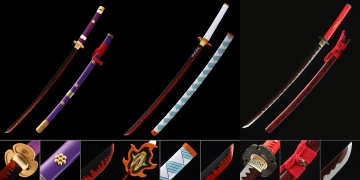
Flame Blade Katana29 items
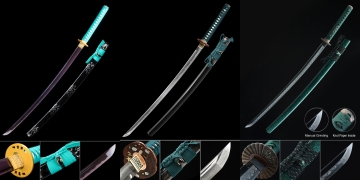
Teal Sageo Katana39 items
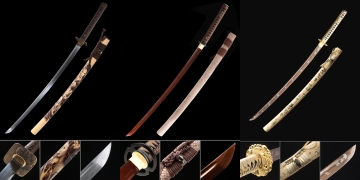
Beige Saya Katana32 items
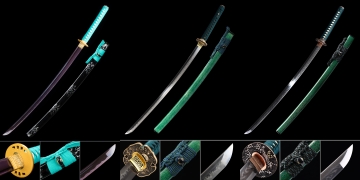
Teal Handle Katana37 items
Frequently Asked Questions
What makes a ninjato different from a katana?
The most fundamental difference is blade geometry. A katana features a pronounced curve along its length — a product of the differential hardening process used in traditional Japanese sword-making. A ninjato, by contrast, has a straight or near-straight blade, giving it a profile closer to the older chokuto form that predates the curved katana by several centuries. This straight geometry affects how the sword sits in its saya, how it looks mounted on a display stand, and how the overall silhouette reads at a distance. For collectors, the ninjato represents a distinct visual language — angular, direct, and architecturally clean — that contrasts meaningfully with the organic sweep of a katana blade.
What is a cloud saya, and how is the pattern made?
A cloud saya refers to a sword sheath finished with a layered lacquer design featuring cloud-motif patterning — known in Japanese visual tradition as kumo imagery. The pattern is typically built up through multiple lacquer applications, with each layer contributing depth and tonal variation. In higher-quality pieces, the cloud forms are rendered with enough detail that they shift slightly in appearance as the light angle changes, giving the saya a three-dimensional quality that flat paint finishes cannot replicate. On display, a well-executed cloud saya becomes a visual focal point in its own right, carrying as much artistic weight as the blade it houses.
How does 1060 carbon steel compare to manganese steel for display pieces?
Both steels are appropriate for display-grade collectibles, but they offer different visual and material characteristics. 1060 carbon steel has a medium-high carbon content that polishes to a clean, bright finish with a subtle surface grain that becomes more visually interesting over time — collectors who appreciate the natural character of carbon steel often prefer it for this reason. Manganese steel, by contrast, is an alloy with added manganese content that increases surface hardness and edge retention, and it tends to hold a sharper, more precisely defined edge geometry over the long term. If your priority is a blade that maintains its visual sharpness and profile under display conditions, manganese steel is a strong choice. If you prefer a blade surface that develops subtle patina and warmth over years, 1060 carbon steel rewards patient collecting.
How should I store and maintain a lacquered saya?
Lacquered sheaths are durable but benefit from consistent care. The primary threat is humidity fluctuation — dramatic swings between dry and moist environments can cause the lacquer to develop hairline cracks over time. Store your ninjato in a stable indoor environment, ideally between 45–60% relative humidity, away from direct sunlight which can fade the surface color and dry out the lacquer layer. Never use solvent-based cleaners on a lacquered saya; a soft, dry cloth is sufficient for routine dust removal. For the blade inside, apply a light coat of camellia oil or mineral oil every few months to prevent surface oxidation. When storing long-term, a sword bag or padded display case adds a physical buffer against accidental contact scratches.
Is a dragon tsuba a traditional fitting or a modern design choice?
Dragon imagery has deep roots in Japanese sword fittings, making a dragon tsuba both historically informed and aesthetically bold. In classical Japanese metalwork, dragon motifs appeared frequently on tsuba, fuchi, and kashira from the Edo period onward, often rendered in shakudo (copper-gold alloy) or iron with detailed relief carving. The dragon carried associations with power, water, and protection — themes that made it a popular commission choice for samurai-class sword owners. On a modern collectible ninjato, a dragon tsuba connects the piece to that visual tradition while adding sculptural detail at the point where the handle meets the blade. For display purposes, a well-cast dragon tsuba catches light from multiple angles and adds a strong focal point to an otherwise linear silhouette.
Customer Reviews
Josef Slany
, Canada
Good value for the price. I am impressed with the detail and quality of the sword.
Well done.
Thank you!
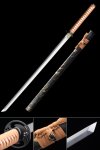 |
1060 Carbon Steel Chokuto Ninjato in Black-Gold Cloud Saya with Brown Cord Handle |