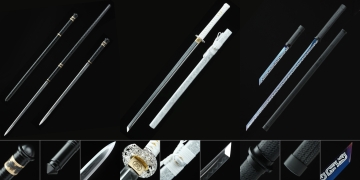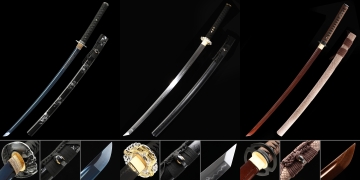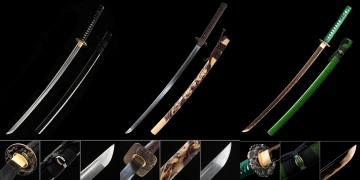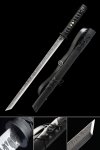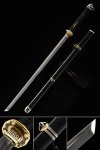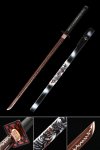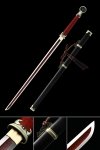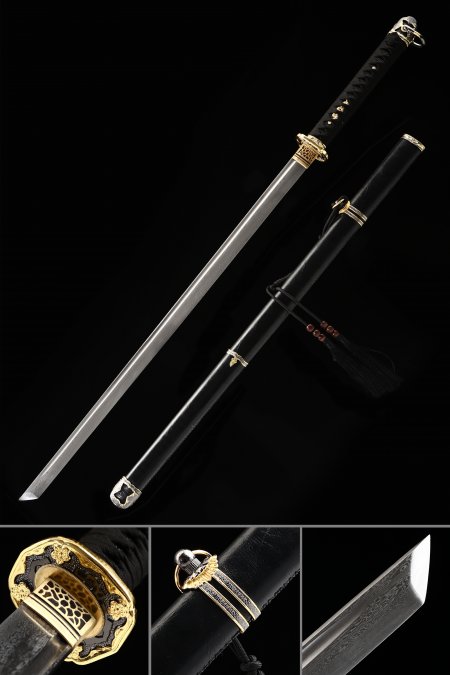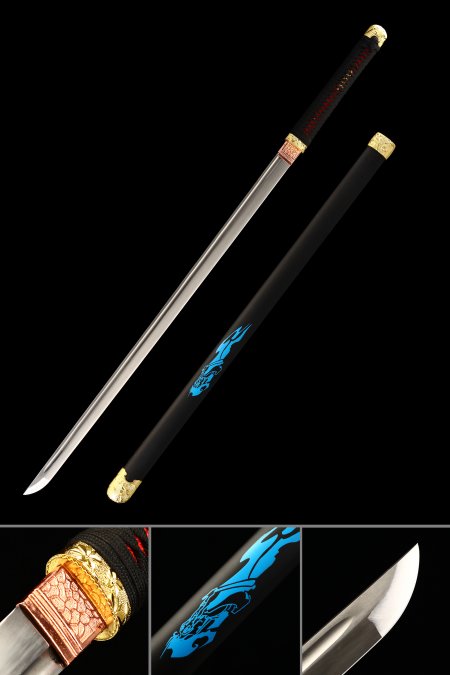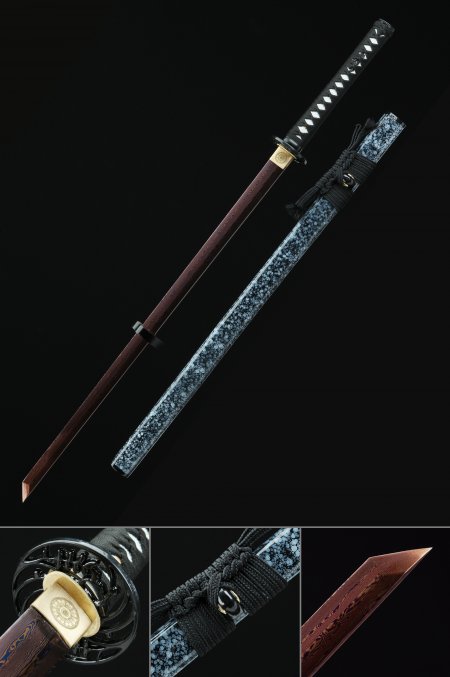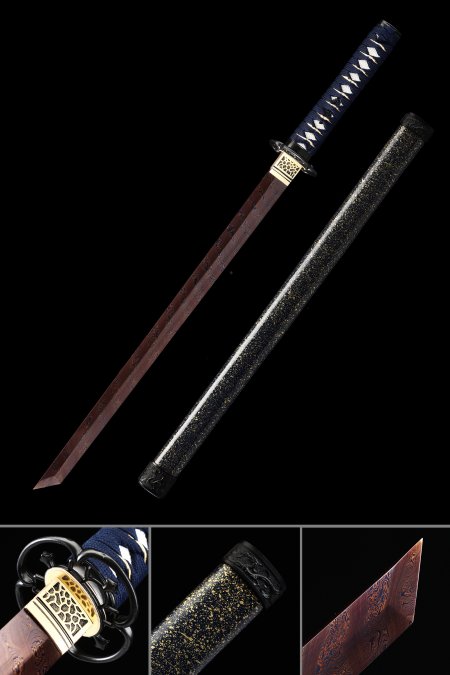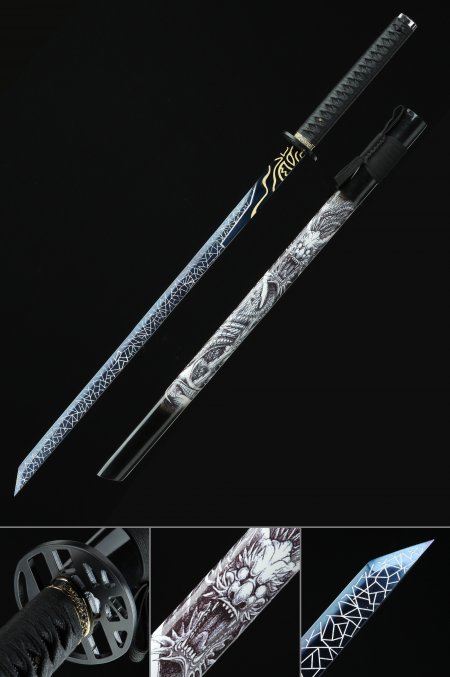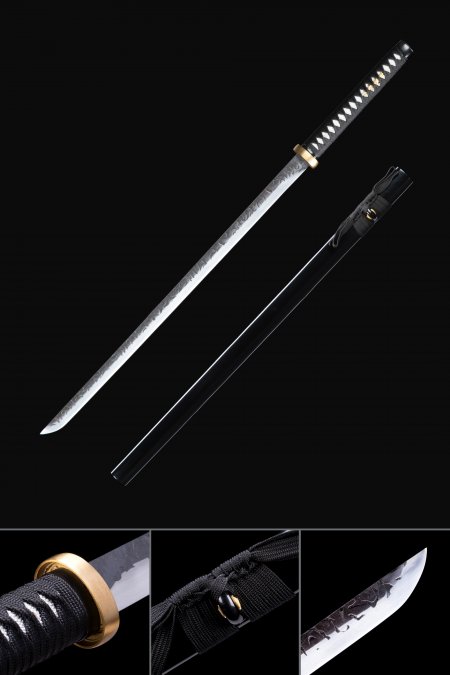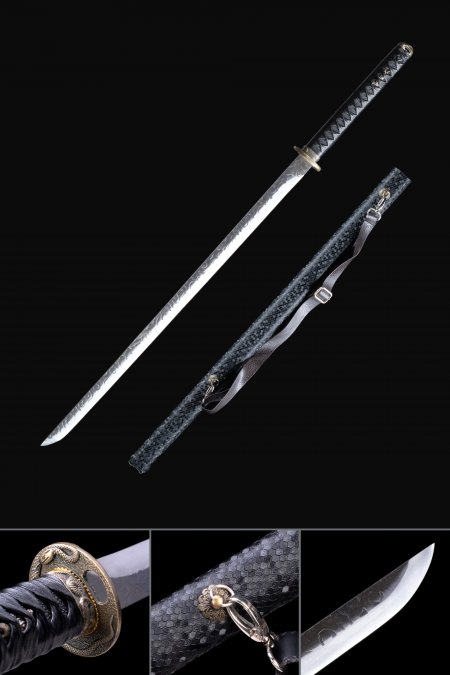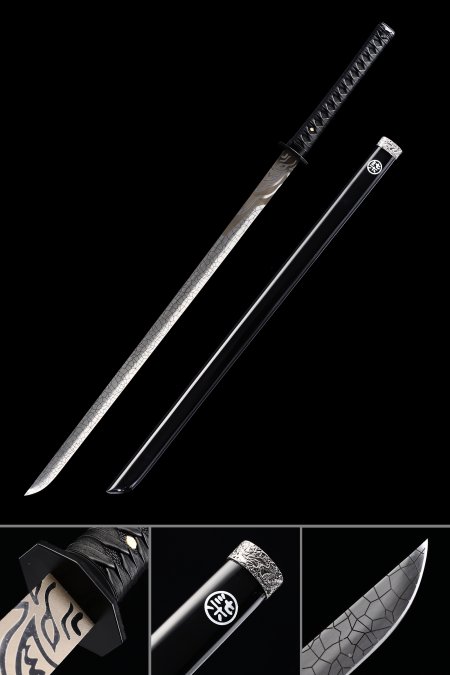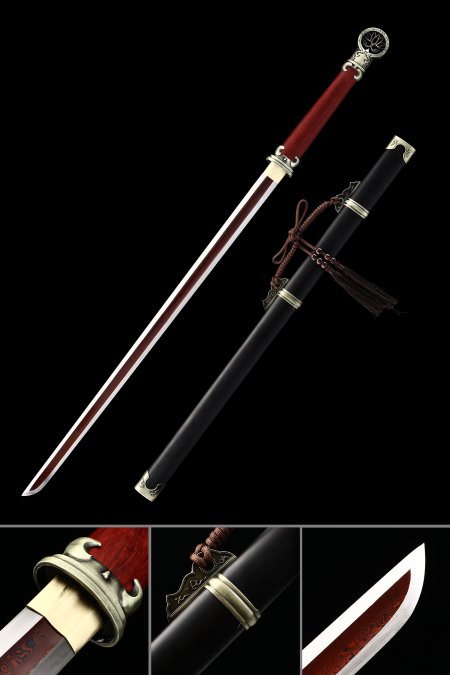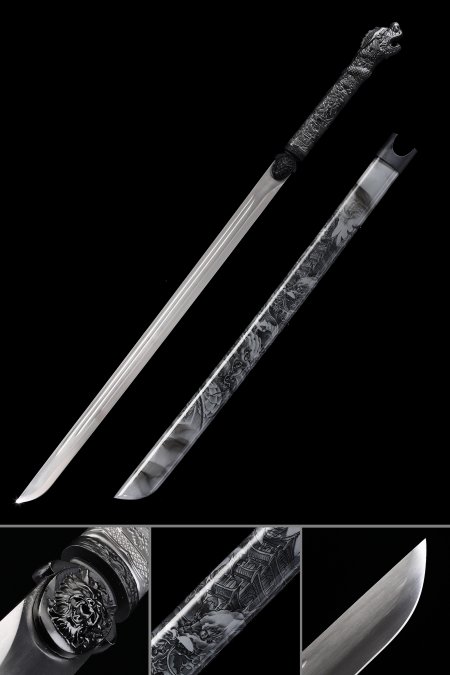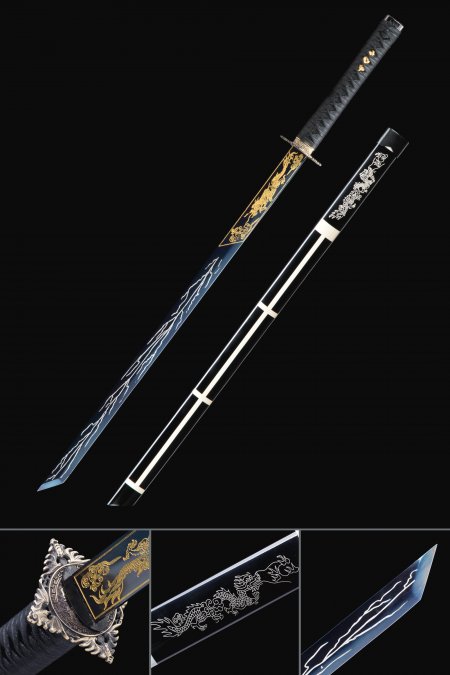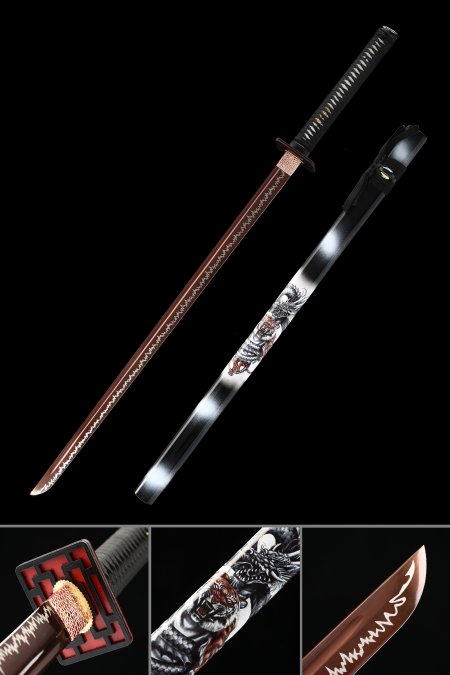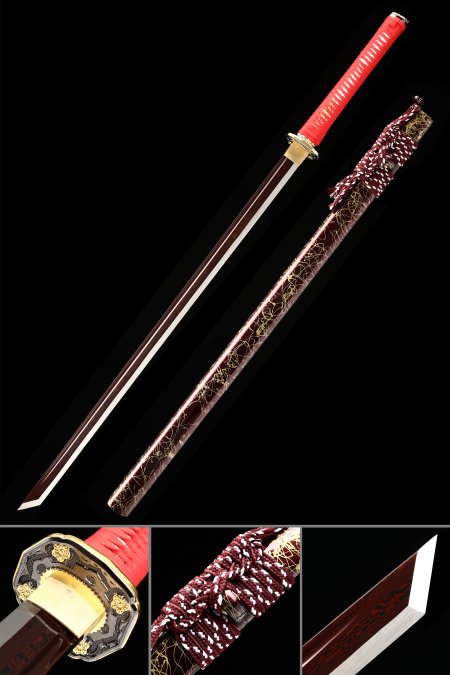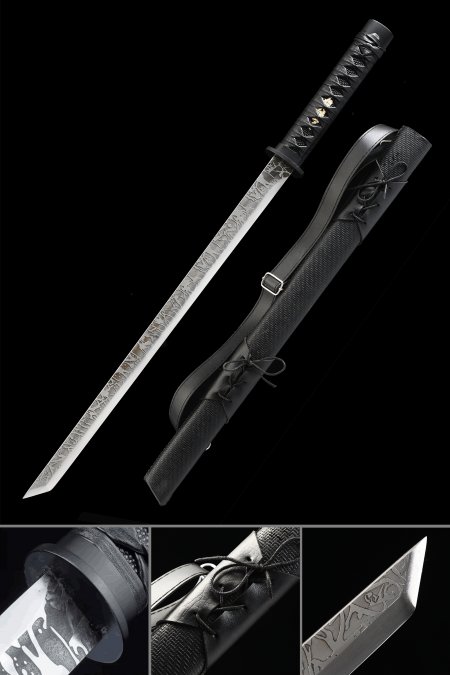
Dragon Blade Ninjato

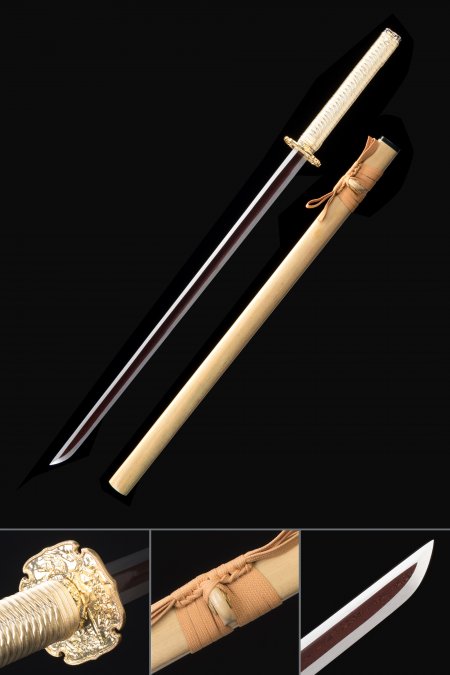
Dragon Blade Ninjato swords bring together the straight-edged silhouette of classical ninjato design and the visual drama of hand-engraved dragon motifs, folded Damascus patterns, and lacquered hardwood saya. Each piece is crafted from premium steels - including 1095 carbon, T10 clay-tempered, and layered Damascus - making them striking centerpieces for any serious collector's display. Free standard shipping is included on every order, backed by our hassle-free return policy.
Showing 15 Products

Frequently Asked Questions

What makes a ninjato different from a katana?
The most immediate distinction is blade geometry. A katana features a pronounced curvature - typically a sori of 1 to 2 centimeters - developed to optimize drawing speed and leverage during a sweeping cut. The ninjato, by contrast, has a straight or very slightly curved blade with a squared tip (kissaki), giving it a more compact, linear silhouette. Historically, the straight profile was associated with practicality and concealment rather than ceremony. For collectors, this means the ninjato reads very differently as a display piece: it projects a spare, architectural quality that pairs well with minimalist display environments, whereas the katana's curve carries a more classical martial elegance. Tsuba shapes also differ - ninjato fittings often feature square or unconventional guard forms rather than the round or oval tsuba common on katana mounts.
How is Damascus steel made, and why does it look that way?
Damascus steel in modern sword production is created through a process called pattern-welding, where two or more steel alloys - typically a high-carbon steel and a softer iron-rich steel - are stacked, heated, folded, and forge-welded together repeatedly. The alternating layers of differing carbon content etch at different rates when the blade is treated with acid, revealing the flowing, wave-like grain patterns collectors immediately recognize. Depending on how the smith manipulates the billet during forging - twisting, cutting, and re-welding the layers - patterns range from tight ladder formations to sweeping feather or raindrop motifs. Because the final surface pattern depends on manual manipulation, no two Damascus blades are identical, which is a significant part of their appeal as collectible display pieces. The layer count in production-grade Damascus typically ranges from 64 to over 300 folds.
What does clay-tempered mean on a T10 steel blade?
Clay tempering is a traditional Japanese heat-treatment technique in which a layer of refractory clay is applied to the spine of the blade before quenching, while the edge area is left exposed or covered with a thinner coating. When the blade is heated and plunged into water, the exposed edge cools rapidly and forms a harder martensitic structure, while the clay-insulated spine cools more slowly and remains comparatively tough and flexible. The boundary between these two zones produces the hamon - the visible temper line that runs along the length of the blade. On T10 steel, which has a naturally high carbon content and small tungsten additions for wear resistance, clay tempering produces a particularly crisp and active hamon with visible crystalline activity. For collectors, a genuine clay-tempered hamon is a mark of authentic craft process and significantly elevates a piece's display and documentary value compared to chemically etched imitations.
How should I care for an engraved dragon blade on display?
Dragon-engraved blades require slightly more attentive maintenance than plain-ground surfaces because the recessed engraving channels can accumulate dust and trap ambient humidity if left untreated. Every four to six weeks, apply a small amount of choji oil or food-grade mineral oil to a soft, lint-free cloth and work it gently along the blade surface, paying careful attention to engraved grooves where moisture tends to settle. Wipe away any excess to avoid oil pooling in the scabbard or on wooden mounts. Store the piece horizontally on a proper sword stand in a stable, low-humidity environment away from exterior walls and direct sunlight. UV exposure is particularly damaging to lacquered saya, causing the finish to fade and crack over time. Avoid touching the blade surface with bare hands, as skin oils accelerate oxidation - use cotton gloves when handling the piece during repositioning or inspection.
Is a dragon ninjato a good gift for a Japanese sword collector?
For a collector who appreciates decorative craftsmanship alongside technical quality, a dragon blade ninjato makes a distinctive and well-considered gift precisely because it occupies a design space that standard katana gifts do not. The straight-blade format is less commonly collected than the katana, making it a genuinely additive piece rather than a duplicate style. The dragon motif carries deep symbolic resonance in Japanese and broader East Asian cultural tradition - representing power, wisdom, and protection - which gives the piece layered meaning beyond pure aesthetics. When selecting a gift piece, prioritize steel specification (Damascus or clay-tempered T10 are strong choices for a discerning collector), fitting quality (look for engraved or sculpted tsuba rather than plain blanks), and saya finish (lacquered hardwood signals a higher tier of presentation). A mounted display stand included with the piece completes the gift presentation and signals thoughtful selection.

Customer Reviews

Ivonne Herrera New York, United States

I got this for my husband, and he was surprise and very amused. But loved it. The packing was great. I was a bit surprise that it was coming from China, nothing on the website said it was coming from there. Getting the sword out of the scabbard was difficult, until I figure out that it was covered in plastic. Nice way to protected, but also less chance of cutting yourself when taking it out. Overall good. I don't know much about quality, but unless you are real samurai and regularly goes on battle, this sword looks and feels great. The weight felt nice, my husband agreed also. He managed to wielded and move it around a bit and found the feel of it good for him. The price did not hurt either. I was expected to paid more for it.

Kokushibo Ninjato in Manganese Steel with Crackle Hamon, Black Lacquer Saya & Dragon Kojiri Kokushibo Ninjato in Manganese Steel with Crackle Hamon, Black Lacquer Saya & Dragon Kojiri