Crane Saya Katana
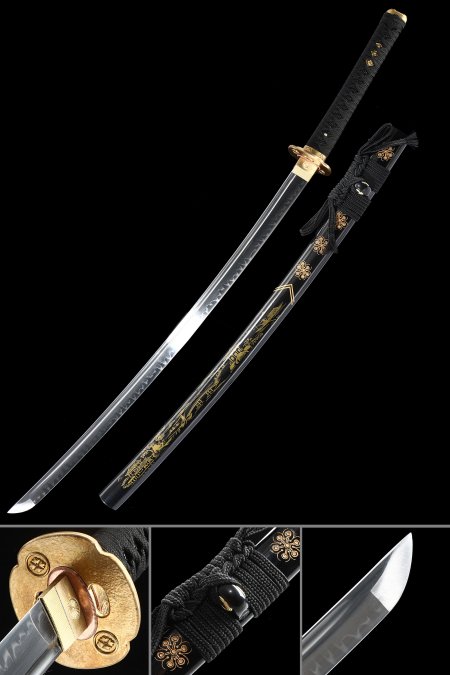
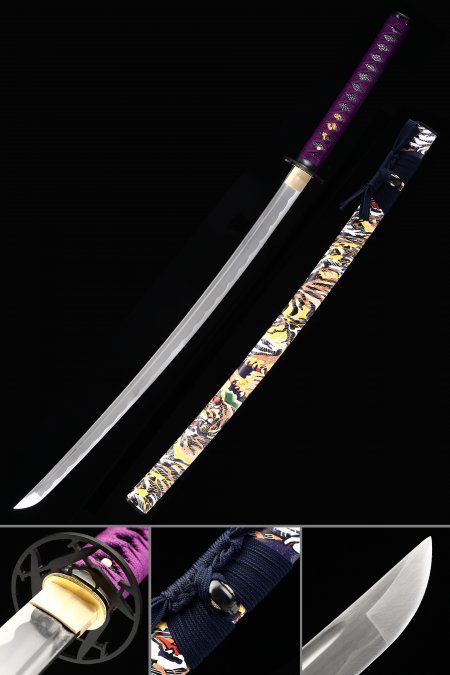
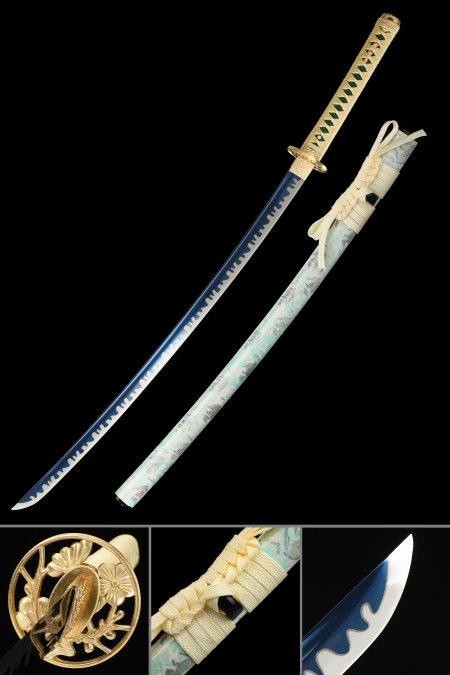
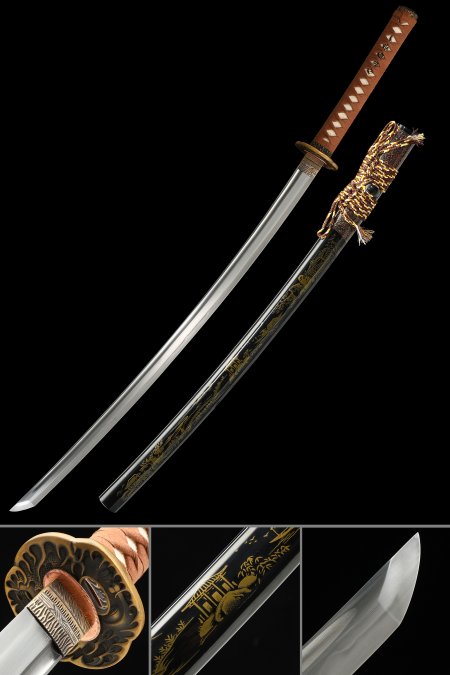
The Crane Saya Katana collection unites masterful lacquerwork with enduring symbolism, each scabbard hand-finished to showcase the crane motif revered in Japanese culture as an emblem of longevity and grace. From gold-lacquered hardwood to deep black finishes paired with chrysanthemum tsuba, every piece is crafted in carbon or manganese steel with full-tang construction and meticulous fittings designed for display and serious collectors alike. Enjoy free shipping on your order and hassle-free returns - bringing a museum-worthy piece home has never been easier.
Related Collections
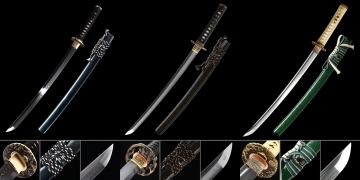
Dragon Tsuba Wakizashi24 items
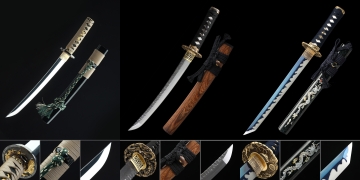
Dragon Tsuba Tanto26 items
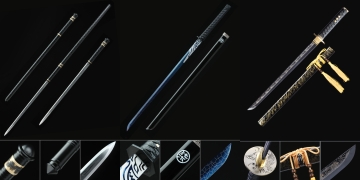
Wave Blade Ninjato19 items
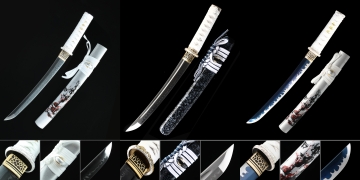
Geometric Tsuba Tanto22 items
Frequently Asked Questions
What makes crane saya katana different from standard lacquered scabbards?
Standard lacquered saya typically feature a single solid color applied to protect and seal the hardwood underneath. Crane saya katana go several steps further - the crane motif is either hand-painted, engraved, or printed onto the scabbard surface before final lacquer coats are applied, meaning the imagery is built into the finish rather than sitting on top of it. On higher-grade pieces, the crane detail may also extend to the tsuba, kojiri, or fuchi fittings, creating a unified decorative program across the entire mounting. This level of thematic cohesion between saya and koshirae is a defining trait of collectible-grade Japanese-style swords.
How does T10 steel differ from 1095 on these katana?
Both T10 and 1095 are high-carbon steels capable of holding a sharp edge and producing a visible hamon after differential tempering, but they differ in composition and resulting characteristics. T10 contains a small percentage of tungsten, which refines grain size and increases wear resistance, making the blade slightly harder at equivalent tempering temperatures. This often results in a more defined and active hamon line - the visual highlight most collectors focus on. 1095 is a purer high-carbon steel with excellent toughness and a well-documented tempering response, favored for its consistency. For display-focused collectors, T10 tends to offer more visual drama in the hamon; 1095 offers a cleaner, more classical aesthetic.
How should I store a lacquered saya katana to prevent damage?
Lacquered wood is sensitive to both humidity extremes and direct UV exposure. Store your crane saya katana horizontally on a proper katana stand in a climate-controlled space, ideally between 40-60% relative humidity. Avoid placing it near windows, heating vents, or air conditioning outlets, as rapid moisture fluctuations can cause lacquer to crack or lift. The blade itself should be lightly coated with choji oil every few months - apply with a soft cloth, wipe off the excess, and never let oil pool near the habaki where it can seep into the tsuka. Keep the saya on when the piece is on display to protect both the blade and the scabbard's interior from dust and contact damage.
Is a crane saya katana a good option as a collector's gift?
Yes - pieces in this collection work particularly well as gifts because the crane motif carries universally recognized cultural meaning without requiring the recipient to have deep knowledge of Japanese sword fittings. The crane symbolizes longevity, good fortune, and elegance across East Asian traditions, making these katana appropriate for milestone occasions. From a presentation standpoint, the combination of a lacquered saya, decorated tsuba, and wrapped tsuka creates immediate visual impact when the piece is unboxed or displayed. Full-tang construction and carbon steel blades also signal genuine craft to anyone familiar with collectible swords, elevating the gift beyond a decorative novelty.
What does full-tang construction mean for a display katana?
Full-tang means the steel of the blade extends the entire length of the handle, secured within the tsuka by a mekugi peg through the tsuka-gashira (pommel end). In contrast, a partial or rat-tail tang is welded or threaded and does not carry structural continuity through the handle. For display purposes, full-tang construction matters because it ensures the katana maintains correct weight distribution - the balance point falls naturally near the habaki - which is essential for authentic handling feel during inspection or repositioning on a stand. Collectors who understand construction details consistently prefer full-tang pieces because they represent the same assembly method used in traditionally made Japanese swords.