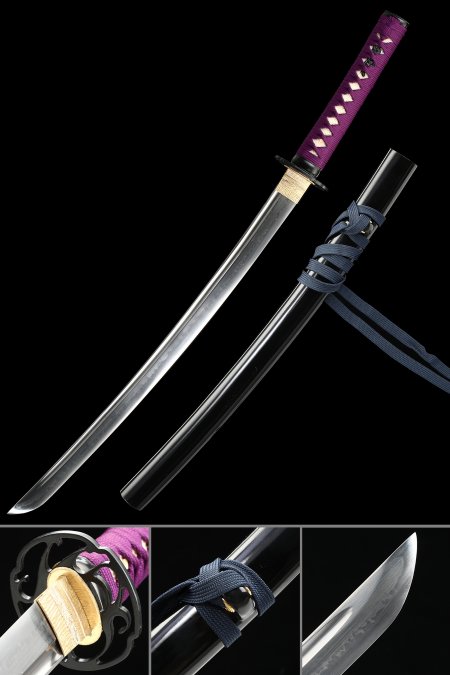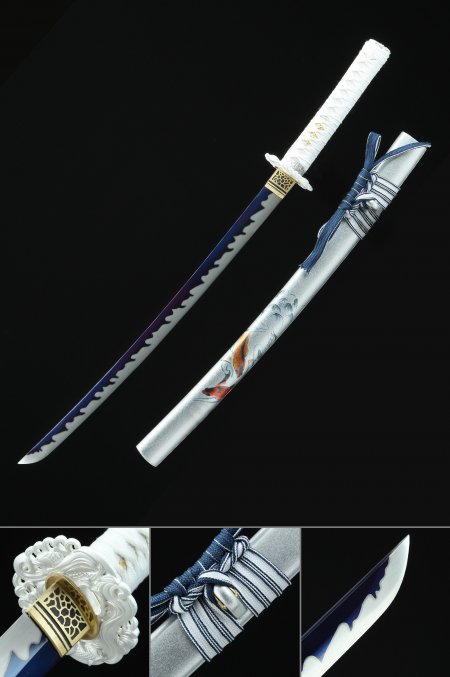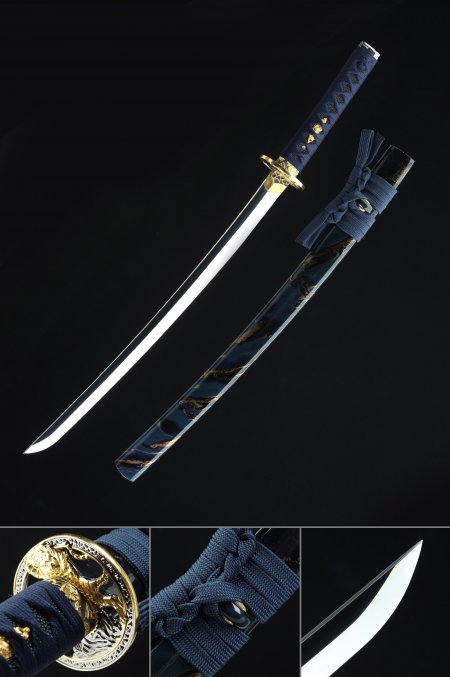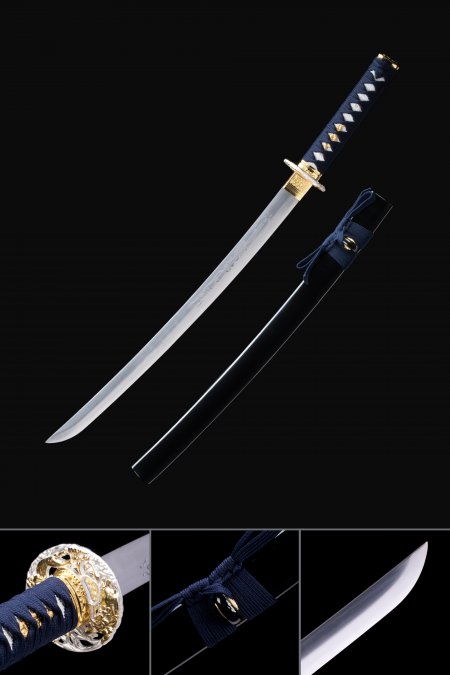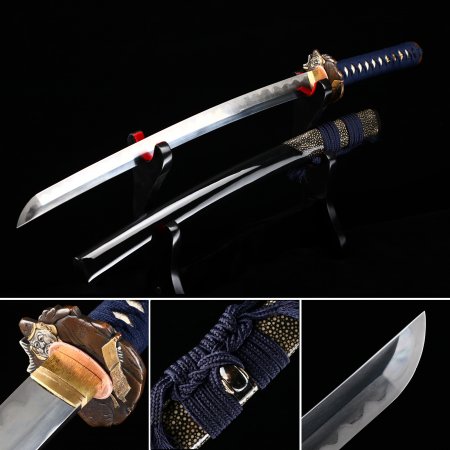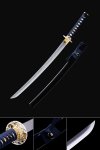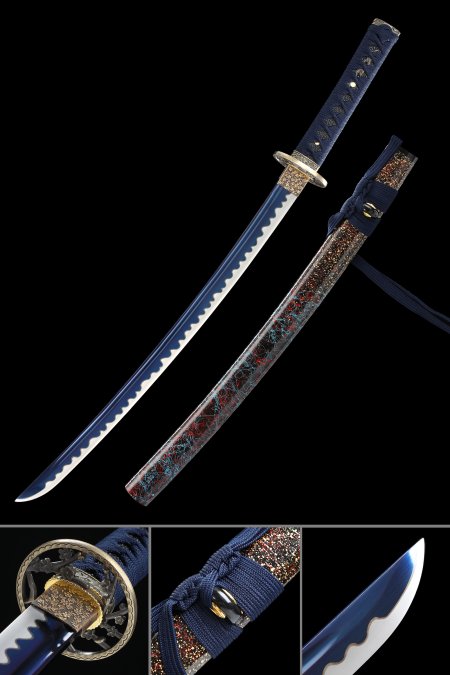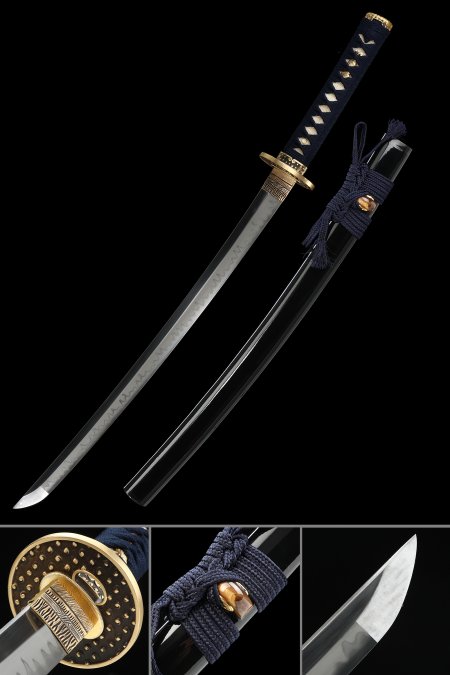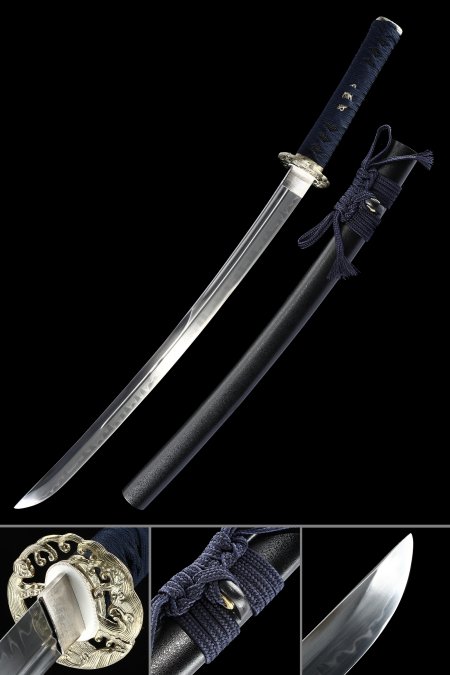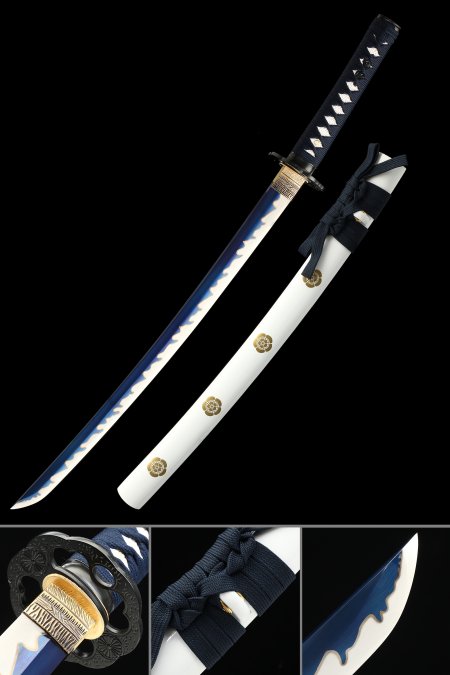
Dark Blue Sageo Wakizashi

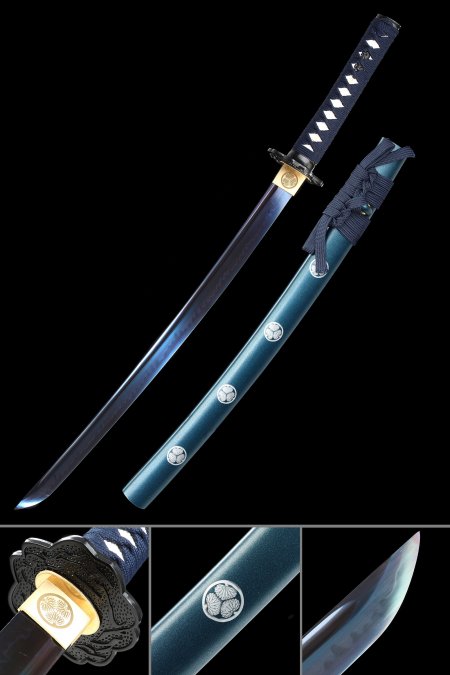
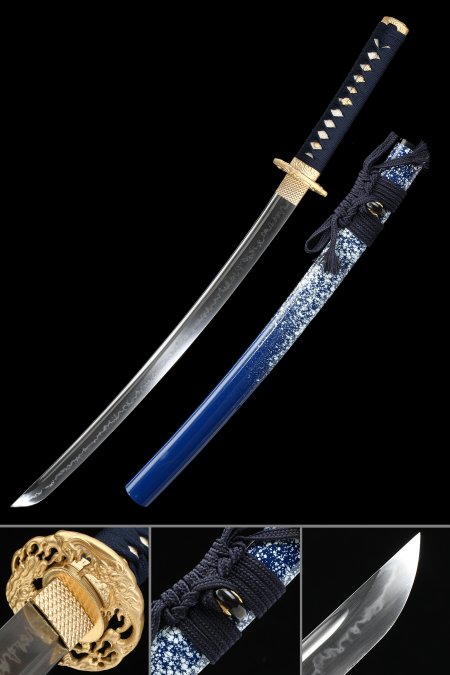
Dark blue sageo lends every wakizashi in this collection a quiet, commanding presence - the deep indigo cord completing each mounting with considered artistry. Crafted from high-carbon steels including T10, 1095, and Damascus, these short-sword collectibles feature real hamon activity, hand-wrapped ito, and lacquered hardwood saya that reflect authentic Japanese koshirae tradition. Each piece is built for display and appreciation, not use. Enjoy free shipping on your order, plus hassle-free returns for complete peace of mind.
Showing 11 Products

Frequently Asked Questions

What does the sageo cord do on a wakizashi?
The sageo is the braided or woven cord attached to the kurikata - a small knob on the saya - and in traditional Japanese sword culture it served to secure the scabbard to the obi, or sash. On a collectible wakizashi today, the sageo carries significant aesthetic weight. Its color is typically chosen to harmonize with the ito hand-wrapping on the tsuka, creating visual continuity between the handle and scabbard. A dark blue sageo, for example, reads as a cohesive design choice when paired with matching or complementary ito, rather than a purely functional afterthought. For display purposes, the sageo is often left loosely draped alongside the saya to show the full mounting in its traditional context.
How does T10 steel differ from 1095 in a wakizashi blade?
Both T10 and 1095 are high-carbon steels well-suited to traditional forging methods, but they differ in composition in one important way. T10 contains a small percentage of tungsten, which improves wear resistance and helps the blade retain its edge geometry over time. 1095 is a simpler high-carbon alloy with no tungsten, making it slightly more reactive to the clay-tempering process and often producing a more dramatic, clearly defined hamon line. In practice, both steels can be clay-tempered to produce real hamon activity. T10 is generally regarded as a step up in refinement for collectors who value longevity and tighter grain structure, while 1095 remains a respected choice for those who prioritize the visual character of the temper line.
What is a real hamon, and how can I identify one?
A real hamon is a temper line created through differential clay tempering - a process where clay is applied along the spine of the blade before quenching, causing the edge and spine to cool at different rates. The edge becomes harder and takes on a martensitic crystalline structure, while the spine remains tougher and more flexible. Visually, an authentic hamon appears as a misty, irregular line running along the lower portion of the blade, often featuring activity patterns such as nie (fine crystalline sparkle) or nioi (a softer cloudy band). A printed or acid-etched hamon, by contrast, looks uniform and lacks depth when examined under direct light. To identify a real hamon, hold the blade at a low angle under a single light source and look for three-dimensional texture and variation along the temper line.
How should I store a wakizashi to preserve the blade and fittings?
For long-term display and storage, a few consistent practices make a significant difference. The blade should be lightly coated with a thin layer of choji oil or a dedicated blade oil before storage, which protects the high-carbon steel from humidity-driven oxidation. Avoid touching the blade surface directly - skin oils are mildly acidic and can leave fingerprints that develop into rust spots over time. Store the wakizashi horizontally or on a dedicated sword stand with the edge facing upward, as this is the traditional resting position and reduces uneven pressure on the saya. Keep the piece away from direct sunlight to prevent fading of the ito, sageo, and lacquer finish. In high-humidity environments, a silica gel packet placed near the storage area helps maintain stable moisture levels.
Is a dark blue koshirae wakizashi a good display pair for a katana?
Pairing a wakizashi with a katana in a matching or complementary koshirae is one of the most traditional display arrangements in Japanese sword collecting. Historically, a daisho - a matched set of katana and wakizashi - used identical or closely coordinated fittings to signal the owner's rank and aesthetic sensibility. For modern display, a dark blue sageo wakizashi pairs especially well with a katana that shares the same ito color, tsuba metal tone, or saya finish. Matching the ito and sageo color across both blades creates visual unity even when the saya designs differ. If you are building a display around a specific color theme, choosing a katana with dark blue ito or a similarly toned lacquer saya will produce a cohesive presentation that reflects the traditional daisho concept.

Customer Reviews

Lambert Serge Hainaut, Belgium

Bonjour , pour toute l'équipe de TRUE KATANA . J'ai acheté chez vous 11 Katanas , pour ma collection . Les katanas ,wakizashi , et Tanto que je vous ai acheté , sont de très belles finitions . Cependant ,la SAYA en bois noir de mon wakizashi , étais fendue en deux endroits avec l'entrée trop étroite , pour introduction de l' HABAKY du sabre . Je l'ai fait recollé par un spécialiste sur bois . J'ai aussi dans le passé , perdu deux sabres , qui se sont égaré dans le transport vers mon domicile . Je me permet ces informations ,à votre demande ,afin d'améliorer le suivis , et la qualité de vos commandes . En bon client , je vous souhaite à toute l'équipe une bonne journée .
T10 Carbon Steel Wakizashi with Black Lacquer Saya - Dark Blue Cord Handle, Gold Scroll Tsuba T10 Carbon Steel Wakizashi with Black Lacquer Saya - Dark Blue Cord Handle, Gold Scroll Tsuba