What materials are typically used to cast a demon tsuba?
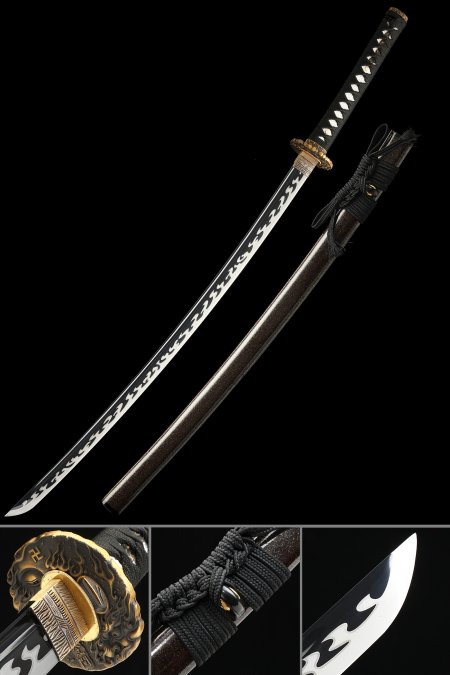
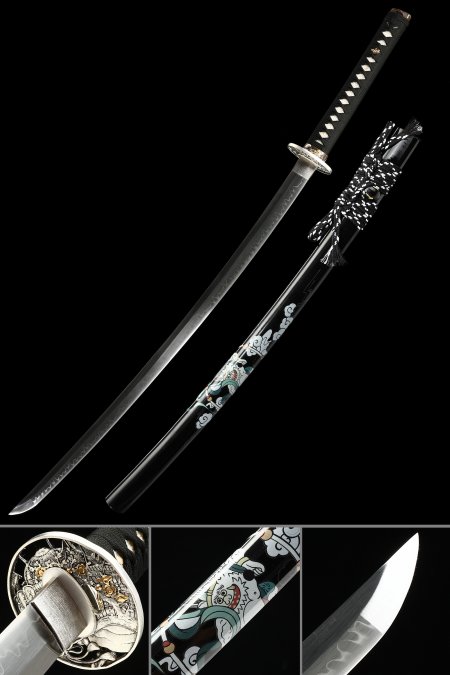
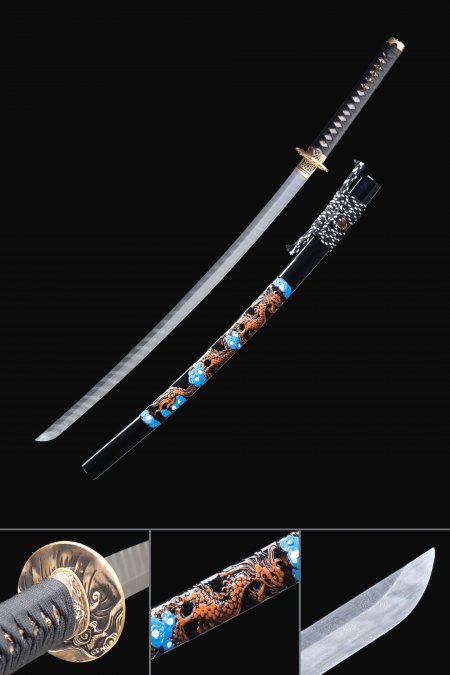
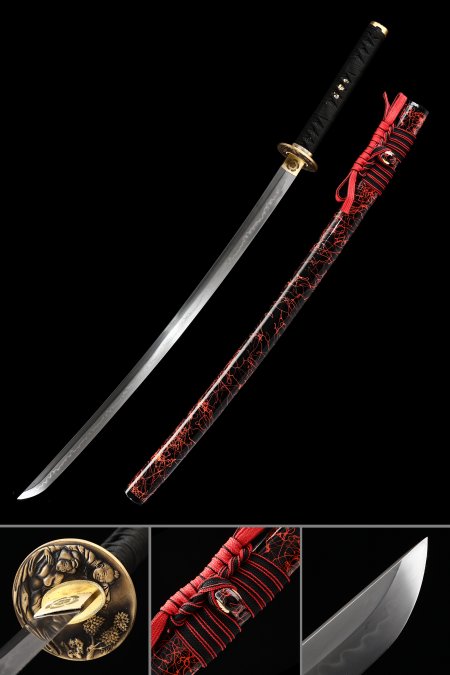
Demon tsuba are most commonly cast or forged from iron, brass, or zinc-alloy metals, then finished through polishing, patination, or plating. Iron guards develop a natural dark oxide surface that suits subdued, traditional mountings. Brass and gold-tone alloys are chosen when the collector wants the guard to command visual attention - the warm metallic sheen amplifies the expressive detail of the demon face and makes the piece read strongly against lacquered saya finishes. High-end examples may feature hand-chiseled relief work (a technique called nunome-zogan in traditional Japanese metalwork), though most collectible-grade demon tsuba achieve their detail through precision casting followed by hand finishing. The weight and surface texture of the tsuba are worth examining closely: a heavier, cooler-to-the-touch guard typically indicates a denser alloy with better long-term finish stability than lightweight zinc castings.
How does T10 steel differ from 1095 in a display katana?
Both T10 and 1095 are high-carbon steels, but T10 contains a small amount of silicon and trace tungsten that improve wear resistance and allow the steel to hold a finer grain structure after heat treatment. When clay-tempered and quenched, T10 reliably produces a well-defined, bright hamon - the temper line collectors look for as evidence of authentic differential hardening. 1095 is a simpler, more forgiving composition: it responds consistently to heat treatment across a wider range of shop conditions, making it a strong choice for smiths who want predictable results and a clean, classic geometry. For display purposes, the visual difference comes down to hamon character - T10 hamon tend toward a tighter, more controlled nie pattern, while 1095 can produce broader, more dramatic activity. Neither steel requires any compromise in appearance, and both hold their surface finish well under standard display-case or wall-mount conditions.
Does the demon motif have historical roots in Japanese sword fittings?
Yes - oni and demon imagery has appeared on Japanese sword fittings since at least the Muromachi period (14th-16th centuries). Tsuba, fuchi-kashira sets, and menuki (handle ornaments) were understood as more than decorative elements; they carried symbolic weight for the samurai who commissioned them. Oni figures were believed to ward off misfortune and serve as protective spirits when invoked correctly, which made them appropriate subjects for the guard - the component positioned literally between the bearer and any threat. Museum collections in Japan and the West preserve iron tsuba with oni faces rendered in high-relief sukidashi carving, demonstrating that the motif is rooted in genuine historical practice rather than modern fantasy aesthetics. Contemporary demon tsuba collectibles draw on that visual vocabulary, making them an accessible entry point into the broader study of Japanese sword furniture iconography.
How should I store a lacquered saya long-term?
Lacquered saya are sensitive to two environmental factors: direct UV exposure and rapid humidity fluctuation. UV light causes lacquer pigments to fade and can make the finish brittle over time, so display cases with UV-filtering glass or wall positions away from direct sunlight are strongly preferred. Humidity swings - especially in climates where heated indoor air becomes very dry in winter - cause the wood beneath the lacquer to expand and contract, eventually lifting or cracking the finish at seams and along the koiguchi opening. Storing or displaying the saya in a room maintained between 40-60% relative humidity eliminates most of this risk. If the saya will be stored rather than displayed, wrapping it loosely in acid-free tissue inside a wooden or cardboard box (not airtight plastic) allows the wood to breathe while protecting the surface from dust and accidental contact.
Is a demon tsuba katana a good gift for a collector just starting out?
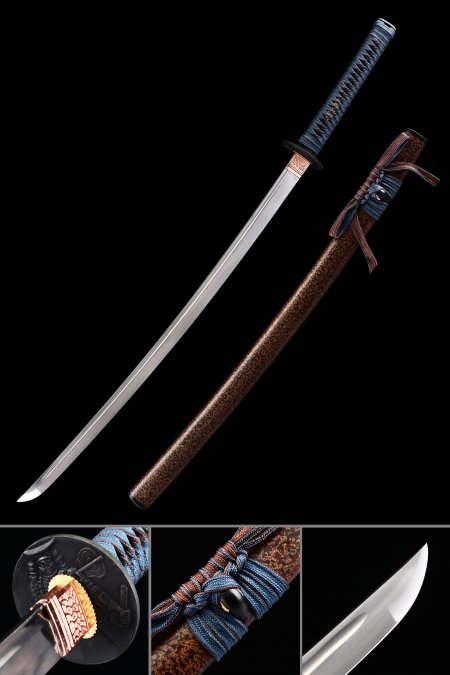
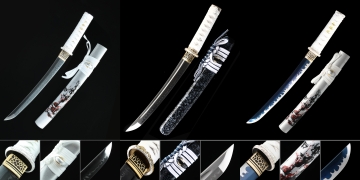
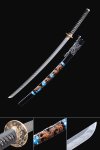
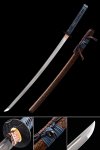
A demon tsuba katana makes an excellent introductory collectible because it delivers several layers of interest simultaneously: steel type and heat-treatment craft, traditional Japanese mounting conventions, and the iconographic history of oni imagery - all in a single piece. For someone new to Japanese sword collecting, the demon tsuba provides an immediate visual focus that makes the piece easy to appreciate before deeper knowledge develops, while the underlying construction details (hamon, ito wrap style, saya finish, tang length) give the collector something to study and learn from over time. Pairing the gift with a simple care kit - a cleaning cloth, a small bottle of choji or mineral oil, and a basic horizontal stand - ensures the new collector has everything needed to display and maintain the piece from day one. A katana with a distinctive saya finish, such as the vine-pattern or dragon-lacquer options available here, also photographs well for those who document their collections.