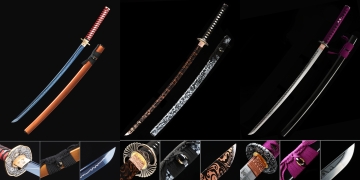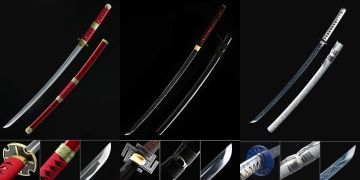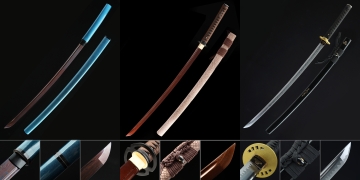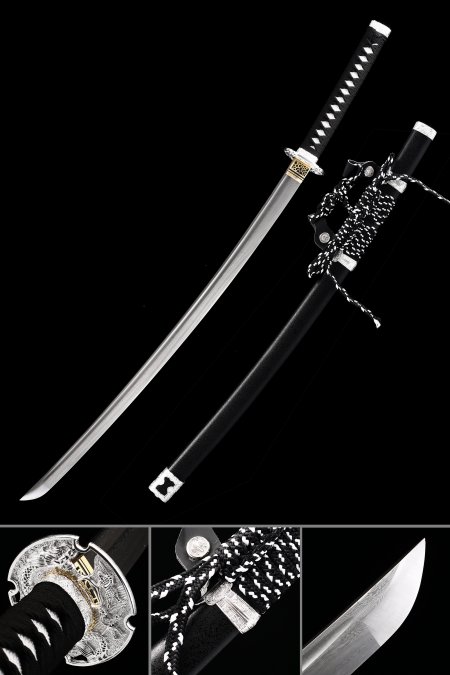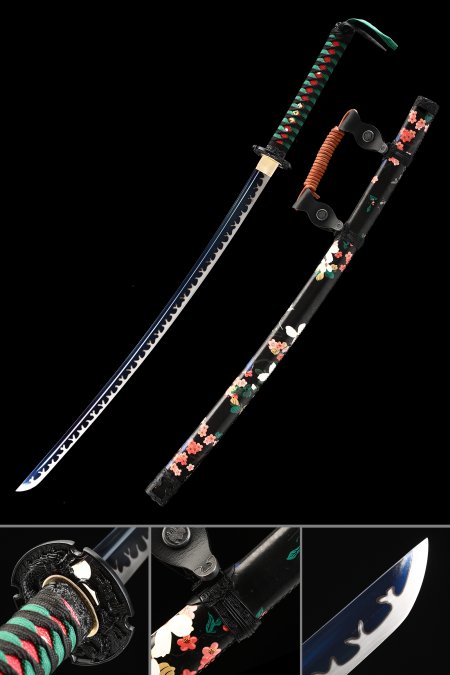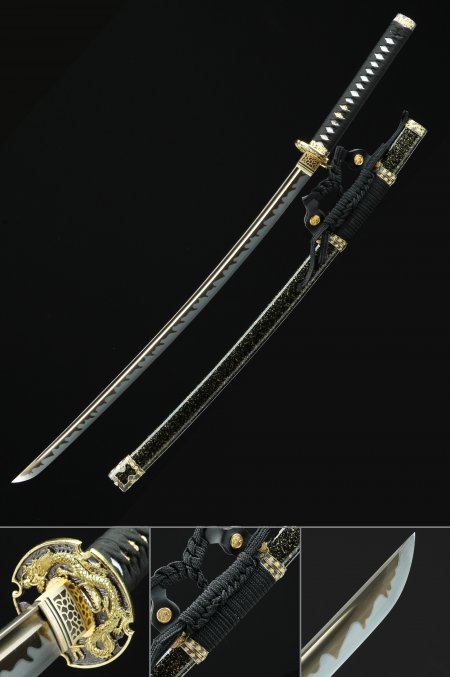
Dragon Tsuba Tachi

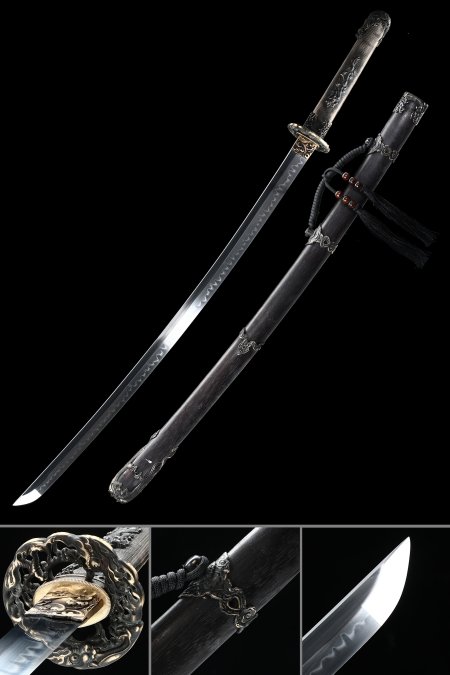
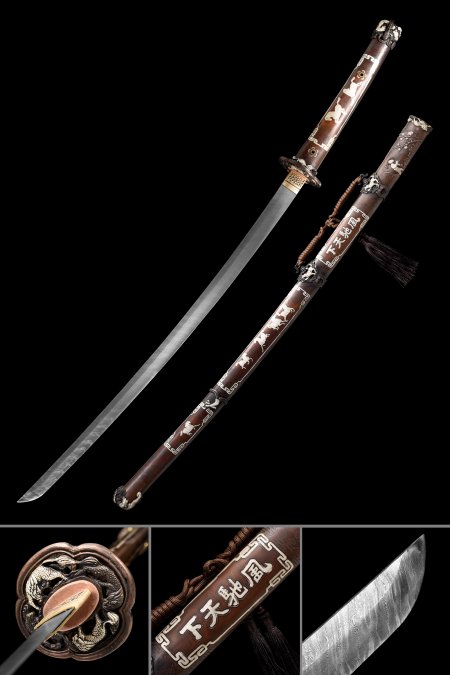
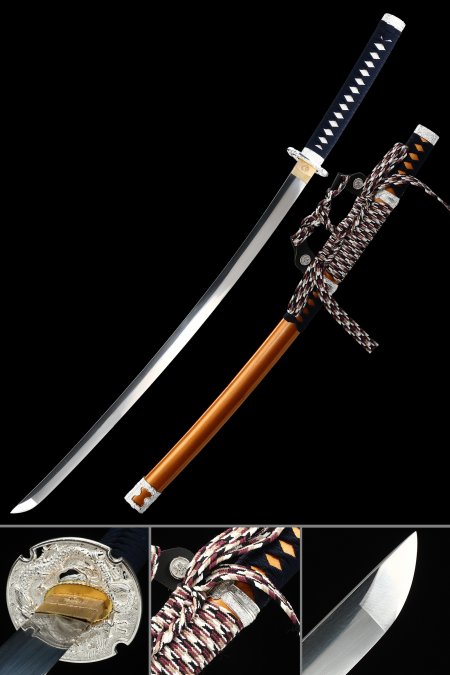
Dragon Tsuba Tachi swords bring together the sweeping elegance of classical Japanese tachi geometry and the bold artistry of hand-crafted dragon guard work. Each piece in this collection pairs high-quality steel blades — from Damascus to T10 carbon — with intricately detailed dragon tsuba, lacquered saya, and wrapped handles that reward close inspection. Free standard shipping is included on every order, and we stand behind each collectible with a no-hassle return policy.
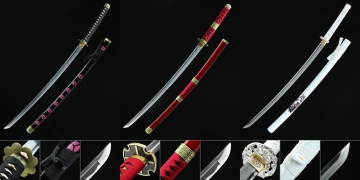
Showing 7 Products

Frequently Asked Questions

What makes a tachi different from a katana?
The tachi is longer than the katana — typically 70 cm or more in blade length — and carries a more pronounced curvature along its spine. Historically, it was worn suspended edge-downward from the belt, which is the reverse of how the katana is carried. This suspension style influenced the direction of the curve: a tachi curves away from the wearer when worn correctly, while a katana curves toward the hand for rapid drawing. For collectors, this means tachi pieces make a distinctly different visual statement on a horizontal display stand, with the sweeping arc of the blade reading as elegant and architecturally bold rather than compact and purposeful.
What does a dragon tsuba symbolize on a sword?
In East Asian iconography, the dragon represents power, wisdom, and auspicious protection — not destruction. Unlike Western dragons, the Japanese and Chinese dragon (ryū or lóng) is a divine creature associated with water, clouds, and imperial authority. On a tsuba, the dragon motif was historically chosen to confer these qualities symbolically on the wearer or the blade. Craftsmen rendered dragons in iron, brass, shakudo, and mixed-metal alloys using techniques like kebori (fine-line engraving), takazōgan (raised inlay), and sukashi (openwork cutout). For today's collector, a dragon tsuba is both an art object in its own right and a direct link to centuries of Japanese metalworking tradition.
How do T10 and Damascus steel blades compare for display?
T10 carbon steel is valued for its ability to develop a clearly defined hamon — the contrast line between the hardened edge and the softer spine — during differential clay tempering. This produces a blade with visible evidence of the heat-treatment process, which many collectors consider the most authentic aesthetic a Japanese-style blade can offer. Damascus steel, by contrast, displays its character through surface pattern: the folded and forge-welded layers reveal flowing banded or watered designs that are unique to each blade. Neither finish is "better" — they appeal to different collecting sensibilities. T10 rewards close examination of the hamon under focused light; Damascus makes an immediate visual impact from across a room.
How should I store and maintain a collectible tachi long-term?
Proper storage protects both the blade and the lacquered saya. Keep the sword horizontally on a dedicated stand in a climate-controlled space — avoid areas with high humidity fluctuations, which can cause lacquer to crack and carbon steel to develop surface oxidation. Apply a light coat of blade oil (choji oil or a food-grade mineral oil substitute) every few months and after handling, since fingerprints transfer moisture and skin acids to the steel. When wiping the blade, use a soft, lint-free cloth and move from the spine toward the edge rather than along the length, to avoid accidental nicks to the cloth or uneven pressure on the surface. Store the sword in its saya when not on display to protect the finish.
Are these tachi swords good choices as display gifts?
Dragon tsuba tachi pieces work particularly well as gifts for collectors interested in Japanese history, East Asian mythology, or decorative metalwork. The combination of an imposing blade length, a thematically coherent koshirae, and the universal recognizability of the dragon motif makes them immediately impressive even to recipients unfamiliar with sword collecting. For gifting, pieces with lacquered saya in high-contrast colors — deep black with chrome fittings, dark red hardwood with iron tsuba — tend to photograph and present especially well. If the recipient already collects katana, a tachi from a matching dragon koshirae family creates a meaningful and visually unified pairing for a two-sword wall or stand display.

Customer Reviews

Charles D Davidson Virginia, United States

Great product with very nice steel! Probaly should have gotten a less flashy model but this one is very pretty. Long shipping process with an added shipping request that I flatly refused to pay. Thought that might wreck the deal but it still came in. I will buy matching shorter versions at some point.

Damascus Steel Katana with Dragon Tsuba - Black Lacquer Saya, Black-White Ito Wrap Damascus Steel Katana with Dragon Tsuba - Black Lacquer Saya, Black-White Ito Wrap
Kyle Colorado, United States

I am very pleased with the quality and the price and I cannot wait to get my hands on one of the battle ready katanas. The only thing and it’s not even worth docking a star over is I would love at least the option to pay for a razor sharp polish on it. Also you guys should make some swords modeled after weapons of the SoulsBorne video game series and I will buy all of them. Black Blade Katana from Dark Souls 3 is a good place to start :)
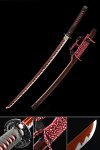
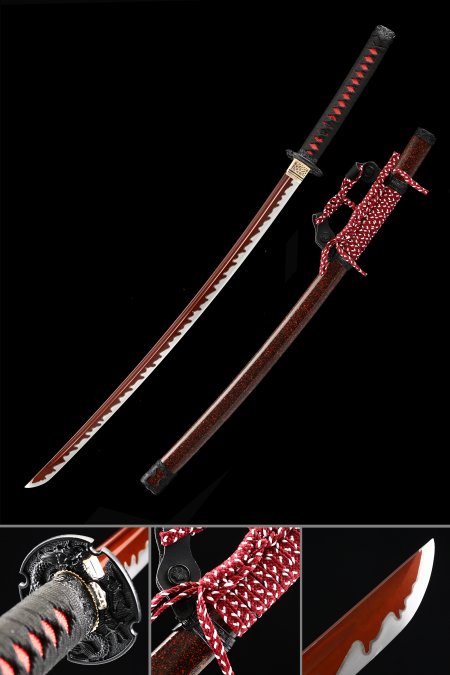
Manganese Steel Tachi Sword with Red Blade, Dragon Tsuba in Dark Red Hardwood Saya Manganese Steel Tachi Sword with Red Blade, Dragon Tsuba in Dark Red Hardwood Saya