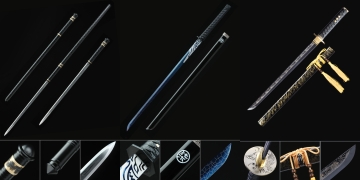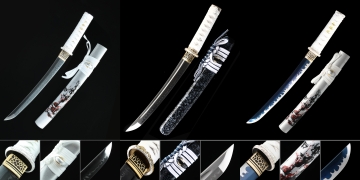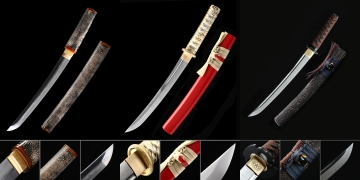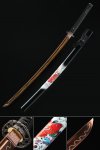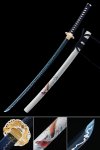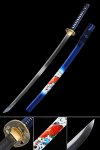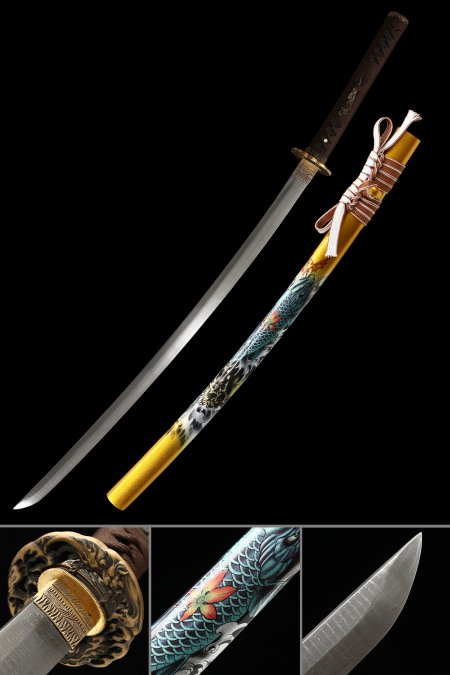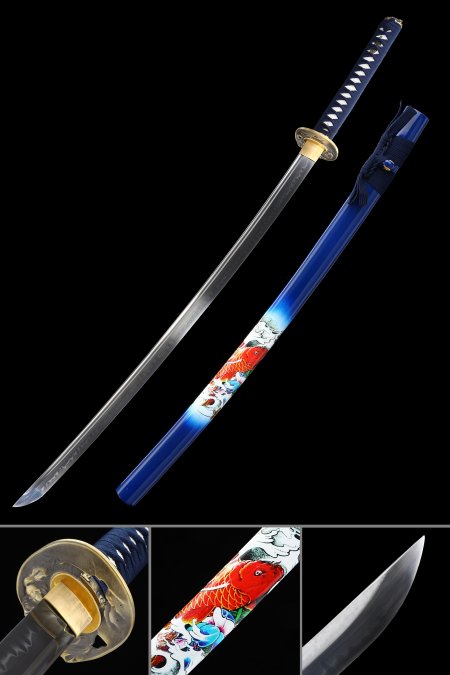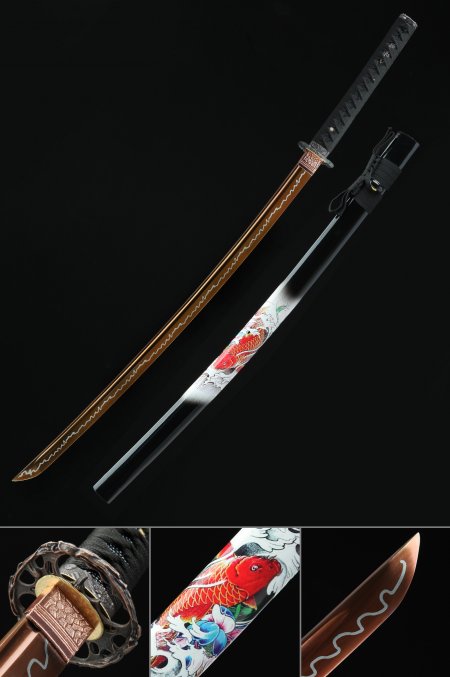
Koi Saya Katana

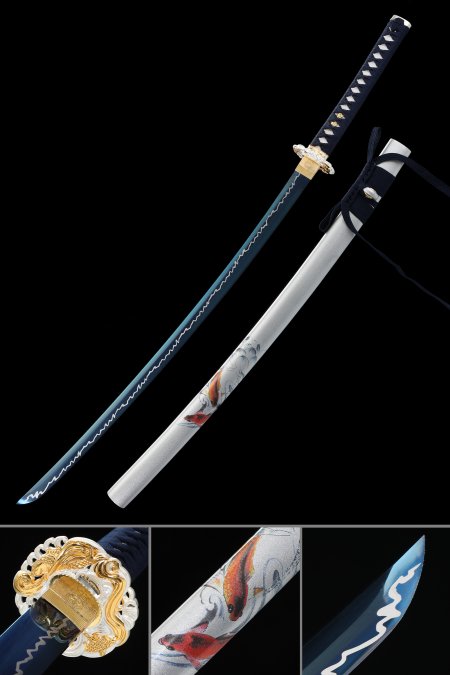
Koi Saya Katana blends traditional Japanese sword-making craftsmanship with hand-painted lacquerwork depicting the iconic koi carp — a symbol of perseverance, good fortune, and artistic elegance. Each piece features a full-tang blade forged from high-carbon or specialty steel, paired with a meticulously decorated scabbard that transforms the sword into a stunning display centerpiece. Free shipping and free returns on every order.
Showing 4 Products

Frequently Asked Questions

What makes koi saya katana different from standard katana?
The defining feature is the hand-painted lacquer scabbard depicting koi carp motifs — a level of decorative finish rarely seen on production swords. Standard katana scabbards are typically finished in a single matte or gloss lacquer coat without figurative artwork. Koi saya pieces go through additional artisan stages: base lacquer application, hand-painting of the koi design, and protective topcoat sealing. This process means the saya itself holds independent collectible value as a piece of decorative lacquerwork, separate from the blade. The blades in this collection are also full-tang construction, meaning the steel extends completely through the handle for structural integrity, a mark of quality that distinguishes them from decorative-only replicas with partial tangs.
How do 1095, T10, and Damascus steel compare in this collection?
Each steel type offers a distinct visual and structural character suited to different collector preferences. 1095 high-carbon steel is clay tempered, producing a visible hamon (temper line) along the blade and a classic differential hardness profile — hard edge, resilient spine. T10 steel adds a small tungsten content that sharpens wear resistance and produces a particularly vivid, activity-rich hamon with bright nie and nioi crystalline activity. Damascus steel is formed by folding and forge-welding multiple alloys, resulting in a flowing, woodgrain-like surface pattern that shifts visually with light — making it the most visually dynamic blade in the collection. For collectors focused on metallurgical detail, T10 offers the most refined hamon; for those drawn to surface artistry, Damascus steel creates a blade that mirrors the painted saya in its layered visual complexity.
What does the koi carp symbolize in Japanese sword culture?
The koi carp carries layered symbolism rooted in both Japanese and Chinese classical tradition. In Japanese culture, koi represent perseverance and the courage to overcome obstacles — drawn from the legend of a koi ascending a waterfall to transform into a dragon. This makes koi imagery a natural pairing for the katana, itself a cultural symbol of discipline and dedication. In decorative sword arts of the Edo period, lacquered saya frequently featured natural motifs — including fish, waves, and botanical forms — as expressions of the owner's aesthetic refinement. A koi saya katana therefore sits within a genuine historical tradition of blade and scabbard as unified artistic objects, rather than being a purely modern design concept.
How should I care for and store a koi saya katana display piece?
Proper storage protects both the lacquered saya and the steel blade. Store the katana horizontally on a dedicated katana stand, edge facing upward in the traditional Japanese manner, in a low-humidity environment — ideally between 40–55% relative humidity. Avoid direct sunlight, which can fade the hand-painted lacquer over time. For the blade, apply a thin coat of choji oil or high-grade mineral oil every three to six months using a soft cotton cloth to prevent surface oxidation. When handling, use clean cotton gloves to avoid transferring skin oils to the blade surface or lacquerwork. Never store the blade in the saya for extended periods without periodic inspection, as trapped moisture can affect both the steel and the lacquer lining.
Is a koi saya katana a good collector's gift choice?
It's one of the stronger gift options in Japanese sword collecting precisely because it works on multiple levels simultaneously. The koi symbolism carries universal positive associations — fortune, perseverance, and vitality — making it culturally resonant without requiring deep sword knowledge to appreciate. Visually, the hand-painted saya creates an immediate impression that appeals to people outside dedicated collector circles, so it displays well in living spaces and home offices, not only in dedicated display rooms. For someone being introduced to Japanese sword collecting, a koi saya katana offers an accessible entry point: the decorative element is immediately legible, while the full-tang blade construction and quality steel give experienced collectors something substantive to examine and appreciate.

Customer Reviews