What makes 1045 carbon steel a good choice for display katana?
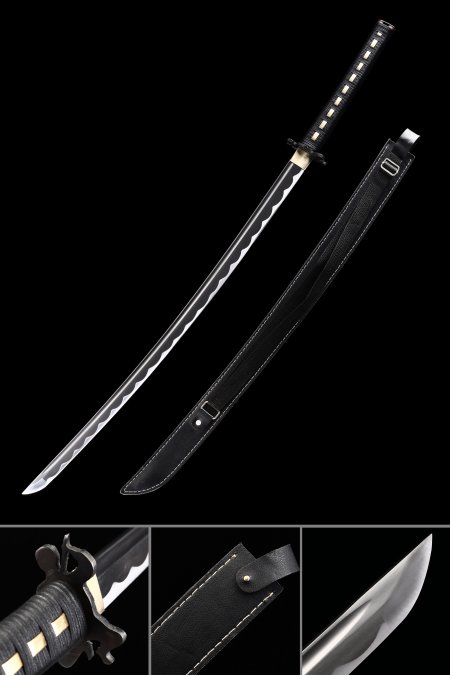
1045 carbon steel contains roughly 0.45% carbon, placing it in the medium-carbon range that balances workability with structural solidity. For display and collectible katana, this alloy is particularly well-suited because it responds well to differential heat treatment, producing a visible hamon - the temper line along the edge - that collectors recognize as a mark of traditional forging craft. It holds polish reliably, resists warping under normal display conditions, and does not require the intensive humidity management that higher-carbon steels like T10 or tamahagane demand. For collectors who prioritize visual impact and long-term stability over edge performance, 1045 is a practical and respected choice.
How is a leather saya different from a traditional wooden lacquered saya?
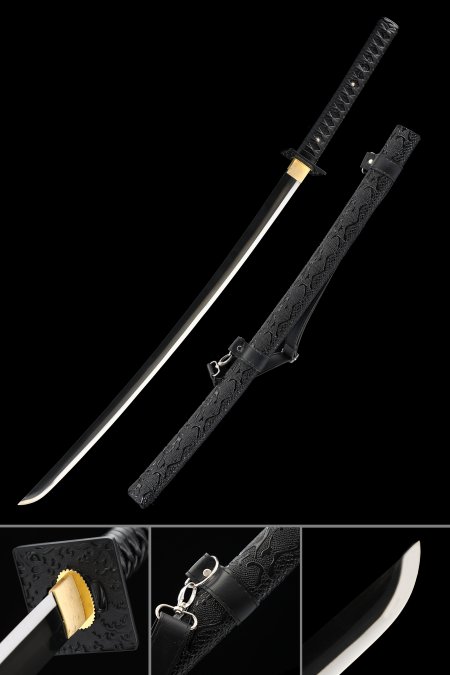
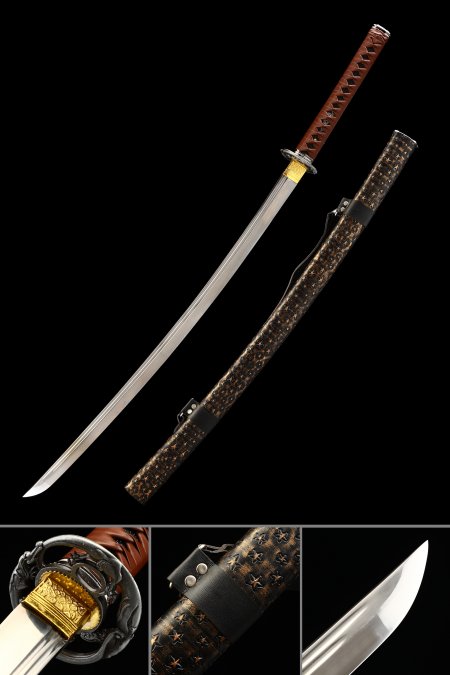
A traditional Japanese saya is carved from honoki wood and finished with layers of urushi lacquer, a process that produces an exceptionally smooth, hard shell. Leather saya, by contrast, wrap a shaped core - often wood or resin - in tanned hide that is then embossed, dyed, and sealed. The result is a surface with tactile depth and design flexibility that lacquer does not easily allow: dragons in relief, star patterns, and textural contrasts can be pressed directly into the leather. From a collector's perspective, leather saya represent a more contemporary or hybrid aesthetic approach, often seen in modern production pieces that aim for bold visual presentation rather than strict historical replication.
Do embossed leather saya require special care to stay in good condition?
Leather saya benefit from occasional conditioning with a neutral leather balm or cream applied in a thin, even layer every few months. Avoid silicone-based products, which can fill the embossed details and flatten the texture over time. Storage in a low-humidity environment - ideally between 45% and 55% relative humidity - prevents the leather from drying and cracking or, conversely, from absorbing moisture and swelling. Keep the saya away from direct sunlight, which fades dyes and weakens the hide. For long-term display, a closed cabinet with a small silica gel pack nearby provides a stable microenvironment that will preserve both the leather saya and the blade housed inside.
Is the dragon tsuba on these katana decorative or structurally significant?
The tsuba - the hand guard positioned between the blade and the handle - serves both a structural and an aesthetic function on traditionally assembled katana. In this collection, the dragon-themed tsubas are cast with detailed relief work and fitted as genuine components of the full-tang assembly, meaning they contribute to the physical integrity of the handle construction rather than sitting as purely cosmetic additions. From a collecting standpoint, the quality of a tsuba's casting and the sharpness of its relief detail are reliable indicators of overall assembly care. A well-defined dragon motif with clean edge transitions suggests attention to fit and finish throughout the piece - a detail worth examining when evaluating any display katana.
How should I display a leather saya katana to best showcase both blade and scabbard?
A horizontal katana stand that supports the saya at two points allows the full length of the leather work to remain visible while keeping the blade safely sheathed. Positioning the saya so its embossed panel faces outward ensures the decorative surface reads clearly from the primary viewing angle. If you prefer a vertical mount, a wall rack with padded cradles prevents contact marks on the leather. Pairing the katana with complementary display elements - a folded silk cloth beneath the stand, a small stone accent, or a framed calligraphy panel - frames the piece as intentional art rather than incidental storage. Avoid placing the display near heating vents or windows where temperature and light fluctuations can affect both the leather and the blade's surface finish over time.