What makes a saya qualify as a "lightning pattern" design?
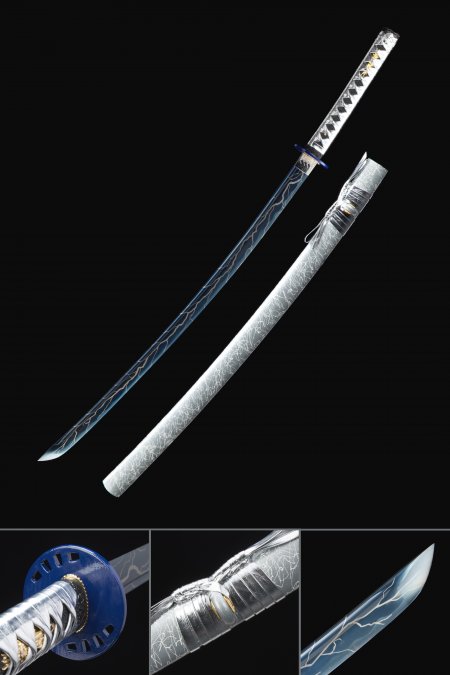
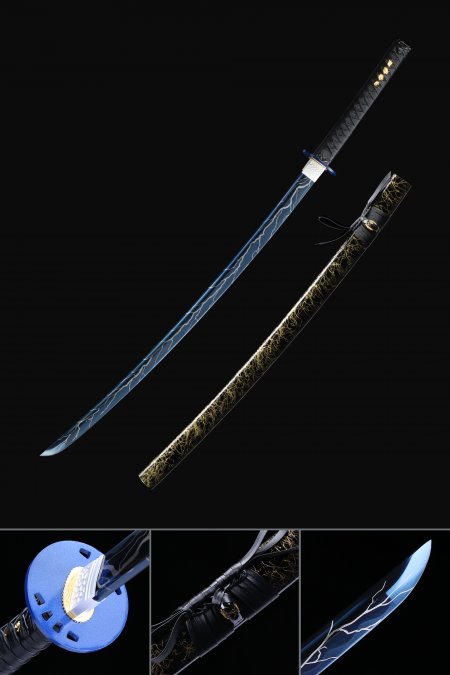
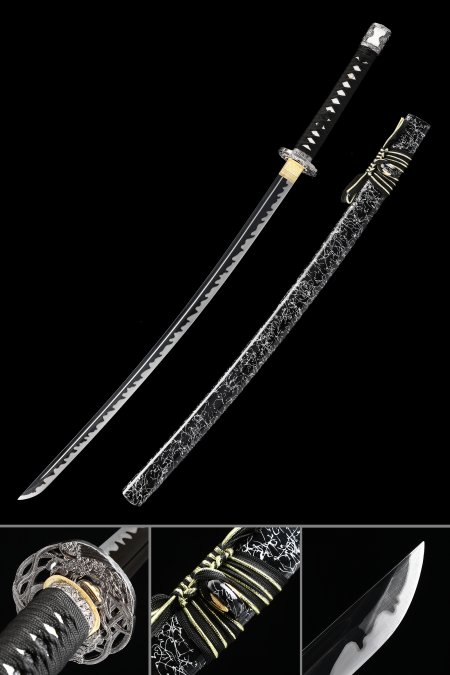
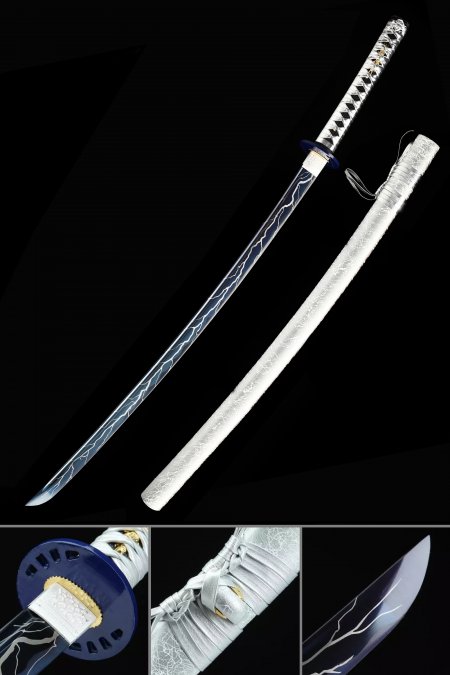
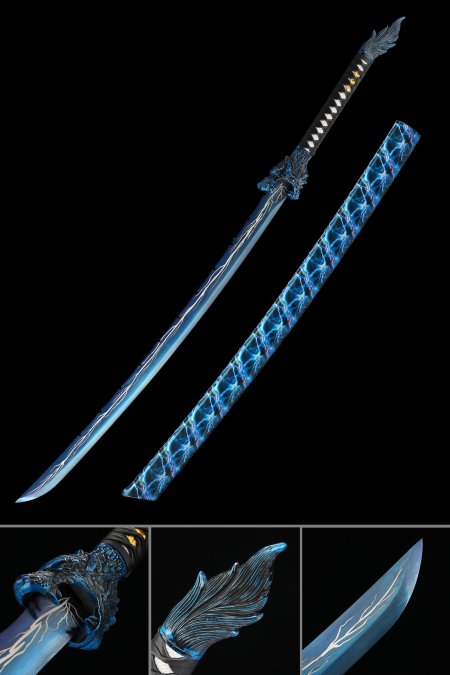
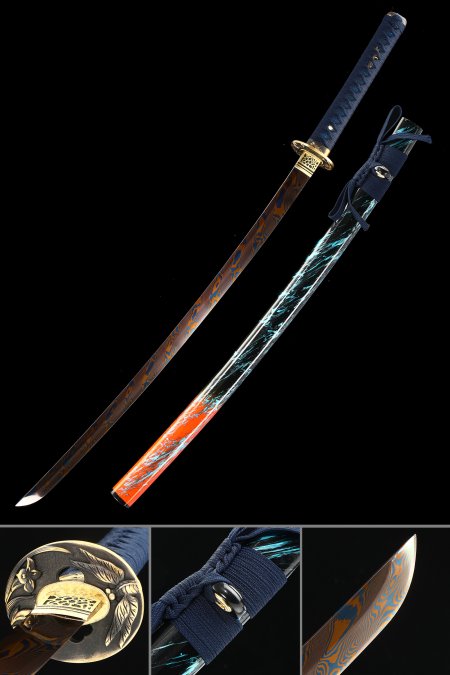
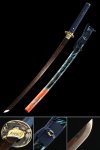
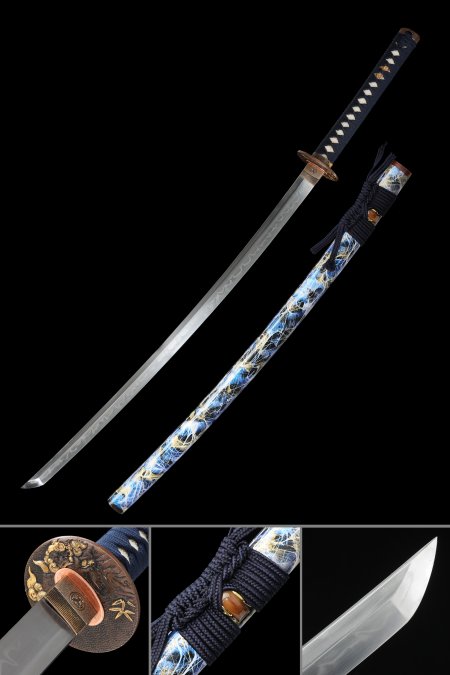
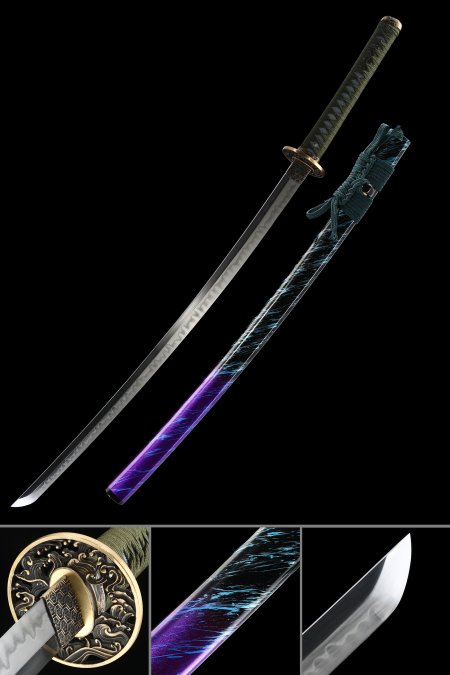
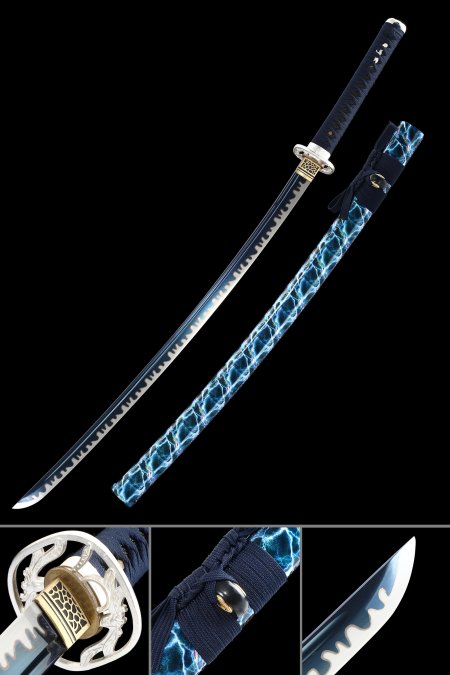
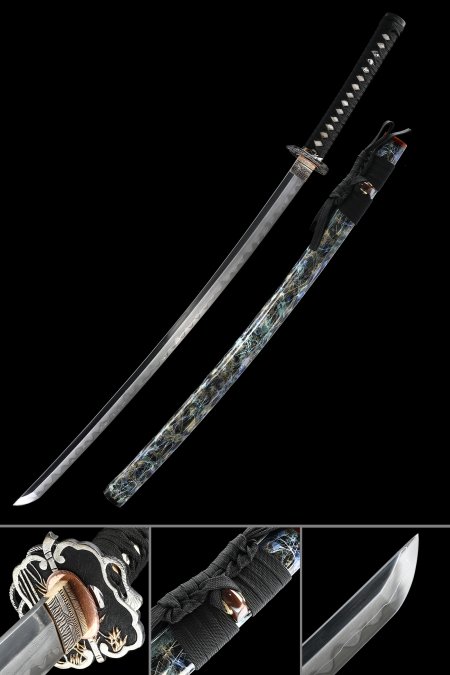
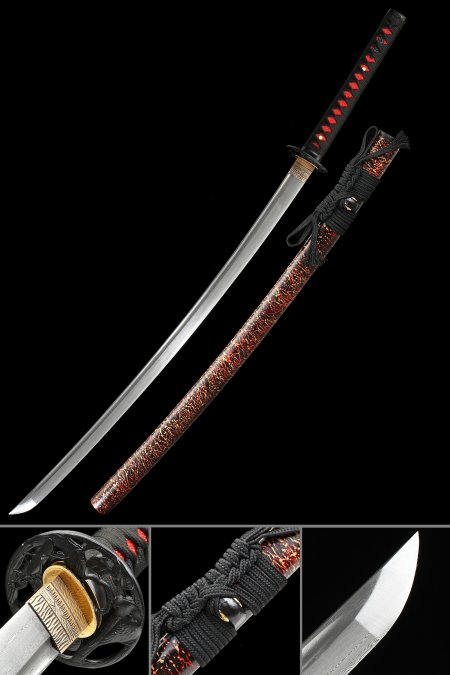
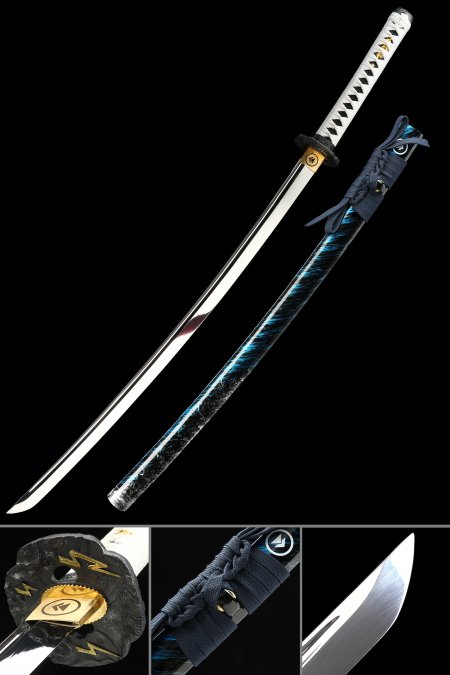
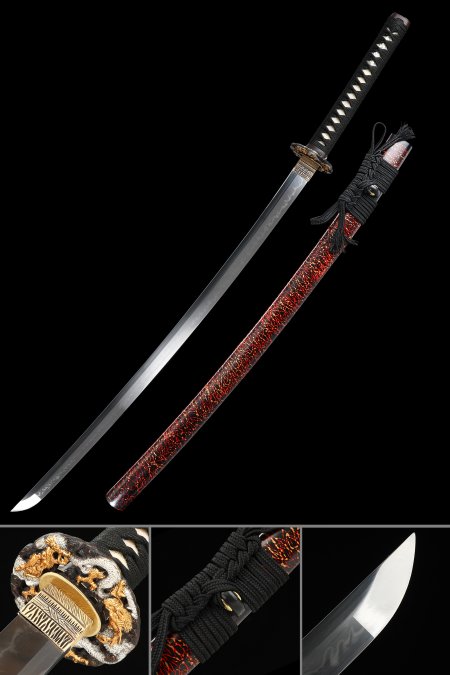
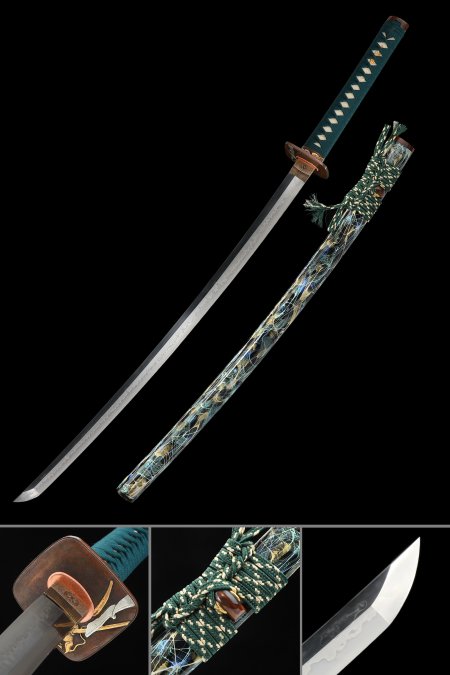
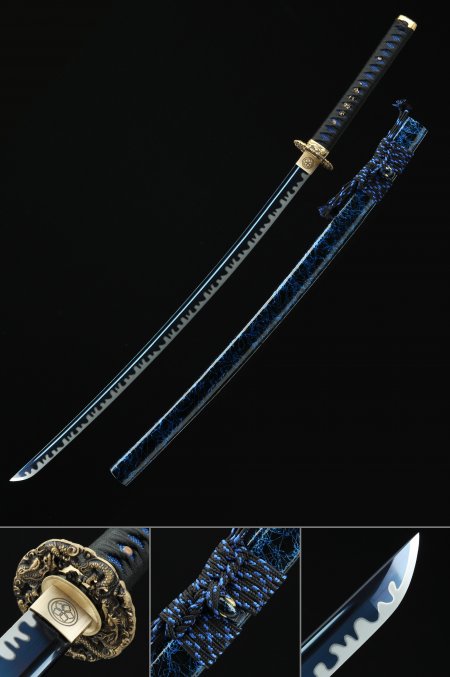
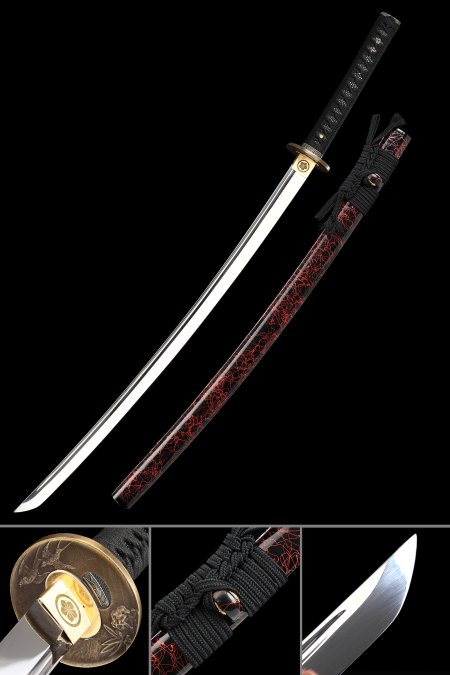
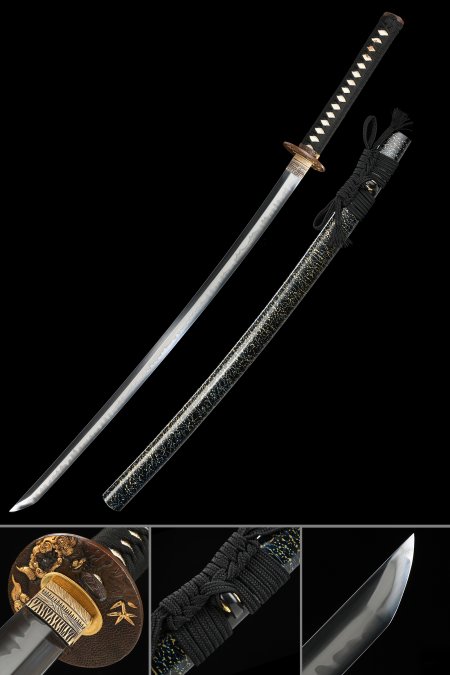
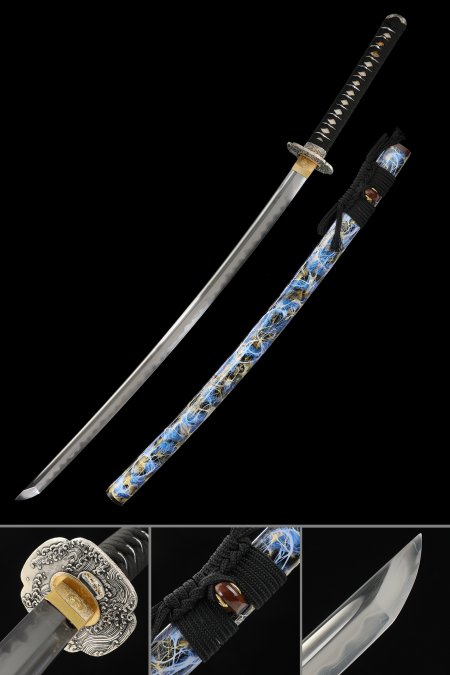
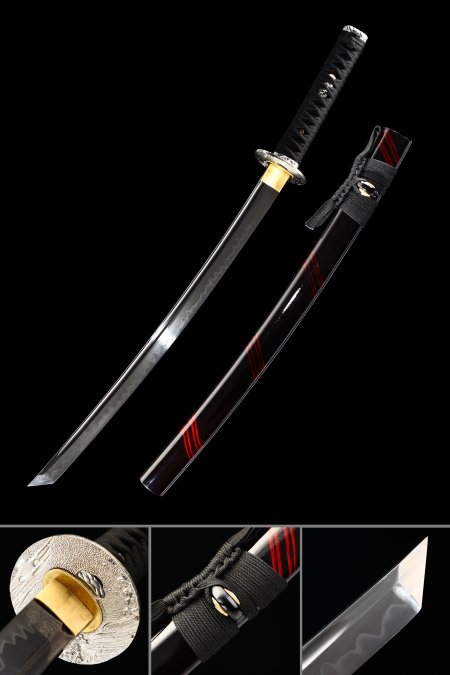
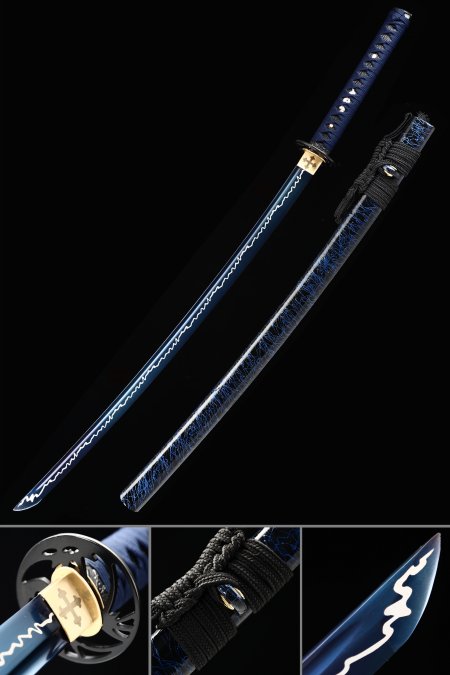
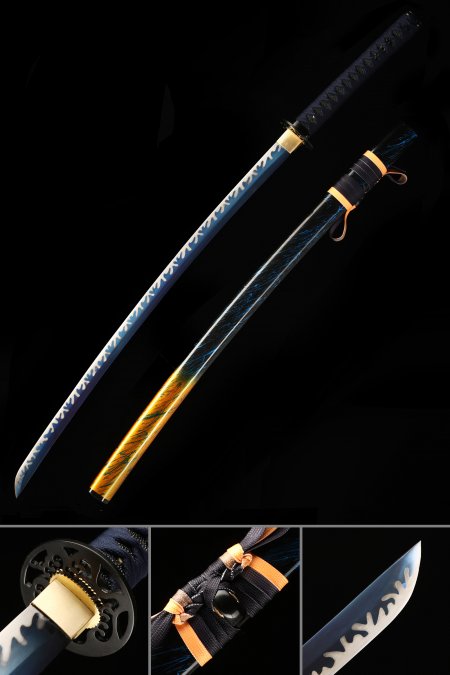
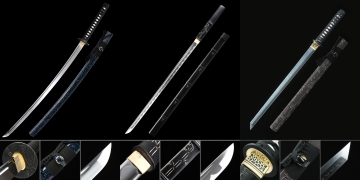
A lightning-pattern saya is defined by its jagged, branching surface design - typically rendered through crackle lacquer application, engraved line work, or painted stripe patterns that mimic the irregular geometry of an electrical discharge. In crackle-finish sayas, the effect is achieved by applying layers of lacquer that contract at different rates as they cure, producing organic fracture lines across the surface. Painted lightning stripes, like the red-on-black designs seen in some T10 carbon steel pieces, use high-contrast color to achieve a bolder graphic impact. Wire-drawn sayas take a more tactile approach, using surface texture rather than color contrast to suggest movement and energy. Each technique produces a distinct visual character, so collectors often develop preferences based on whether they favor the organic unpredictability of crackle finishes or the graphic precision of stripe-based designs.
How does manganese steel differ from 1045 or T10 carbon steel?
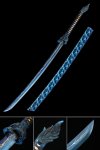
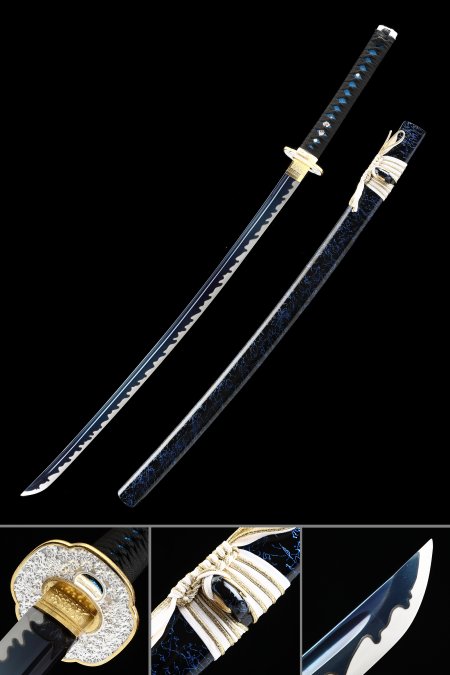
Manganese steel and carbon steel grades differ primarily in alloy composition and the surface finishes they naturally support. Manganese steel contains elevated manganese content, which contributes to its characteristic deep blue factory finish - that blue coloration is a result of the oxidation process during manufacturing and is integral to the steel itself rather than applied as a coating. This makes manganese steel blades a natural visual partner for blue or electric-themed sayas. 1045 carbon steel is a mid-range carbon steel known for consistent full-tang construction suitability and a reliable dark finish when treated; it is a practical choice for display-grade pieces where structural integrity and clean lines are the priority. T10 carbon steel is a higher-carbon tool steel that, when differentially heat-treated, can develop a genuine hamon - the crystalline temper line that forms at the boundary between hardened and softer steel zones. For collectors who value authentic metallurgical detail visible on the blade's surface, T10 pieces with real hamon offer a level of technical interest that the other grades do not replicate.
Is a full-tang construction important for a display katana?
For display and collectible purposes, full-tang construction matters more for long-term stability than for any functional consideration. A full-tang blade extends the steel continuously from tip through the entire handle, secured by mekugi pins through the tsuka. This means the handle assembly is anchored to a single uninterrupted piece of steel, which resists loosening over years of handling, repositioning on a stand, or rotating for photography and inspection. Partial or rat-tail tang assemblies - where the blade narrows significantly inside the handle - can develop subtle play in the handle over time, particularly in pieces that are handled regularly rather than left completely static. For a display piece that will be taken down, examined, and replaced regularly, full-tang construction preserves the overall tightness of the fitting and keeps the saya-to-blade alignment consistent, which is especially visible in lightning-pattern sayas where any misalignment disrupts the visual continuity of the design.
How should I care for a lacquered lightning-pattern saya?
Lacquered sayas require a stable environment to maintain their finish long-term. The primary threats are UV light, humidity fluctuation, and physical abrasion. Store the piece away from direct sunlight or strong artificial lighting, both of which can gradually fade pigmented lacquer - particularly red and blue tones that appear frequently in lightning-pattern designs. Humidity is equally important: aim for a relative humidity between 45% and 60%. A silica gel packet placed near the display stand helps buffer against seasonal swings. For the saya's surface itself, occasional light dusting with a soft, dry cloth is sufficient - avoid solvent-based cleaners or polishes not specifically formulated for lacquerwork, as these can strip the finish. The blade inside the saya should be lightly oiled periodically and the saya aired out to prevent moisture accumulation between the two surfaces. Handle the saya by its body rather than gripping near the koiguchi opening to avoid stress on the lacquer at its thinnest application point.
Do lightning saya katanas make strong gift or display set options?
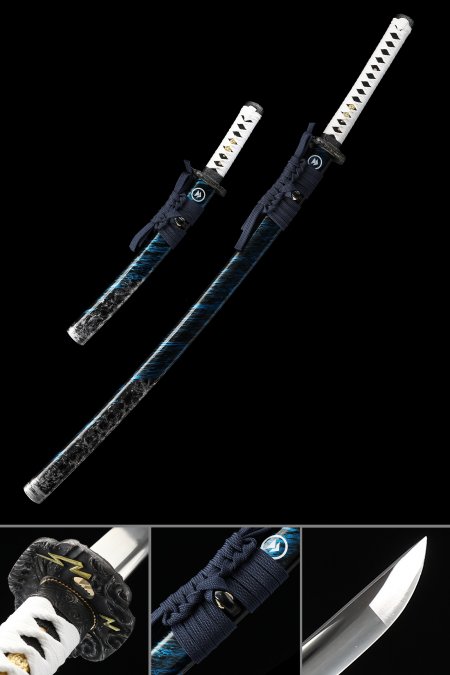
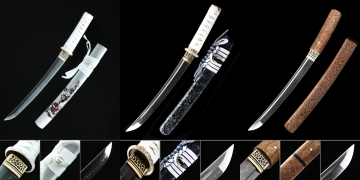
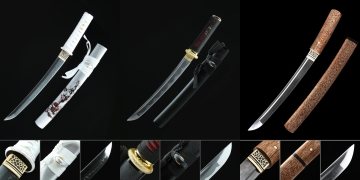
Lightning saya katanas are particularly effective as display gifts because their visual impact is immediately legible - you don't need specialized knowledge to appreciate the contrast between a blue blade and a crackle-lacquer scabbard. For collectors or enthusiasts who already own more traditional black or natural wood saya pieces, a lightning-pattern katana introduces a strong focal point that anchors a wall display or stand arrangement. The katana-and-tanto sets in this collection add compositional depth for display purposes: pairing a full-length katana with a matching tanto creates a daisho-style presentation that has strong visual symmetry. When selecting a piece as a gift, consider the recipient's existing color palette - blue and silver combinations photograph cleanly against most backgrounds, while red-stripe designs make a bolder statement and tend to work better as standalone focal pieces rather than as part of a multi-sword display.