Orange 1095 Carbon Steel Tachi Swords

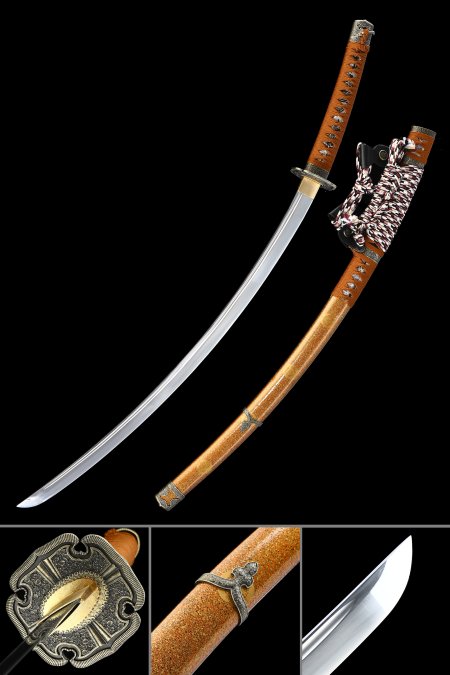
The Orange 1095 Carbon Steel Tachi collection brings together hand-forged blades crafted from high-carbon 1095 steel, each paired with a striking orange lacquer saya that makes every piece an immediate visual centerpiece. From delicate chrysanthemum tsuba to intricate bronze scroll fittings, the hardware on these tachi reflects the aesthetic discipline of classical Japanese sword-making tradition. Every order ships free, and returns are always hassle-free.
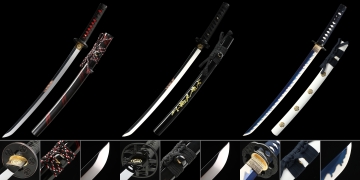
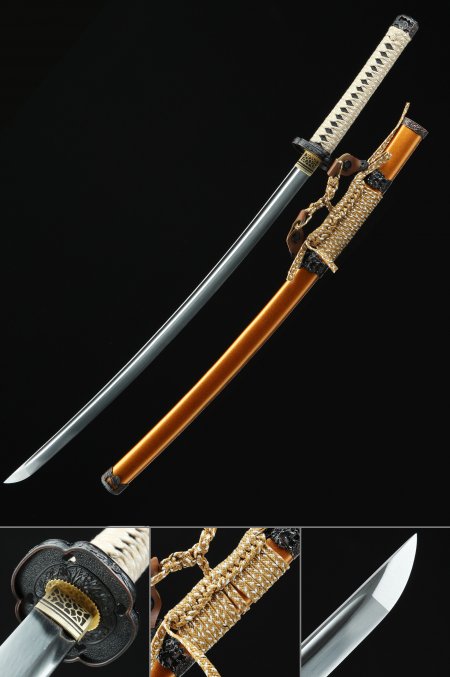
Showing 2 Products

Related Collections

Frequently Asked Questions

What makes 1095 carbon steel a preferred choice for tachi collectors?
1095 carbon steel contains approximately 0.95% carbon, placing it in the high-carbon category that responds exceptionally well to differential heat treatment. When the edge is quenched at a faster rate than the spine, the resulting hardness gradient creates a visible hamon — the temper line that runs along the blade's length and is considered one of the most important aesthetic and structural details in Japanese blade collecting. The spine retains relative flexibility while the edge area achieves significant hardness, producing a profile that displays beautifully and holds its geometry over time. For collectors, the visibility of a well-formed hamon on 1095 steel is a direct, readable record of the smith's heat treatment process — a detail that differentiates hand-forged collectibles from mass-produced display pieces.
How does a tachi differ from a katana in design and display?
The tachi predates the katana and was the primary long blade of Japan's classical mounted warrior class. The most immediately measurable distinction is blade length — tachi typically measure 70 cm or more along the cutting edge, compared to the katana's standard 60–73 cm range. More significantly, the tachi was worn suspended edge-downward from the belt using specific cords and fittings, rather than edge-upward and tucked through the obi as with a katana. This carry orientation influenced the tachi's deeper curvature, which was optimized for drawing from a downward-hanging position. When displaying a tachi, orientation matters: edge-downward mounting on a horizontal stand or wall bracket reflects historical accuracy and is the conventionally correct presentation for serious collections.
What is the significance of the orange lacquer saya on these tachi?
Lacquered scabbards have been integral to Japanese sword aesthetics since at least the Heian period (794–1185 CE). Color selection was rarely arbitrary — vivid hues including deep reds, oranges, and yellows were historically associated with ceremonial use, court presentation, and high-ranking military figures. Orange in particular occupies a meaningful position within Japanese color symbolism, evoking themes of prestige and seasonal ceremony. On a collectible tachi, an orange lacquer saya serves a dual purpose: it protects the interior wooden core while creating a bold chromatic contrast against the blade's polished steel and the wrapped handle. For display purposes, the color creates immediate visual hierarchy within any arrangement of mounted blades, making these pieces natural focal points in a collector's cabinet or dedicated display wall.
How should I care for a lacquered saya to preserve its finish?
Traditional urushi lacquer and modern lacquer finishes both benefit from similar care practices. Avoid prolonged exposure to direct sunlight, which causes color fading and surface micro-cracking over time. Humidity is the more serious concern — wood expands and contracts with moisture changes, which can cause chips or lifting at the lacquer seams near the koiguchi (mouth) and kurikata (cord knob). Store the saya in a climate-controlled environment, ideally between 40–60% relative humidity. When handling, use clean cotton gloves to prevent fingerprint oils from etching the lacquer surface. Minor surface dust can be removed with a soft, dry microfiber cloth using light strokes. Avoid any liquid cleaners unless specifically formulated for lacquerwork, as solvents will strip the finish.
Are these tachi suitable as display gifts for Japanese history enthusiasts?
Tachi in this collection are designed and positioned as collectible display pieces, making them well-suited for presentation to enthusiasts of Japanese history, classical art, or decorative craftsmanship. The combination of historically informed blade geometry, hand-forged 1095 steel with a visible hamon, and the distinctive orange lacquer saya creates a gift that rewards closer inspection over time — there are layers of material and design detail that a knowledgeable recipient will continue to discover. For display pairing, a solid hardwood sword stand that presents the blade edge-downward in the traditional tachi orientation adds meaningful context to the gift. If the recipient collects across multiple blade styles, these tachi complement pieces from the Tachi Swords collection to create a historically coherent arrangement.