Olive 1095 Carbon Steel Katana

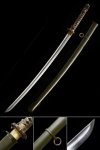
Rooted in historical craftsmanship and finished with distinctive olive-toned aesthetics, each sword in this collection is hand-forged from 1095 high-carbon steel — a classic choice prized by collectors for its reliable edge retention and authentic grain structure. From WWII-era military reproductions to ornately engraved dragon-motif blades, every piece is built with full-tang construction, period-accurate fittings, and carefully lacquered saya that make them as compelling on display as they are meaningful in a collection. Free standard shipping is available on all orders, along with a straightforward return policy for a confident purchase.
Showing 2 Products

Related Collections

Frequently Asked Questions

What makes olive-finished saya distinct from standard katana scabbards?
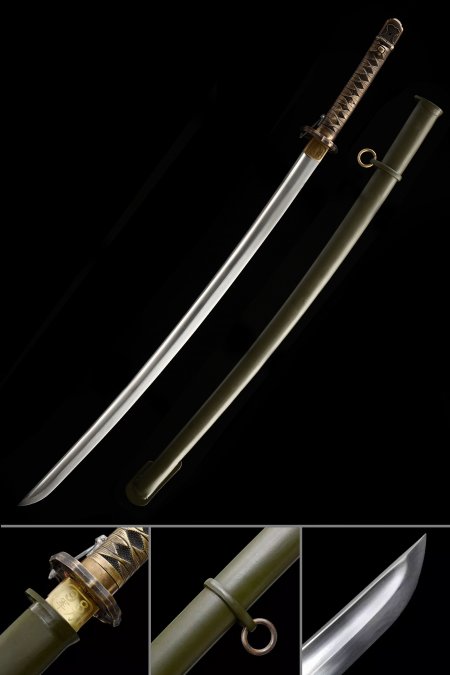
Olive-finished saya draw directly from Japanese military sword traditions, particularly the Type 98 Shin-Gunto series issued during WWII. Unlike lacquered wooden saya in black or natural wood tones, olive iron saya were produced for durability and field-ready standardization — which is why they became closely associated with the NCO-grade military swords of that era. From a collector's perspective, the olive finish carries historical specificity: it signals a particular period, a production standard, and an aesthetic born from necessity rather than decoration. Paired with copper fittings, the result is a color palette that is restrained, historically grounded, and visually distinctive against the more common black-and-silver sword presentations found in most collections.
How does 1095 carbon steel compare to stainless steel for display katana?
1095 high-carbon steel and stainless steel serve very different purposes in the world of collectible swords. Stainless steel — typically 440 or 420 grade — is corrosion-resistant and requires minimal maintenance, but it cannot be differentially hardened in a way that produces a genuine hamon, the temper line that defines traditional Japanese blade aesthetics. It also lacks the structural characteristics needed for full-tang construction optimized for handling. 1095 carbon steel, by contrast, responds authentically to traditional heat-treatment processes, producing a real hamon and the kind of grain structure associated with hand-forged craftsmanship. The trade-off is that 1095 requires periodic light oiling to prevent surface oxidation — a small commitment that most serious collectors consider part of proper sword stewardship. For display collectors who value historical authenticity and visible craftsmanship over zero-maintenance convenience, 1095 is the more meaningful choice.
How should I store and maintain an olive iron saya katana long-term?
Iron saya require slightly different care than lacquered wooden scabbards. Because the saya itself is ferrous metal, it benefits from an occasional light wipe with a clean cloth to remove fingerprints and moisture, and in higher-humidity environments, a very thin application of camellia oil or choji oil on the exterior surface can help prevent surface rust. The blade inside should be maintained with the same oil applied along the full length using a soft cloth or traditional uchiko powder method. When storing the katana horizontally on a display stand, ensure the blade edge faces upward — this is the traditional orientation and also prevents the oil from pooling unevenly. Avoid storing in sealed plastic cases without desiccant, as trapped humidity accelerates oxidation on both the blade and the iron saya.
Is the Type 98 Shin-Gunto a good entry point for WWII military sword collecting?
The Type 98 Shin-Gunto is widely considered one of the most approachable entry points into WWII Japanese military sword collecting, and for good reason. It was produced in large quantities and issued across multiple officer and NCO grades, making it historically significant without being exceedingly rare in reproduction form. The mounting style is distinctive — the olive saya, the standardized tsuba shape, the military-grade fittings — and it reads immediately as period-specific even to viewers without deep sword knowledge. A well-crafted 1095 carbon steel reproduction like the NCO version with copper fittings captures the visual language of the original accurately enough to serve as a genuine study piece, while remaining accessible for collectors who are still building their historical reference knowledge. It pairs well alongside other 20th-century militaria or as a standalone centerpiece in a dedicated Japanese sword display.
Can dragon-engraved katana blades hold collector value over time?
Ornamental engravings — called horimono in traditional Japanese sword terminology — have appeared on blades for centuries, serving religious, symbolic, and aesthetic functions. Dragon motifs in particular carry deep iconographic meaning in East Asian traditions, representing power, protection, and elemental forces. When applied with precision to a 1095 carbon steel blade, engravings become a permanent part of the blade's identity and significantly increase its visual distinctiveness as a display piece. From a collector-value standpoint, the craftsmanship quality of the engraving, the coherence of the overall mounting design, and the rarity of the specific aesthetic combination all contribute to long-term appeal. A blade featuring a dragon engraving coordinated with a matching dragon saya and contrasting tsuka wrapping — as found in this collection — presents as a unified artistic statement rather than a generic production piece, which is precisely the quality that tends to hold meaning for collectors over time.

Customer Reviews