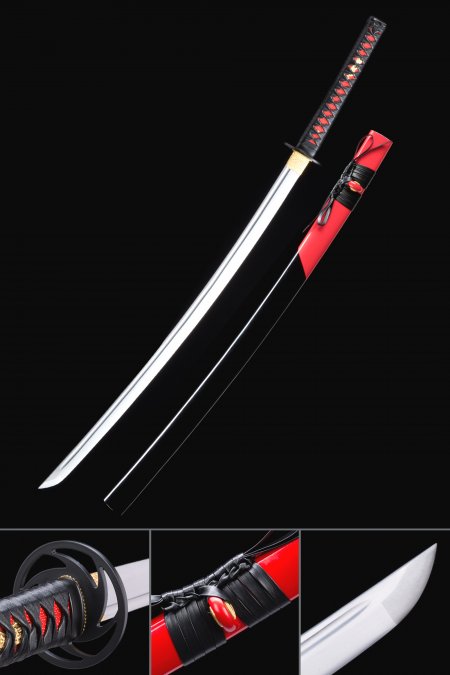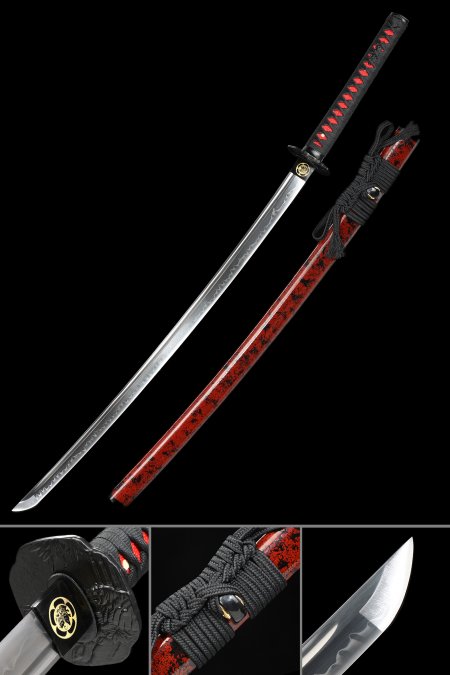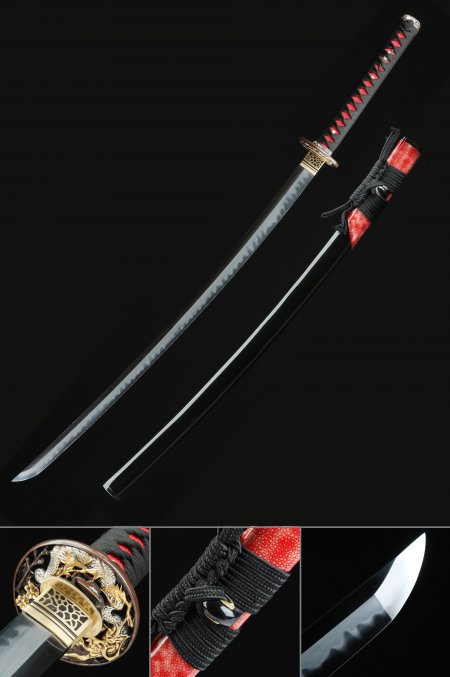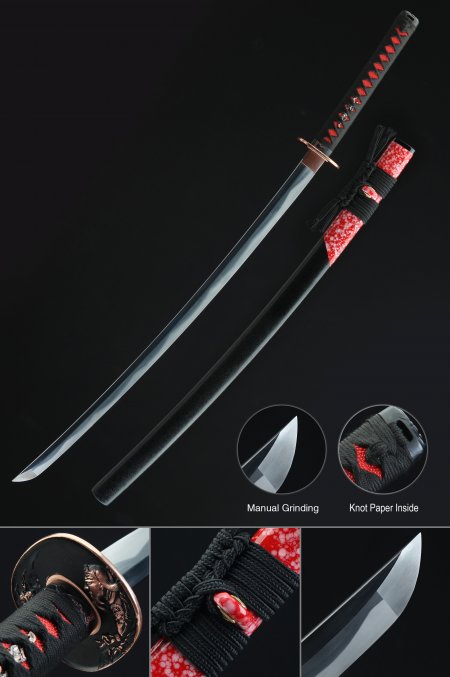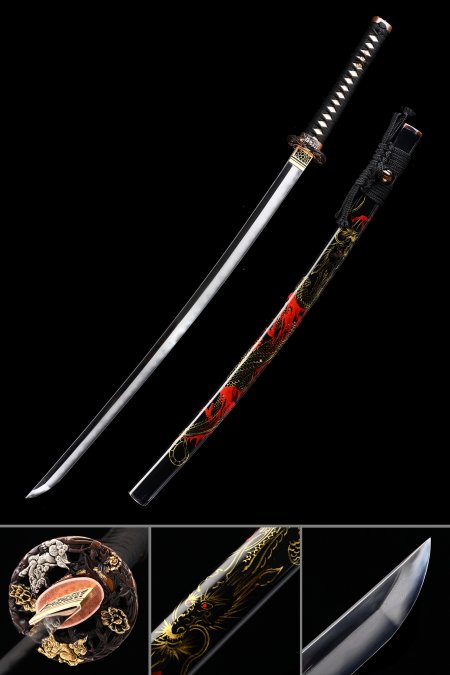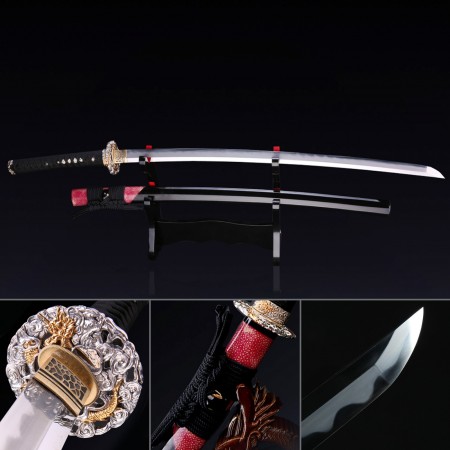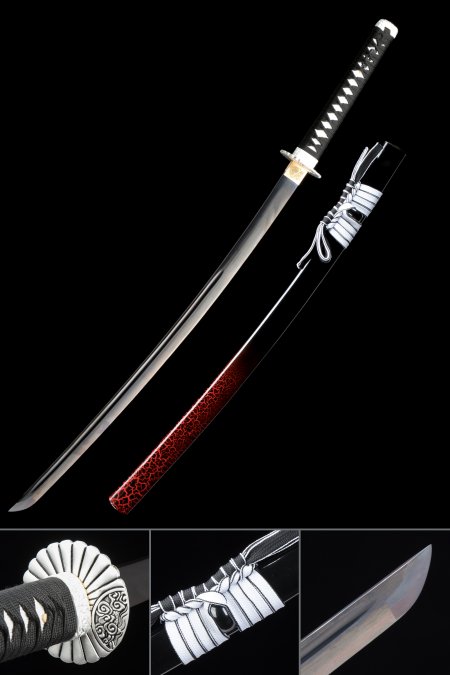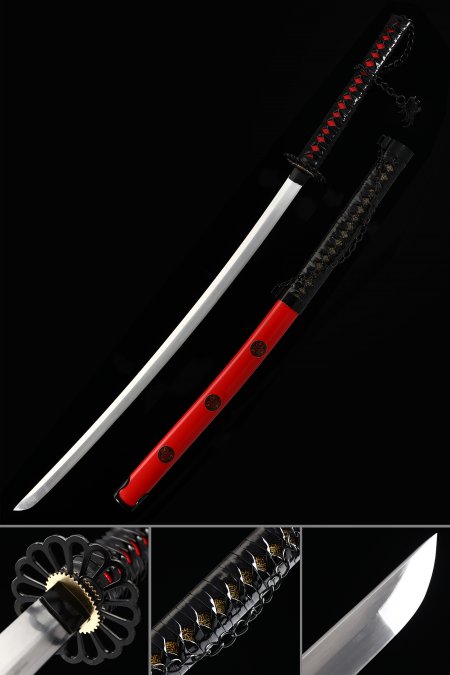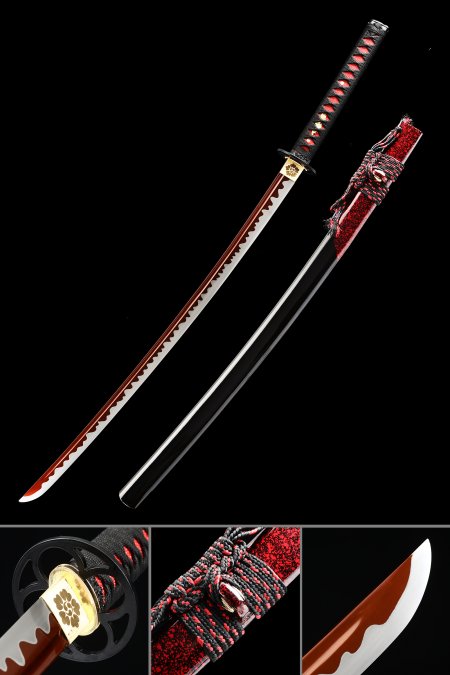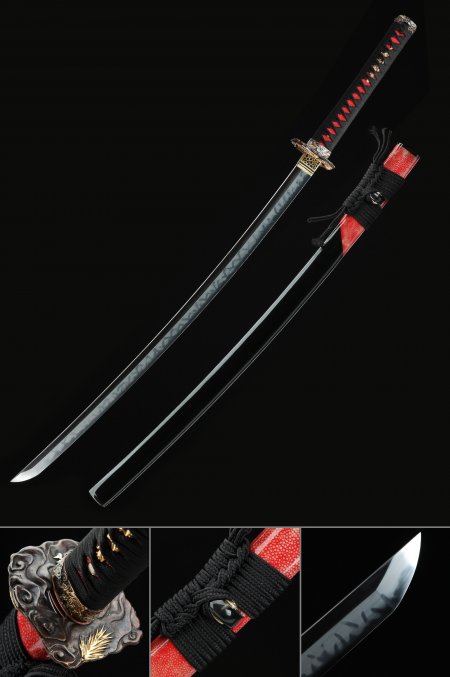
Red Black Saya Katana

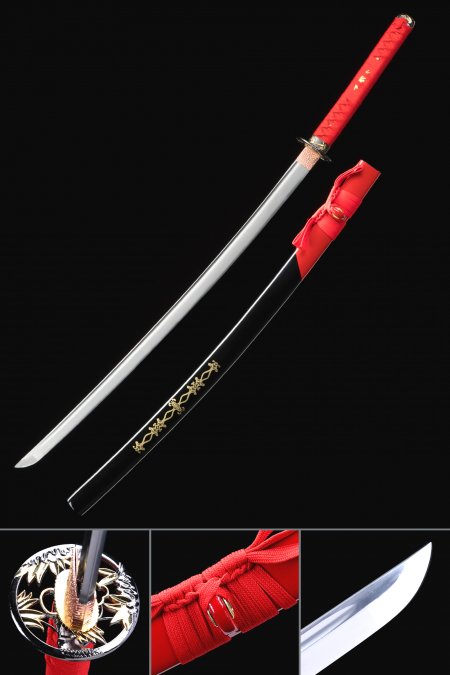
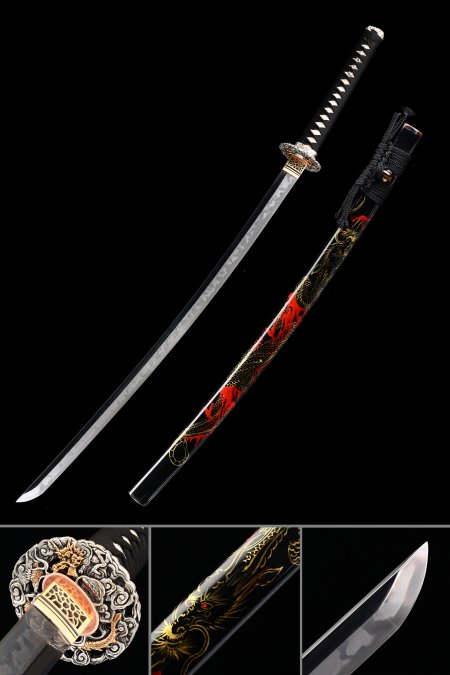
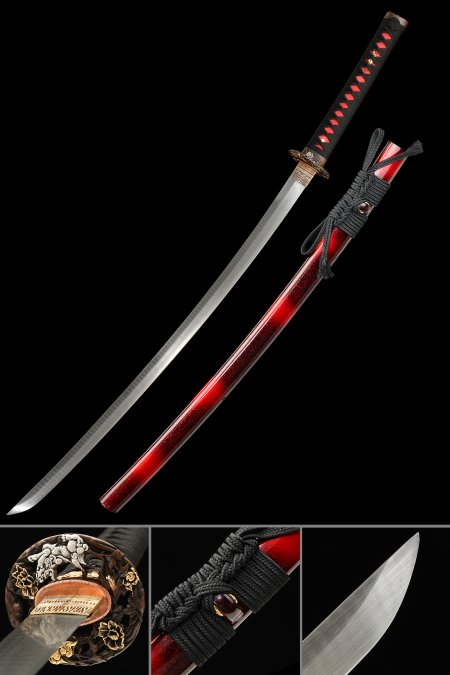
Red and black lacquered saya katana combine centuries-old Japanese finishing traditions with striking visual contrast - each scabbard hand-coated to deepen the wood grain beneath layers of urushi-inspired lacquer. From manganese steel to hand-forged T10 carbon and layered Damascus, every blade in this collection is paired with fittings chosen for aesthetic harmony: chrysanthemum or dragon tsuba, silk-wrapped ito, and full-tang construction throughout. Free standard shipping on all orders, with hassle-free returns.
Showing 14 Products

Frequently Asked Questions

What makes a red-black saya katana a collectible piece?
A red-black saya katana earns its place as a collectible through the quality of its individual components and how well those components work as a unified koshirae - the complete mounting assembly. Key markers include the lacquer finish on the saya (scabbard), which should show depth and consistency rather than a flat painted surface; the blade steel type and surface finish; and the quality of the tsuba, fuchi-kashira, and ito wrap. In this collection, each piece is assembled so that the red-black color relationship runs through the entire mounting, from the saya to the handle cord wrap, creating visual coherence that distinguishes a thoughtfully composed collectible from a generic replica.
How does T10 steel differ from Damascus in these katana?
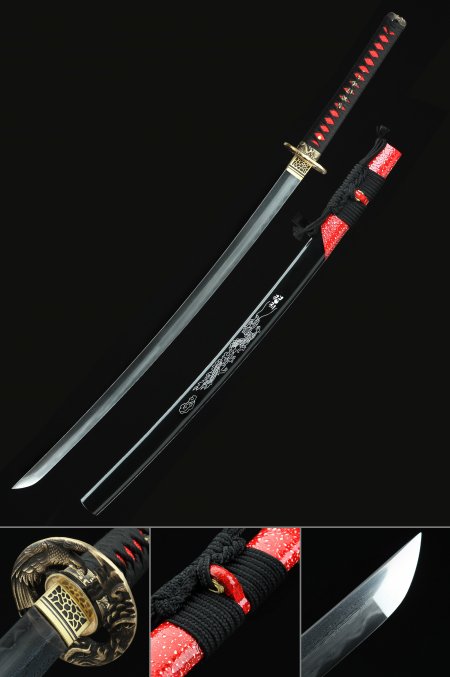
T10 carbon steel and Damascus steel represent two distinct approaches to blade construction, each with different visual and material characteristics. T10 is a high-carbon tool steel that, when clay-tempered, develops a genuine hamon - a visible temper line along the edge created by differential heat treatment. This hamon is a natural metallurgical result, not an acid etch, making each T10 blade's pattern unique. Damascus (or pattern-welded) steel is constructed by forge-welding multiple steel layers together, then manipulating the billet to create flowing surface grain patterns. The Damascus surface texture shifts visibly under different lighting angles, giving the blade a dynamic, almost organic quality. For collectors, T10 appeals through its connection to traditional Japanese tempering methods, while Damascus appeals through its layered visual complexity.
What is koshirae, and why does it matter for display?
Koshirae refers to the complete decorative mounting of a Japanese sword - including the saya, tsuka (handle), tsuba (guard), and all associated fittings - as opposed to the blade alone. In Japanese sword collecting tradition, koshirae is evaluated as a complete aesthetic system: the proportions, materials, and color relationships between components are expected to be harmonious rather than arbitrary. A red-black saya katana assembled in koshirae style means the lacquer color, ito wrap pattern, tsuba design, and blade finish have been coordinated intentionally. For display purposes, this matters because a well-composed koshirae reads as a coherent object from any viewing angle, rather than appearing as mismatched parts assembled for convenience.
How should I store and maintain a lacquered saya katana?
Lacquered wood scabbards require consistent environmental conditions to maintain their finish. Avoid storing in areas with rapid humidity changes - high moisture can cause the lacquer to blister or the wood beneath to expand, while very dry conditions can lead to surface cracking. The ideal storage range is roughly 45-55% relative humidity. Keep the saya away from direct sunlight, which fades red lacquer more quickly than black. When handling, hold the saya by its body rather than gripping the koiguchi (mouth opening) tightly. The blade inside should be lightly coated with a neutral choji oil or camellia oil before long-term storage to prevent oxidation - a clean rice paper or soft cloth application along the flat is sufficient. Inspect the ito wrap periodically and retighten if any loosening appears near the fuchi or kashira.
Are these katana suitable as display gifts for collectors?
Red-black saya katana make strong display gifts precisely because the color combination is visually assertive without being thematically restrictive - it works in both traditional Japanese-influenced display setups and contemporary interior arrangements. For gift-giving, pieces featuring a dragon tsuba or chrysanthemum tsuba add additional symbolic depth that collectors familiar with Japanese decorative arts will recognize and appreciate. Full-tang construction ensures long-term structural integrity, which matters for a collectible intended to be handled and repositioned over years. Pairing a katana with a matching hardwood display stand completes the presentation. Collectors who already own pieces in complementary styles may also want to explore our Red Katana collection for thematically aligned additions.

Customer Reviews

Timothy A Neal North Caro, United States

I definitely recommend True Katana to anyone that feels skeptical. I went for a battle ready sword, display piece nonetheless. It could come in handy in some unforeseen circumstance compared to the cheaper swords when it comes to durability. It's all true to its description and just a slight scratch on the scabbard but not upset at all! I have my first Katana!!
T10 Carbon Steel Katana with Real Hamon in Black Lacquer Saya & Dragon Artwork T10 Carbon Steel Katana with Real Hamon in Black Lacquer Saya & Dragon Artwork