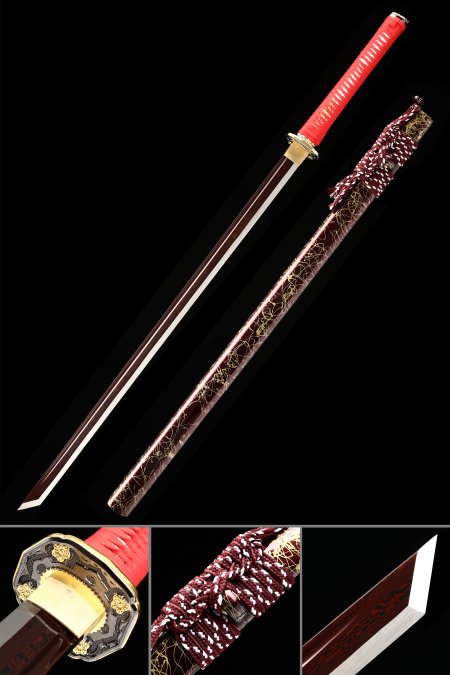
What steel types are used in these ninjato swords?
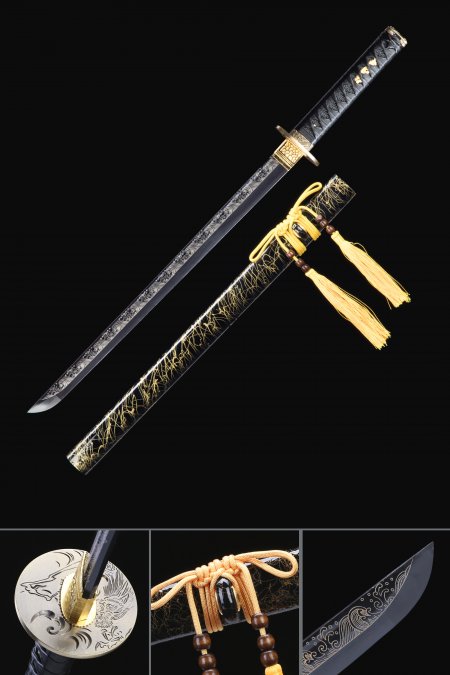
The ninjato in this collection span three distinct steel grades, each with its own character. 1045 carbon steel provides reliable mid-range hardness and is an excellent entry point for display collectors — it resists chipping well and maintains the clean straight-blade profile over time. 1060 carbon steel steps up the carbon content, resulting in improved structural density and better edge geometry retention, making it a favorite for collectors who handle their pieces regularly during rotation or photography. Damascus steel is the most visually distinctive option: layers of folded steel are acid-etched to reveal flowing grain patterns across the blade flat, meaning no two Damascus ninjato are ever identical. For a display-focused collector, Damascus offers an irreplaceable combination of artisan process history and surface visual complexity.
How do silver and gold tsuba affect a ninjato's display value?
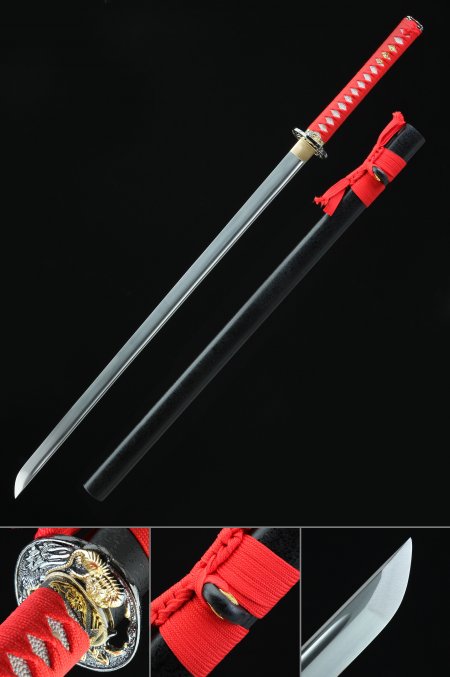
Tsuba fittings in silver and gold tones serve a dual purpose in display-quality ninjato: they function as the visual anchor of the entire piece and they signal the tier of craftsmanship invested in the sword's furniture. A plain iron tsuba reads as utilitarian; a silver or gold tsuba with engraved dragon or tiger motifs immediately communicates that this piece was conceived as an art object. Under directional display lighting, the tonal contrast between a gold tsuba and a matte-lacquered black saya is particularly striking. Collectors building multi-piece displays often use matching metalwork tones across pieces to create thematic coherence, and silver/gold tsuba are among the easiest elements to harmonize across different blade styles.
How does a ninjato differ from a katana as a collectible?
The most immediate distinction is blade geometry. A katana features a pronounced curved profile — the sori — that defines its cutting mechanics and aesthetic identity. A ninjato uses a straight or minimally curved blade, typically shorter in overall length, which gives it a more compact and geometric silhouette. For collectors, this means the two sword types create very different display impressions even when placed side by side with matching furniture. The ninjato's straight profile emphasizes the tsuba and saya as design elements, whereas the katana's curve naturally draws the eye along the entire blade. Many collectors pursue both forms specifically because they contrast so effectively in a shared display arrangement.
What is the recommended way to store a display ninjato long-term?
Proper storage begins with the blade. Apply a light coat of camellia oil or mineral oil to the steel every two to three months, or more frequently in humid coastal environments. Store the ninjato horizontally on a dedicated sword stand rather than leaning it against a wall, which can stress the saya over time. Keep the piece away from direct sunlight — UV exposure degrades lacquer finish and can bleach ito wrapping. Maintain indoor humidity between 40–60%; levels outside this range accelerate either oxidation or lacquer cracking. If storing in a display case, include a small silica gel packet to buffer humidity spikes. Never store the blade inside the saya for months at a time without periodic airing, as trapped moisture accelerates oxidation at the habaki.
Is a silver gold tsuba ninjato a suitable collector's gift?
A ninjato with ornate silver or gold tsuba is one of the more immediately impressive display swords available in this price tier, which makes it well-suited as a gift for collectors, enthusiasts of Japanese history, or anyone who appreciates handcraft metalwork. The visual impact on unboxing is high — the lacquered saya, the wrapped tsuka, and the detailed guard all communicate quality before the recipient has read a single specification. For gifting purposes, pieces featuring dragon or tiger tsuba engravings tend to have broad appeal because both motifs carry recognized symbolic weight in East Asian artistic traditions. Pairing a ninjato with a matching display stand elevates the presentation further and provides an immediately usable display solution.