Silver Tsuba Hamidashi

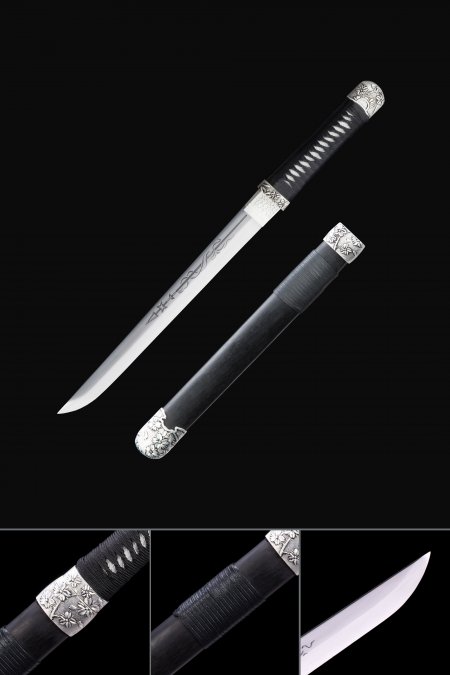
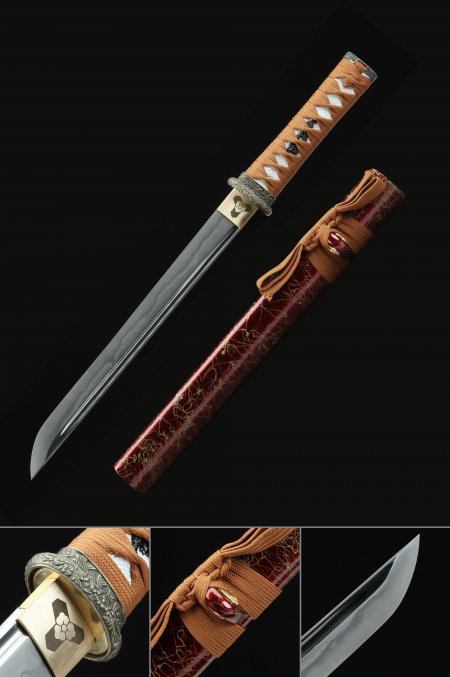
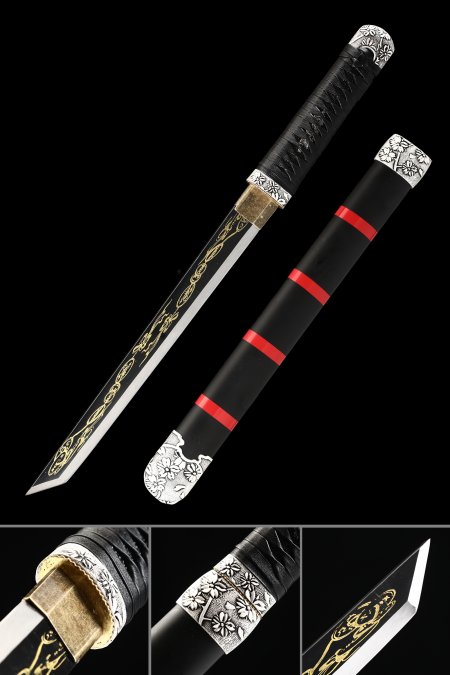
The Silver Tsuba Hamidashi collection brings together compact tanto-style blades distinguished by finely crafted silver-toned guard work - from delicate cherry blossom cutouts to intricate floral reliefs. Each piece is assembled with careful attention to handle wrap, saya finish, and blade engraving, creating a cohesive aesthetic that rewards close study on any display stand or collector's shelf. Every order ships free with hassle-free returns, so adding to your collection is always straightforward.
Showing 3 Products

Frequently Asked Questions

What makes a hamidashi different from a standard tanto?
The defining difference is the guard. A standard tanto typically uses a full-sized tsuba, while a hamidashi uses a ko-tsuba - a smaller, more compact guard that sits nearly flush with the habaki collar. This gives the hamidashi a cleaner silhouette and shifts visual focus toward the blade geometry and handle metalwork. The term literally references this 'protruding' or minimal guard design. For collectors, this distinction matters because it places greater emphasis on the craftsmanship of the fuchi, the quality of the ito wrap, and the detail work on the blade itself. Every element has to carry more visual weight when the guard is reduced.
How does T10 carbon steel differ from high manganese steel in these pieces?
T10 is a high-carbon tool steel with a small tungsten addition that improves wear resistance and grain refinement. Its most celebrated collector feature is the ability to develop a genuine hamon - the undulating temper line produced by differential clay-tempering during the heat treatment process. This misty boundary between the hardened edge and softer spine is considered a hallmark of traditional Japanese blade craft and is immediately recognizable to informed collectors. High manganese steel, sometimes called spring steel, is more flexible and takes blade engraving cleanly with crisp, defined lines. It develops a warmer gray patina over time rather than a hamon. The choice between them comes down to what you value in a display piece: visible temper artistry or engraved surface decoration.
Is the silver tsuba on these pieces cast alloy or hand-finished?
The silver-toned guards in this collection are crafted from metal alloy, typically zinc-based or iron alloy, and finished to achieve a bright silver appearance. Motifs such as cherry blossoms and floral scrollwork are either cast into the form during production or engraved as a secondary finishing step. While these are not sterling silver, the alloy construction offers consistent detail reproduction and good corrosion resistance for long-term indoor display. For collectors, the value lies in the decorative precision of the motif work and how it visually integrates with the cord wrap and saya color - not in the precious metal content.
How should I store a hamidashi tanto to keep it display-ready?
Store the piece with the blade inside the saya and oriented horizontally or with a slight upward tilt at the kissaki end - this is the traditional storage orientation and helps prevent oil from pooling at the tip. Apply a thin coat of choji oil or high-quality mineral oil to the blade every two to four months, more frequently in humid climates. Keep the piece away from direct sunlight and heat vents, as UV exposure and temperature swings degrade lacquer on the saya and can loosen the ito cord wrap over time. A dedicated display case with a stable humidity level, ideally between 45-55% RH, is the best long-term environment for carbon or high manganese steel blades.
Are silver tsuba hamidashi pieces good as gifts for collectors?
They make an excellent gift choice for anyone who appreciates Japanese blade aesthetics, particularly at the entry to mid-collector level. The hamidashi form is compact enough to display on a desk stand or small wall mount without requiring dedicated cabinet space, which makes it practical for collectors with limited display room. The silver tsuba motifs - especially cherry blossom designs - carry strong cultural resonance and are visually striking even to someone unfamiliar with blade collecting. Pairing a hamidashi with a matching display stand elevates the presentation considerably. For a more curated gift grouping, consider combining with a piece from the Hamidashi Tanto collection to showcase the range of guard styles within this blade form.

Customer Reviews

Takami Matsubara California, United States

It looks great, nice details, doesn't shake inside the sheath, and it has a nice heavy feel. But I do wish it was more sharp for slicing, stabbing through a body was easy but slicing off a limb seemed to be difficult. It felt more like I had to chop it off like a tree. Maybe this is my personal preference but I wish it was thinner. The blade I got was 0.75 cm thick, which is thin and make the blade durable and easy to maintain. I think I cut about 15 and blade had only minor damage. But I think 0.45 ~ 0.35cm thickness will make the blade easier to slice and maneuver around.
High Manganese Steel Hamidashi Tanto with Black Saya - Gold Engraved Blade, Silver Floral Tsuba High Manganese Steel Hamidashi Tanto with Black Saya - Gold Engraved Blade, Silver Floral Tsuba