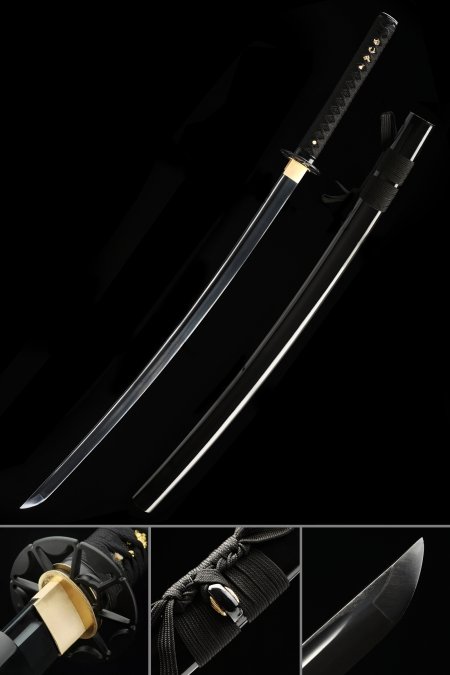
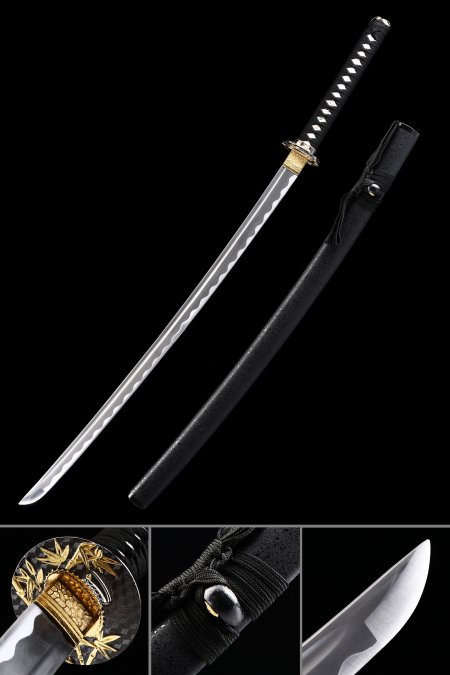
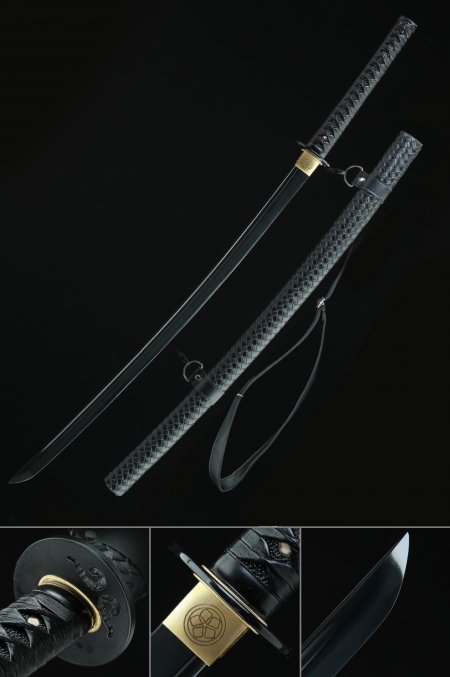
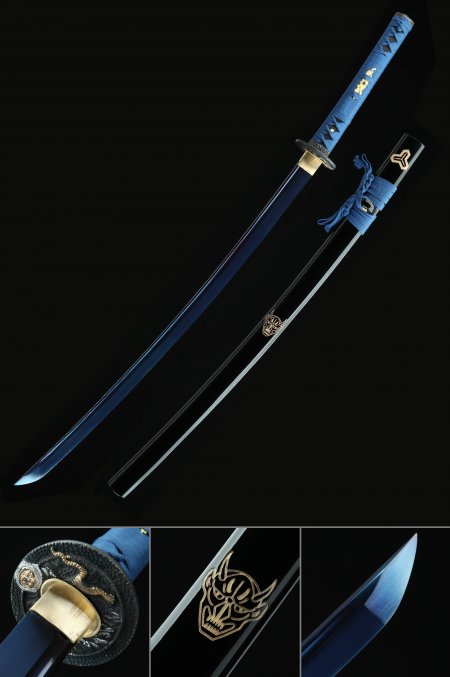
What is a hamon and why does it matter on a display piece?
Updated Feb 2026
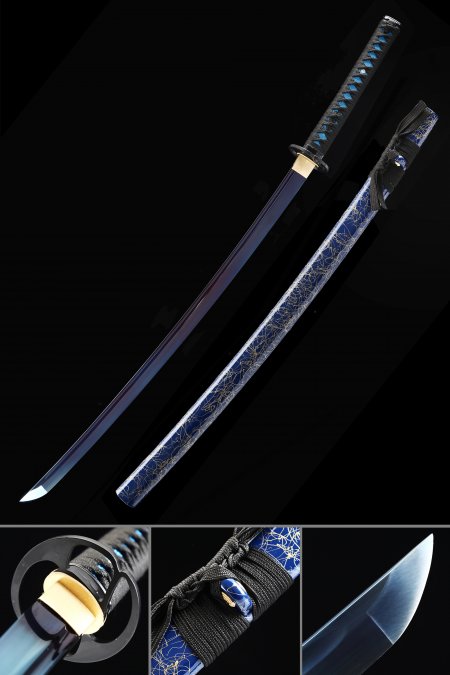
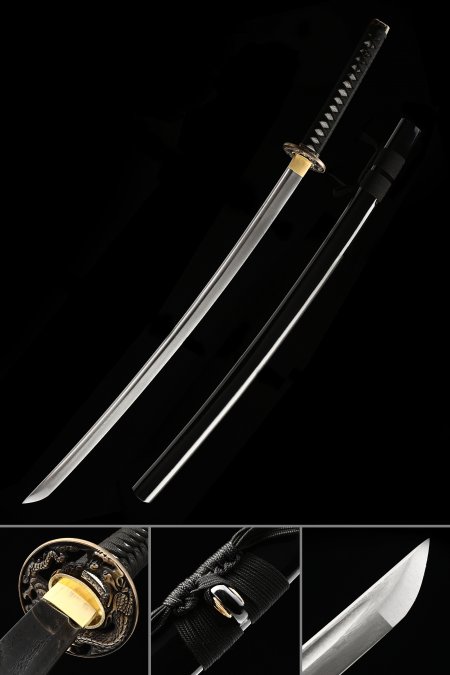
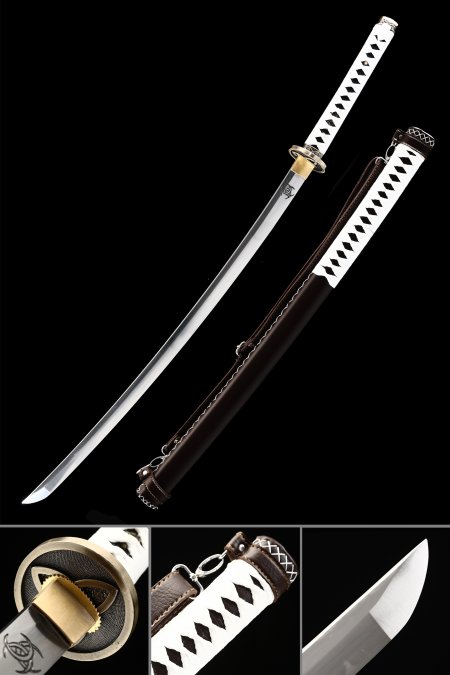
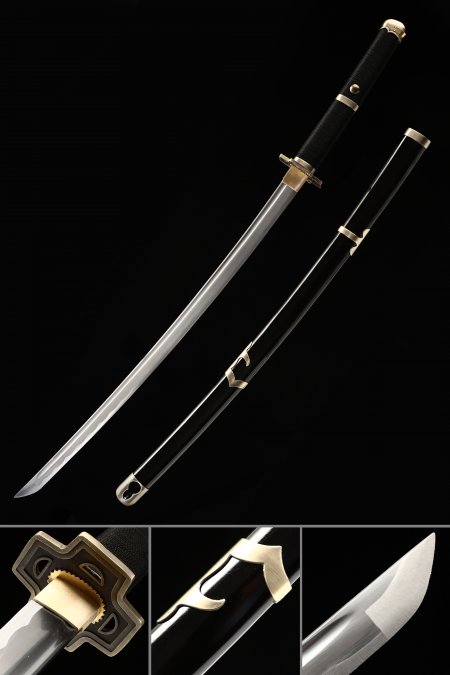
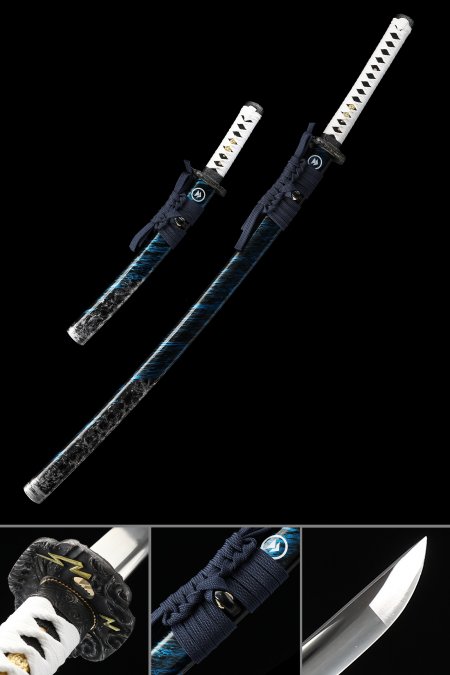
A hamon is the visible temper line that appears along the blade after differential hardening. During clay tempering, the smith coats the spine and flat of the blade with an insulating clay layer while leaving the edge exposed or thinly coated. When the blade is quenched in water, the exposed edge cools rapidly into hard martensite, while the protected spine remains softer pearlite. The boundary between these two crystalline structures creates the hamon. On a display piece, the hamon serves as a signature of authentic forging technique and adds a striking visual element — patterns range from straight (suguha) to undulating waves (midare) — that connoisseurs use to evaluate craftsmanship quality.