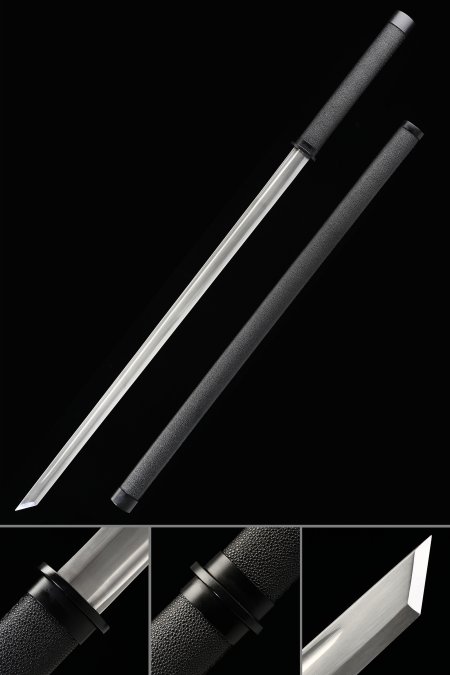
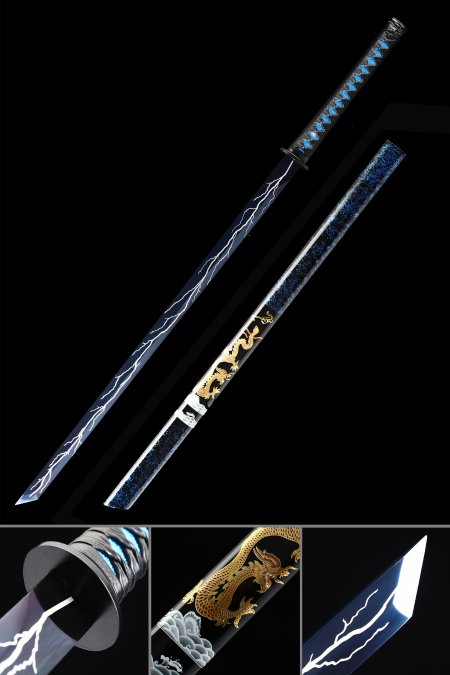
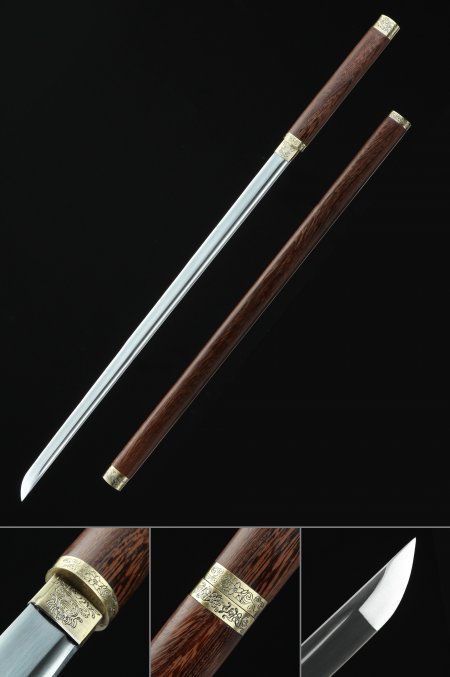
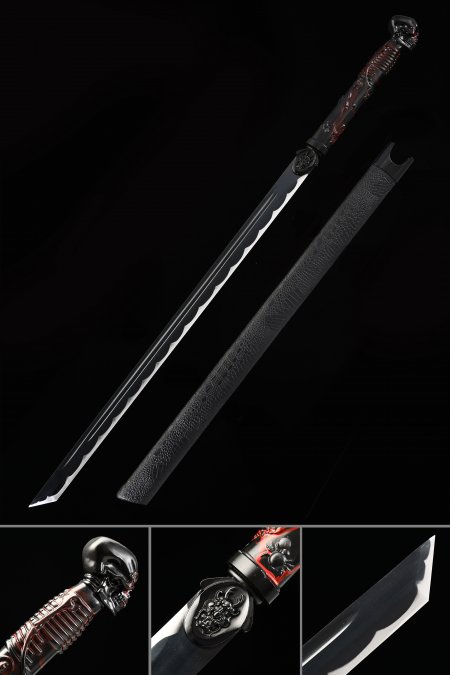
How does a ninjato differ from a katana in shape and design?
Updated Feb 2026
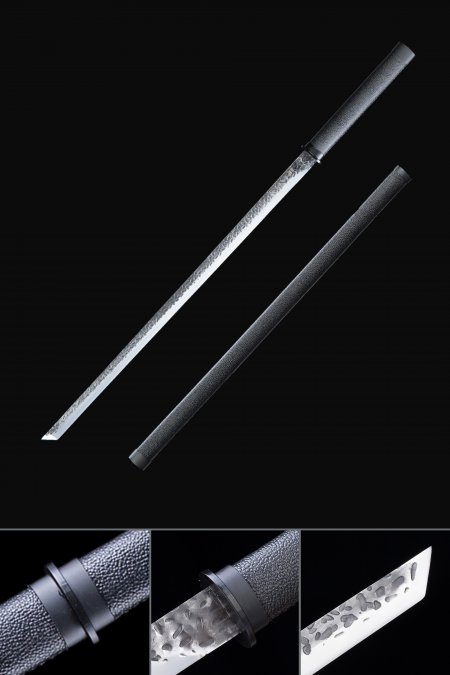
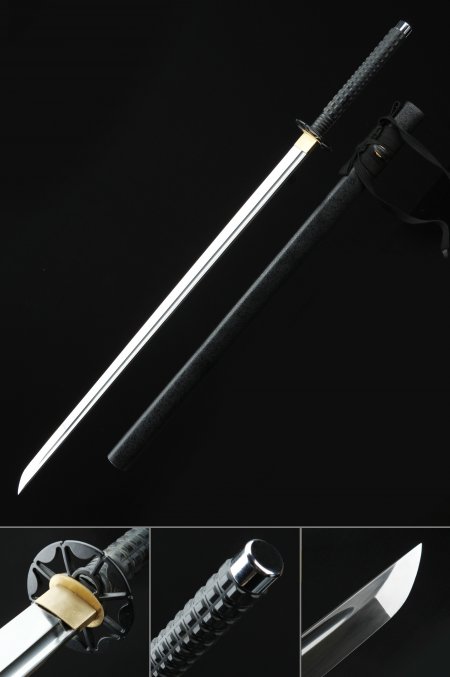
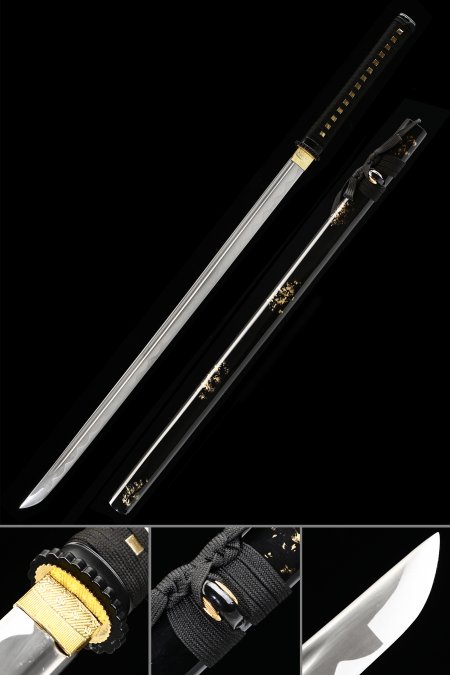
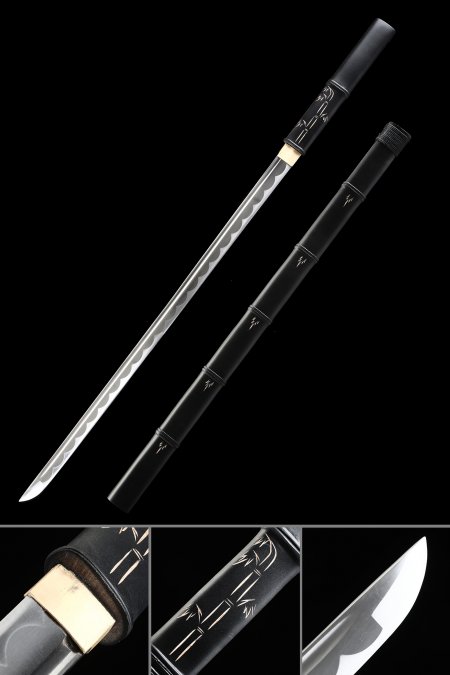
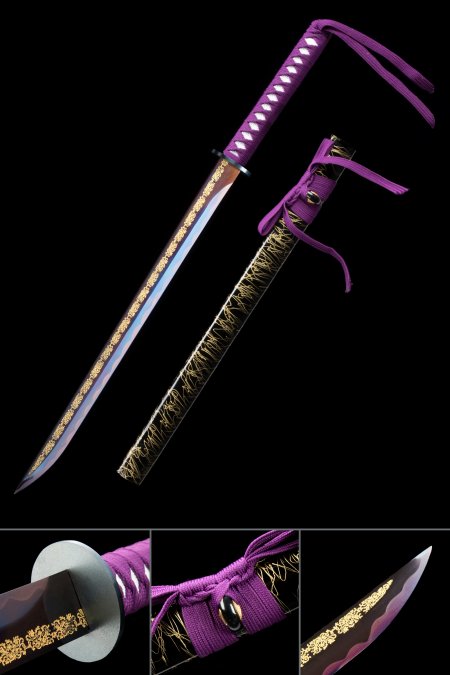
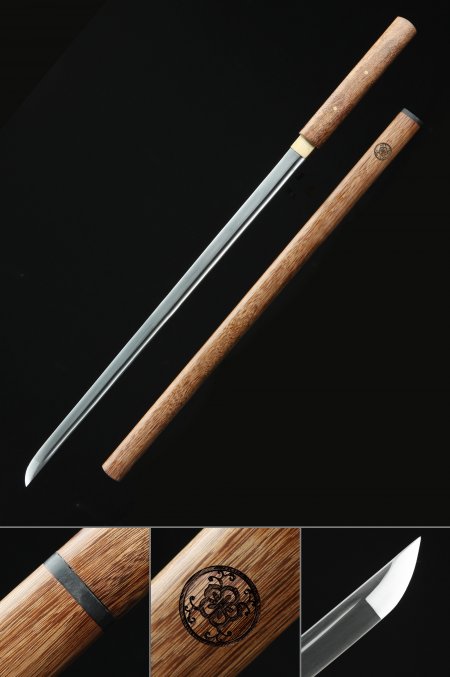
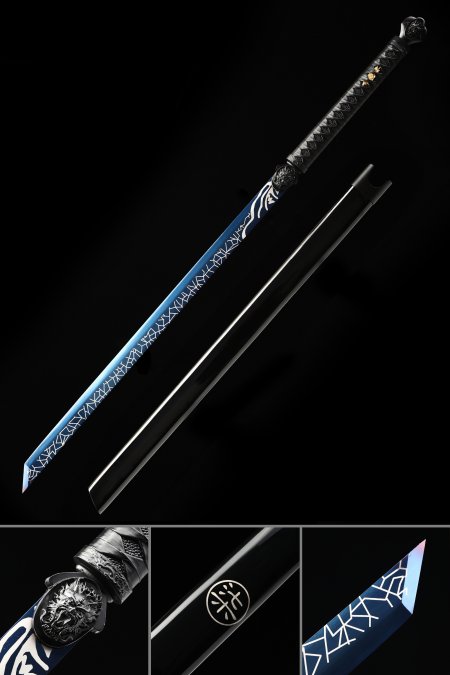
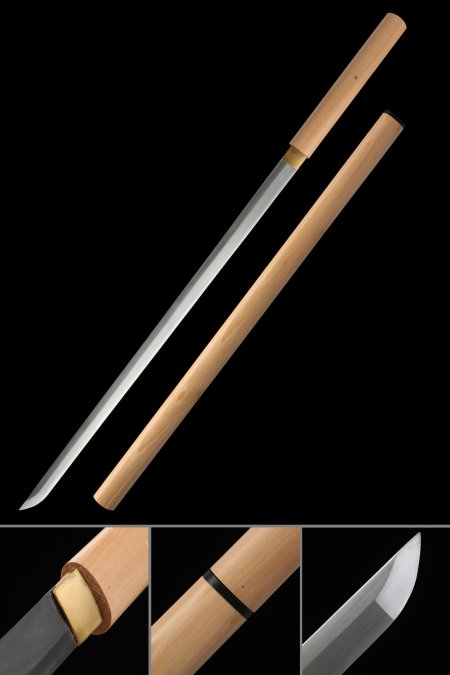
The most immediate difference is the blade geometry. A katana features a curved, single-edged blade typically between 60 and 73 centimeters, designed around a sweeping draw-cut motion. A ninjato, by contrast, carries a straight or nearly straight blade that is usually shorter — often around 55 to 60 centimeters — with a square tsuba rather than the katana’s round or ornate guard. The straight profile gives the ninjato its distinctive angular silhouette on a display wall. Handle construction is broadly similar, using ray skin and cord wrapping over a full-tang core, but the overall proportions feel more compact and utilitarian, reflecting the sword’s association with covert operatives in Japanese lore.