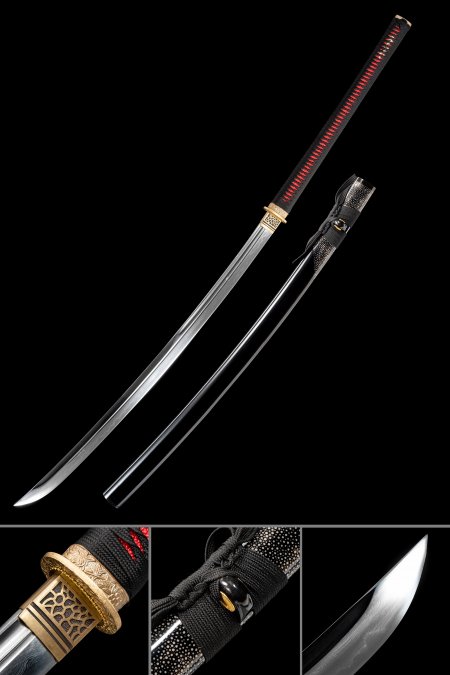
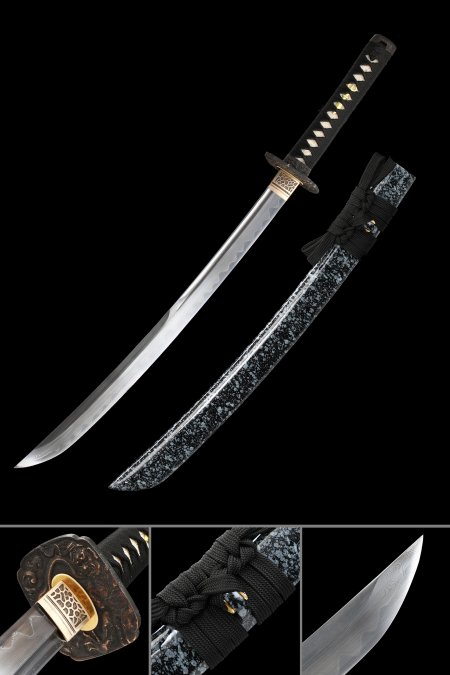
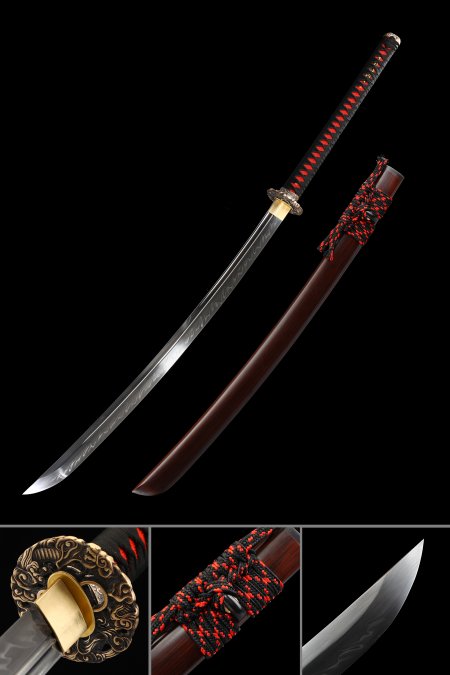
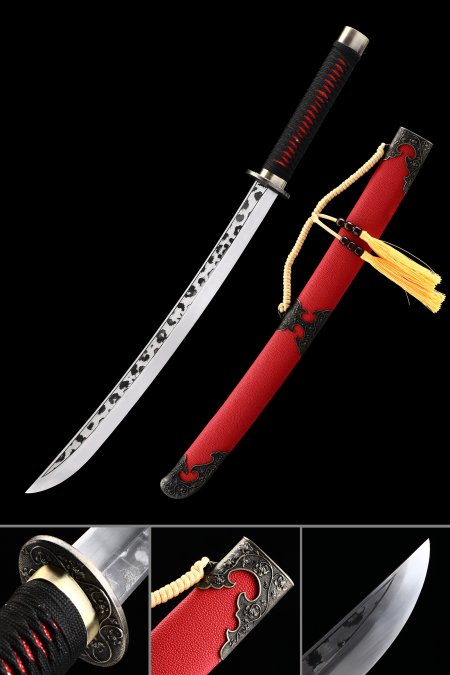
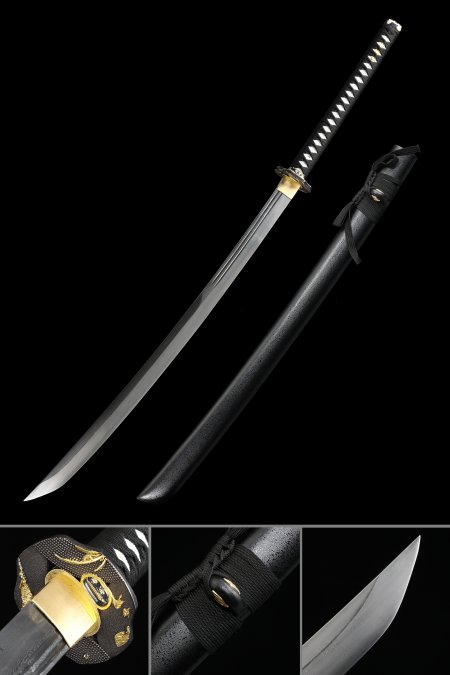
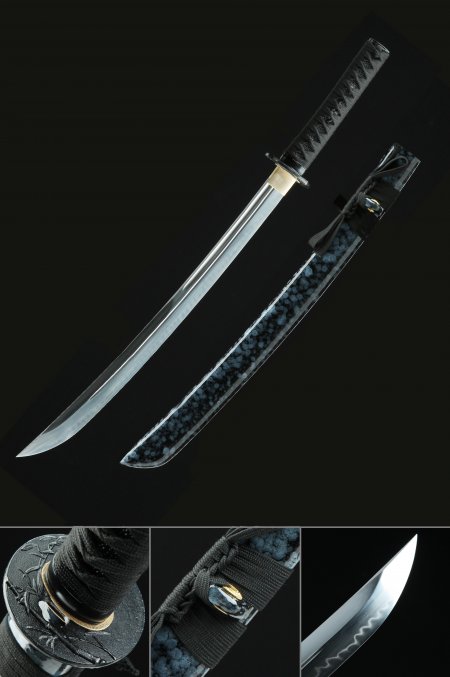
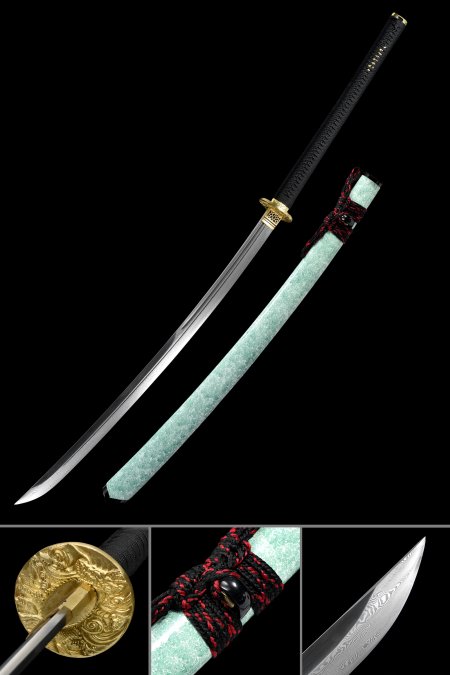
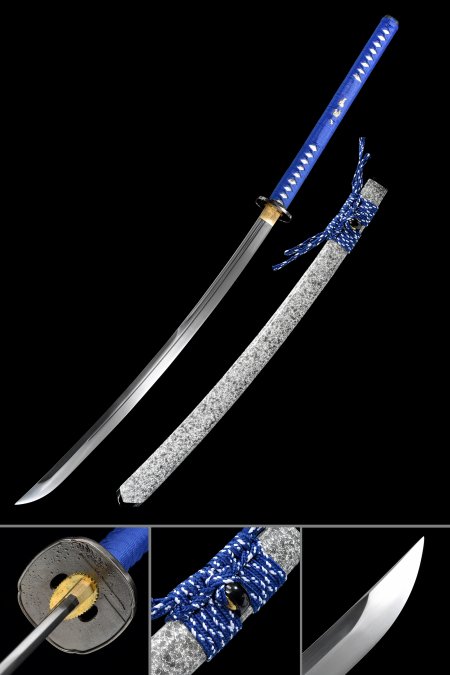
What does a real hamon line indicate on a naginata blade?
Updated Feb 2026
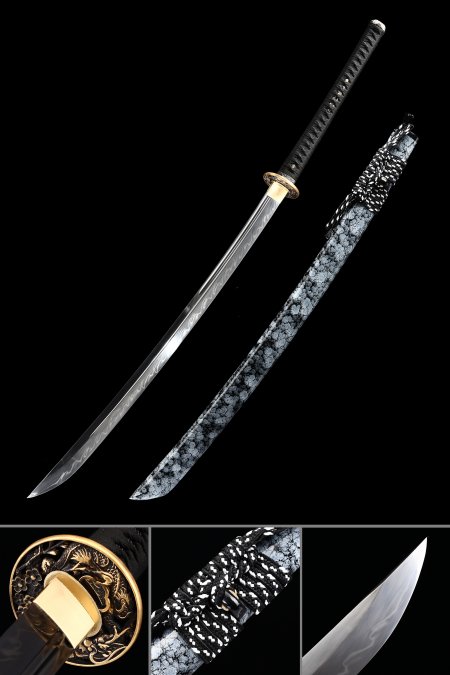
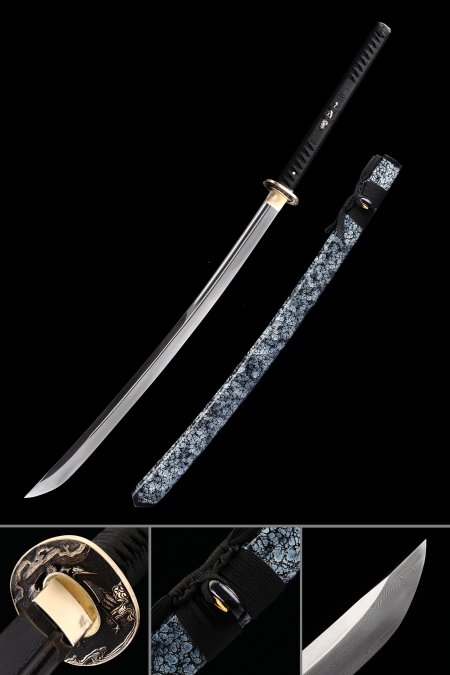
A real hamon is the visible boundary between the harder edge steel and the softer spine created during differential clay tempering. The smith coats the spine and flats with an insulating clay mixture, leaving the edge exposed, then heats and quenches the blade. The exposed edge cools rapidly into martensite — a harder crystalline structure — while the insulated spine remains in the tougher pearlite phase. The transition between these two zones produces the hamon. Unlike etched or printed lines found on mass-produced replicas, a genuine hamon shifts subtly under changing light and is a reliable marker of traditional forging craftsmanship.