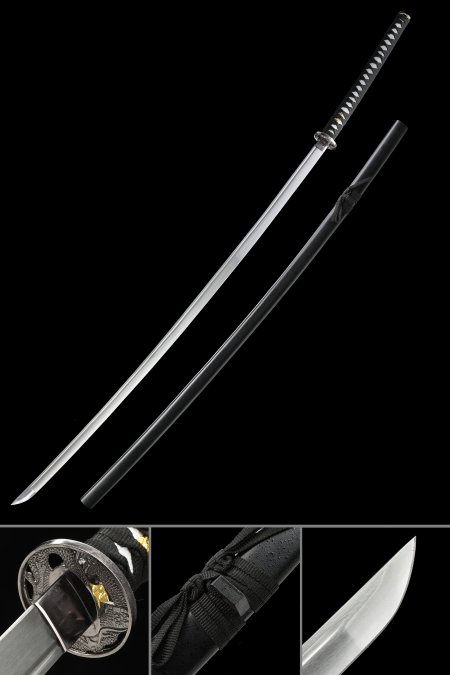
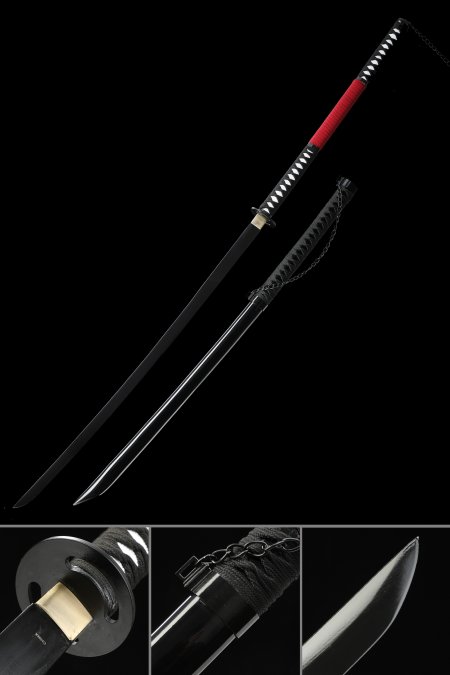
How does clay tempering create a real hamon on an odachi?
Updated Feb 2026
Clay tempering is a traditional heat-treatment method central to Japanese sword-making. The smith applies a mixture of clay, ash, and sometimes other materials along the blade's spine, leaving the edge area with thinner or no clay coverage. When the blade is heated and quenched in water, the uncoated edge cools rapidly and forms a harder crystalline structure called martensite, while the clay-insulated spine cools more slowly, retaining a softer, tougher grain structure. The boundary between these two zones becomes visible after polishing as the hamon - the undulating temper line that runs along the blade. On a genuine clay-tempered odachi, this line is a true metallurgical feature embedded in the steel itself, not a surface treatment. Collectors can usually identify authentic hamon activity by the subtle activity (nie and nioi) visible within and along the temper line under angled light.