What exactly makes a hamon "real" vs. an etched one?
Updated Mar 2026
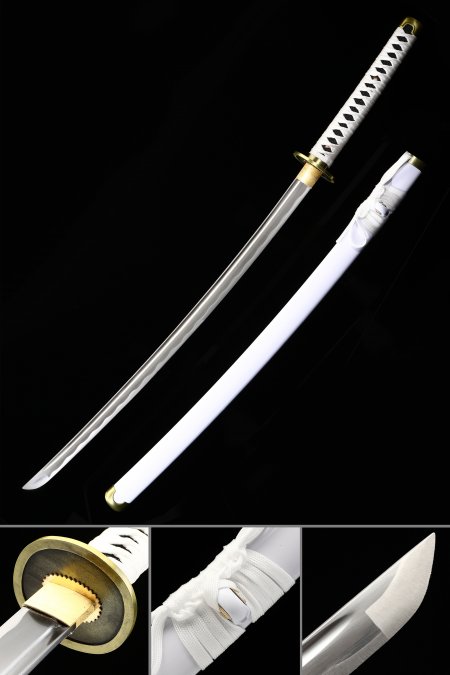
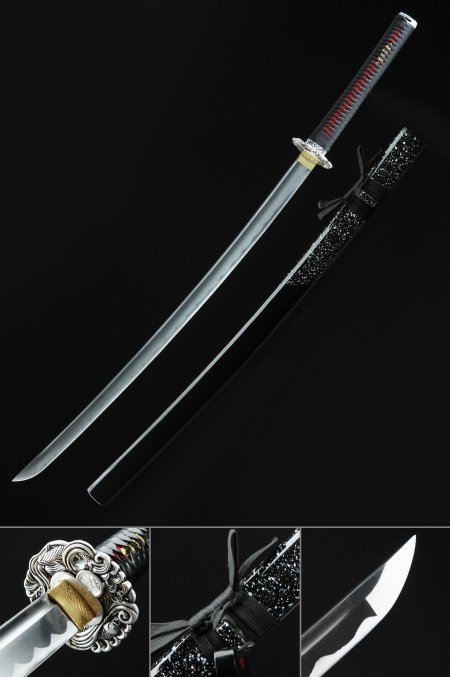
A real hamon is a structural feature created during the heat-treatment process, not applied to the surface afterward. The smith coats the blade's spine in clay before quenching; the uncoated edge cools rapidly and hardens into martensite, while the clay-protected spine stays softer and tougher. The visible boundary - the hamon - is where these two metallurgical zones meet. Under good light, a real hamon shows nie (tiny reflective crystals) and nioi (a misty, cloud-like glow) that shift as the blade angle changes. An etched or acid-drawn hamon, by contrast, is a uniform line cut chemically into the steel's surface - it looks flat, lacks crystal activity, and does not change appearance under different lighting. On any blade in this collection, the hamon you see is the direct result of differential clay tempering.