What makes clay tempering different from standard hardening?
Updated Mar 2026
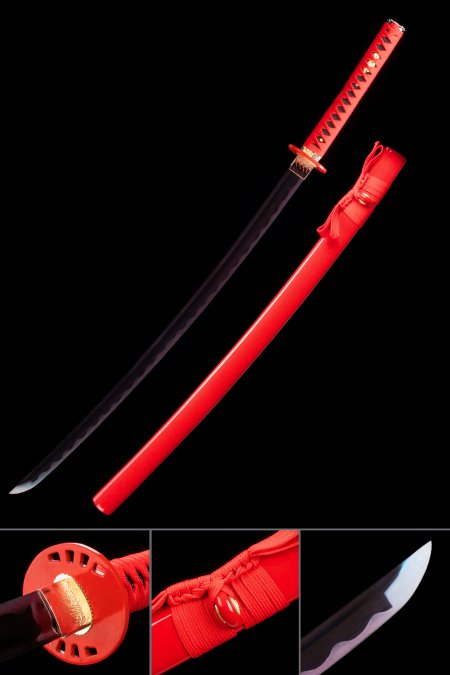
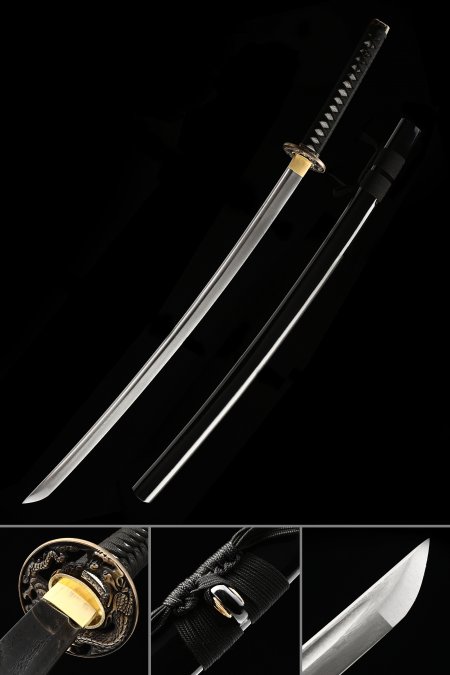
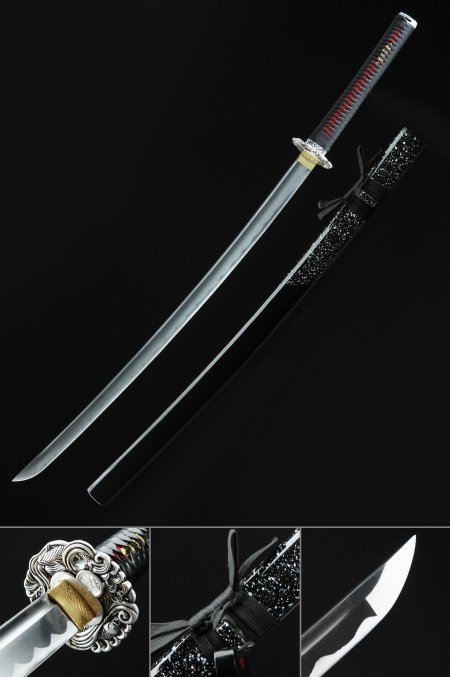
Standard hardening quenches the entire blade uniformly, producing consistent hardness throughout but sacrificing the visual and structural contrast that defines traditional Japanese swords. Clay tempering selectively insulates the spine with a refractory clay mixture before quenching, causing the spine to cool slowly and remain tough while the edge hardens rapidly into a martensitic structure. The result is a real hamon - a temper line visible to the naked eye as a mist-like boundary running along the blade. This hamon is not decorative; it is a direct record of the thermal gradient created during hardening. Collectors prize it because it cannot be faked convincingly: an authentic hamon has depth, texture, and nie (crystalline sparkle) that acid-etched imitations lack entirely.