What makes red-black ito wrapping difficult to execute well?
Updated Mar 2026
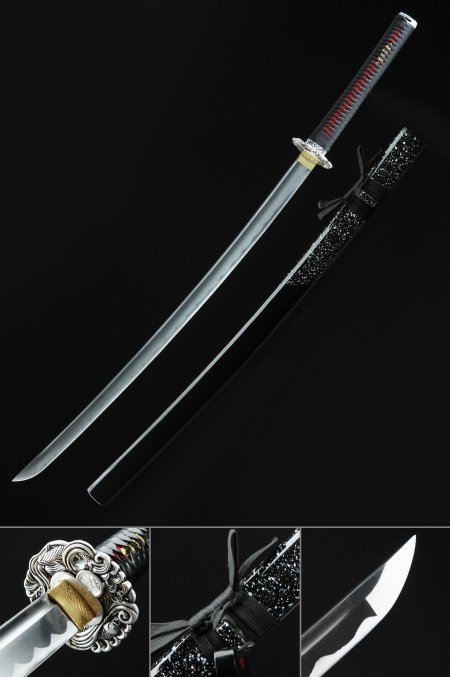
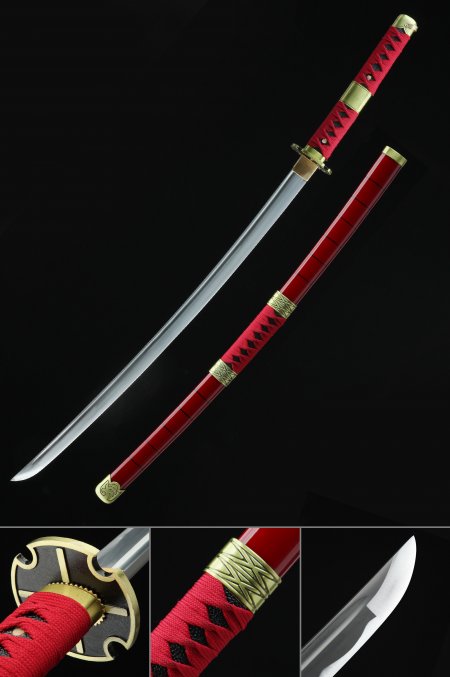
Alternating two ito colors on a tsuka demands precise measurement and consistent tension throughout the entire wrapping process. A single miscalculation in the starting position shifts every subsequent diamond out of alignment, making the color split uneven along one side of the handle. On well-made pieces, the red and black sections meet cleanly at each crossing point with no overlap or gap, and the ito lies completely flush against the samegawa underneath. Collectors should inspect the underside of the handle near the pommel — this area is the most difficult to finish neatly and is where shortcuts in craftsmanship become most visible.