What makes Damascus steel visually different from standard katana steel?
Updated Mar 2026
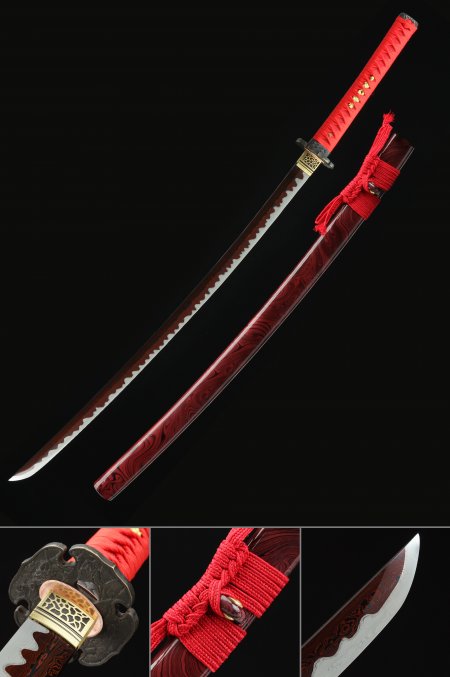
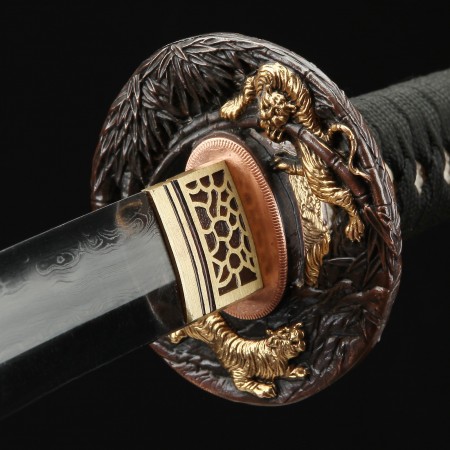
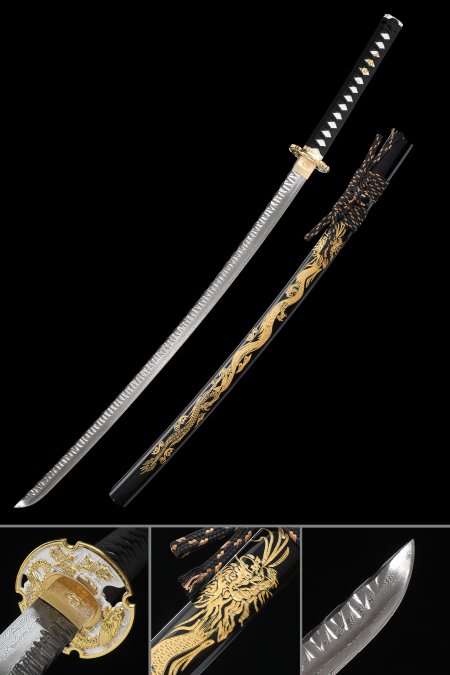
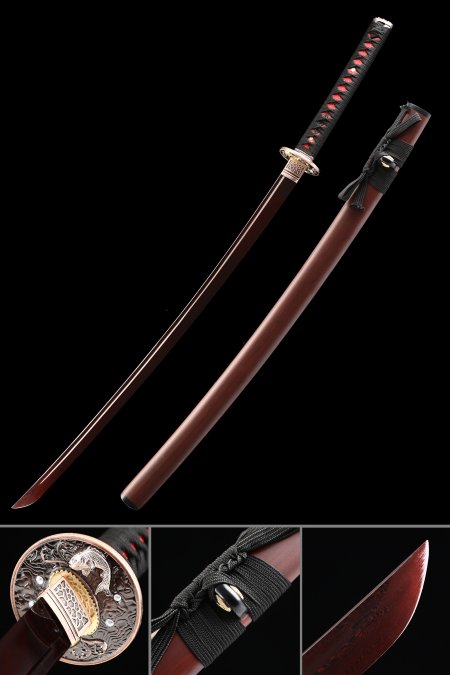
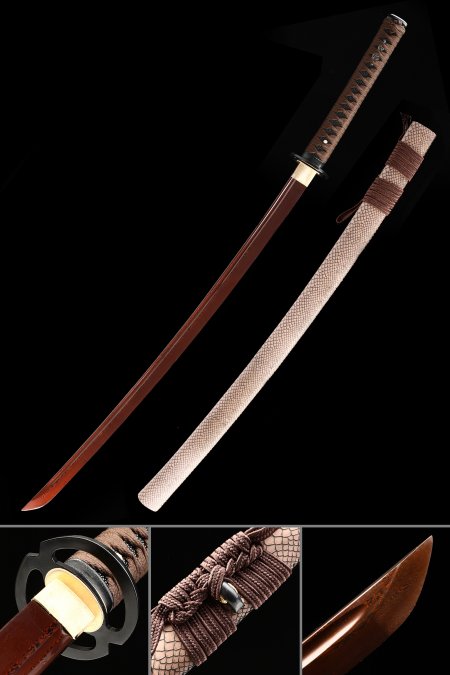
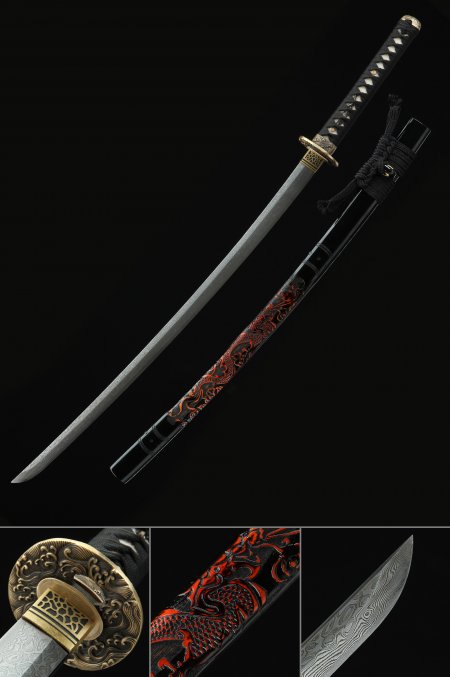
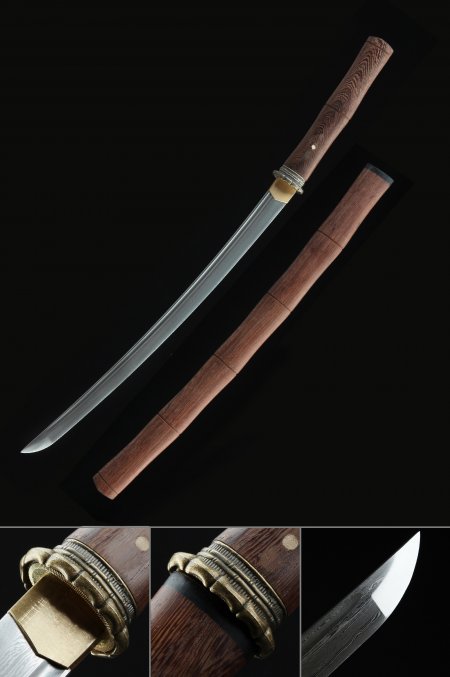
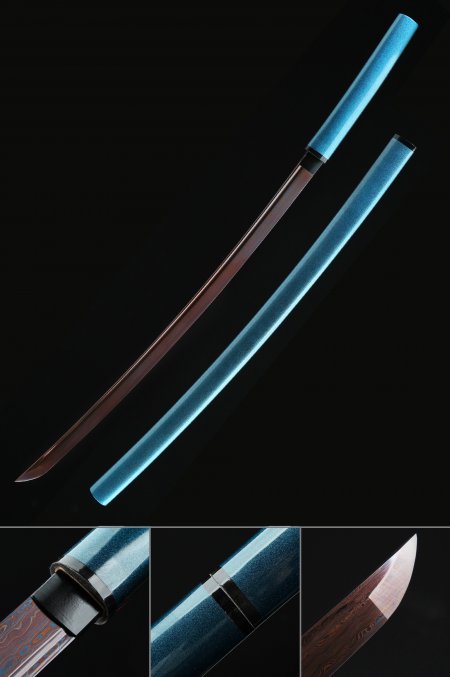
Damascus steel is produced by forge-welding multiple layers of steel together, then repeatedly folding and drawing out the billet. This process creates the characteristic flowing, watered surface pattern - often described as woodgrain or water ripples - that no standard mono-steel blade can replicate. In dark red Damascus katana, this layered grain appears especially vivid against the deep crimson blade finish, creating a visual contrast between the steel's natural silver-gray tones and the overall color treatment. Because the pattern forms organically during forging, every blade carries a unique surface design, which is a significant part of their collectible appeal.