How does a 1045 katana differ from a T10 or 1095 steel piece?
Updated Mar 2026
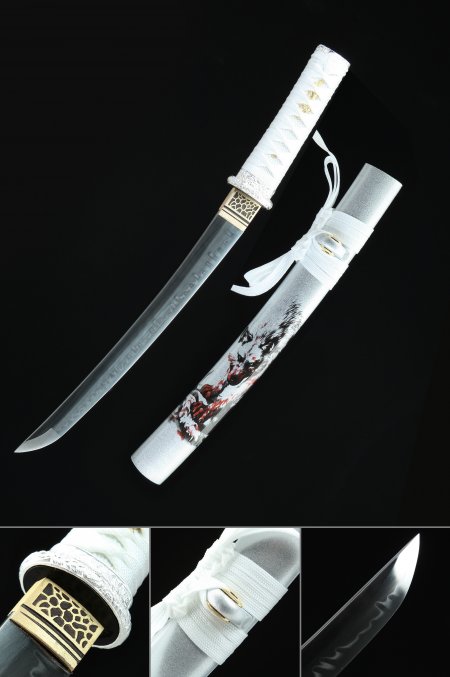
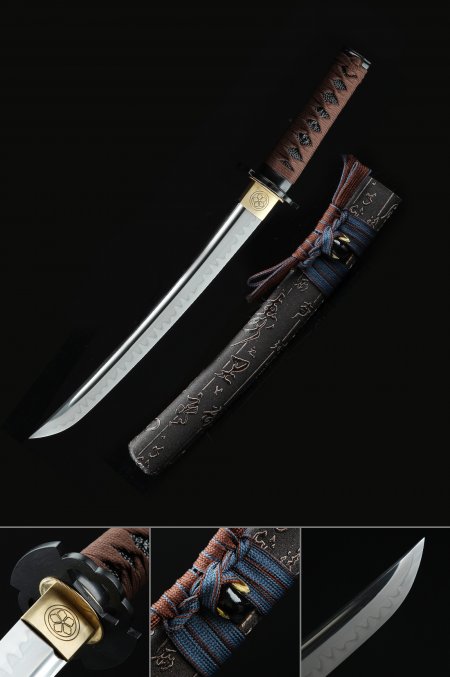
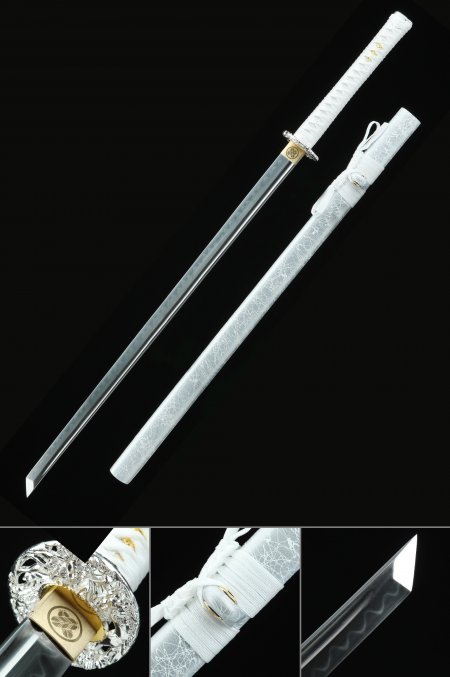
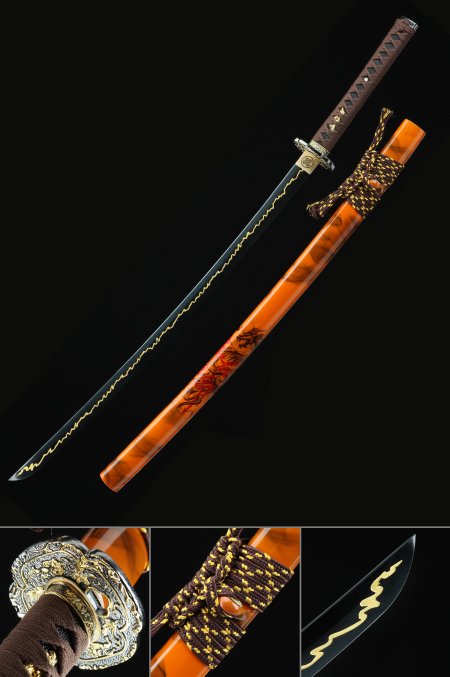
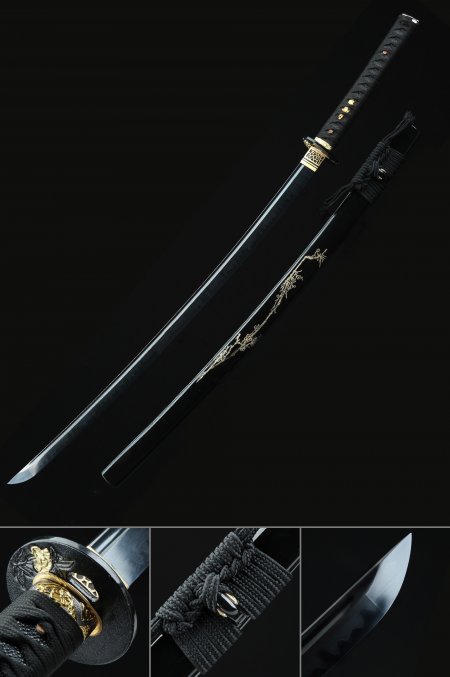
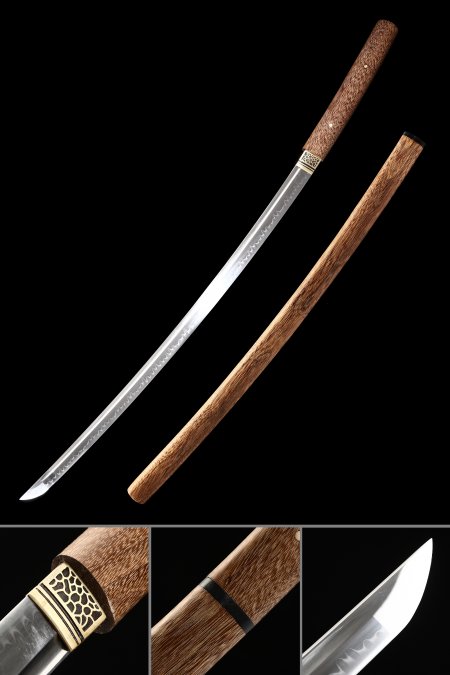
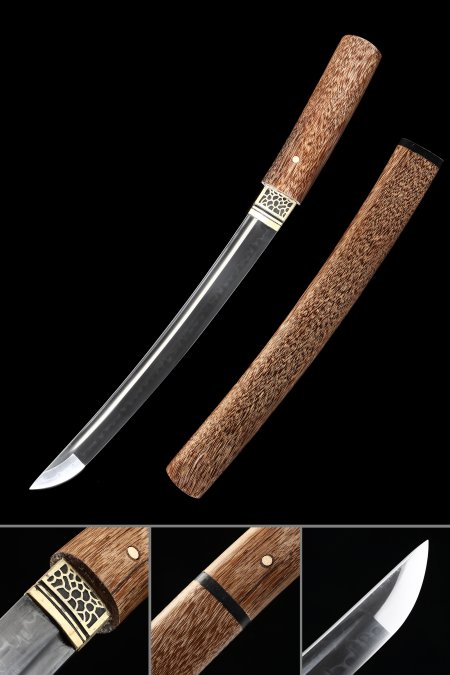
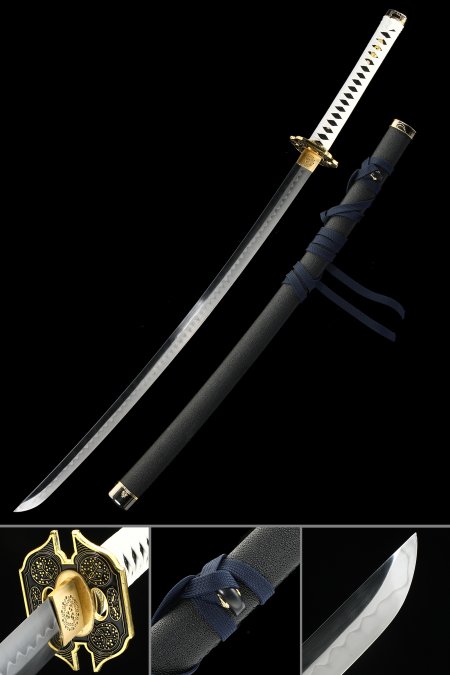
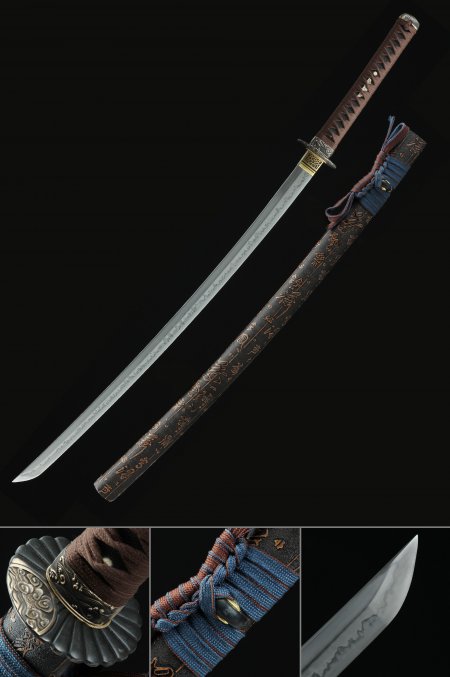
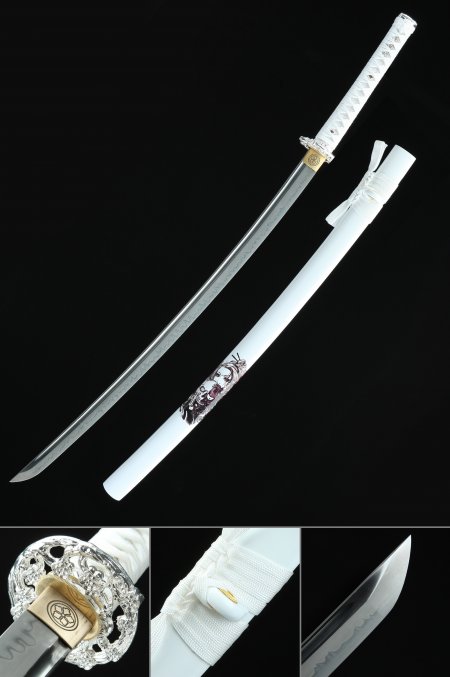
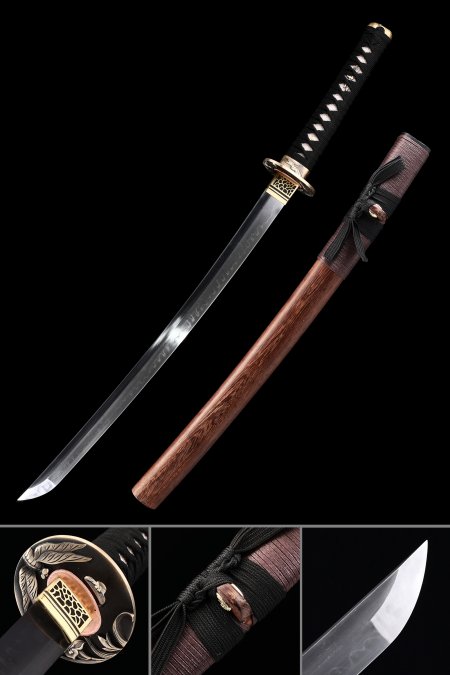
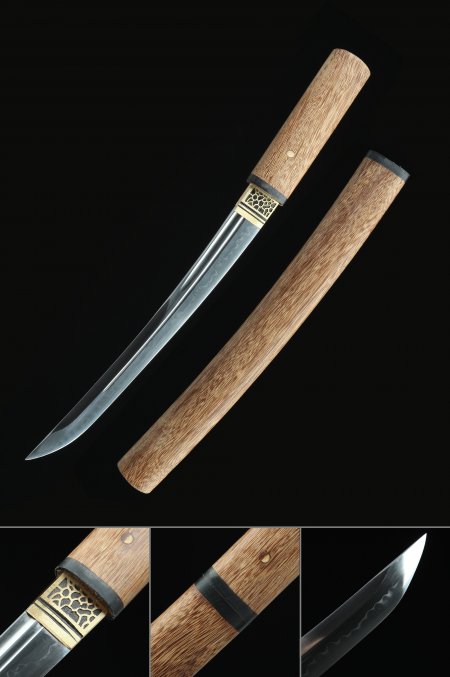
The differences come down to carbon content, heat treatment potential, and surface character. T10 tool steel and 1095 high-carbon steel both contain significantly more carbon (0.95-1.0%), which allows a skilled smith to perform clay tempering - a process that creates a visible hamon (temper line) along the blade. That hamon is one of the most prized visual elements in traditional Japanese sword aesthetics. A 1045 blade, by contrast, does not clay-temper in the same way, so its appeal comes from clean geometry, consistent polish, and the overall composition of fittings and saya rather than from blade-surface detail alone. For collectors who prioritize striking overall presentation - bold red lacquer, decorative tsuba, anime-accurate proportions - 1045 is an excellent and more accessible choice. Collectors who want visible metallurgical surface character should explore the Red 1095 Carbon Steel Japanese Samurai Swords collection for that level of detail.