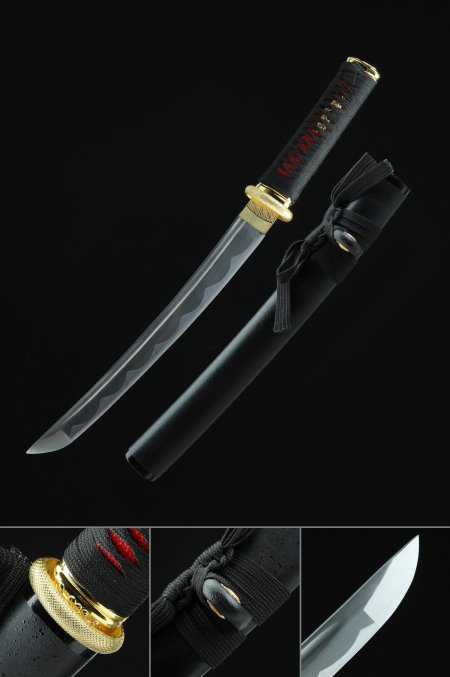
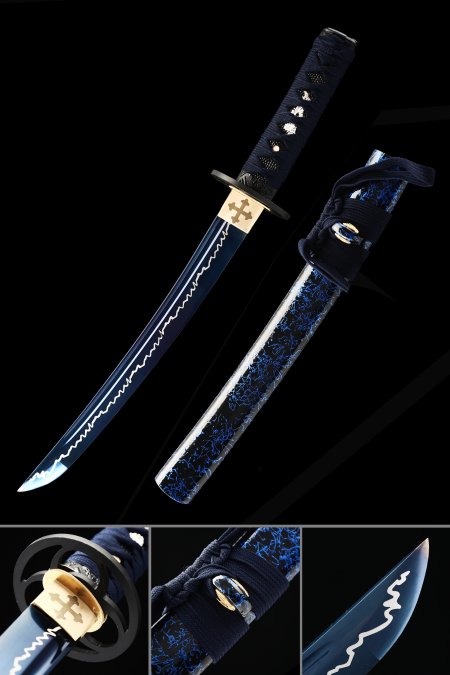
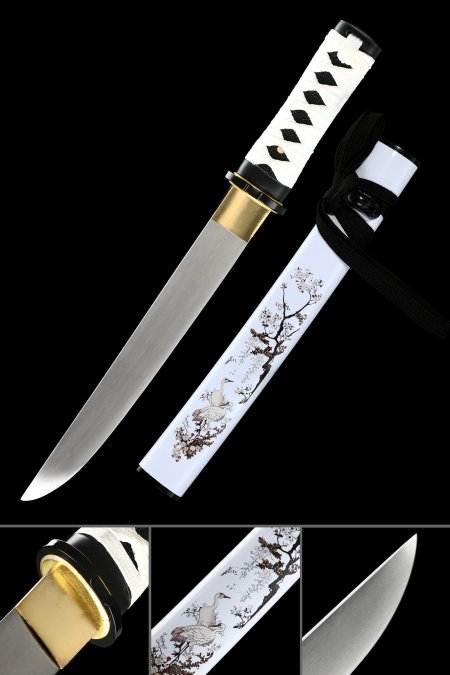
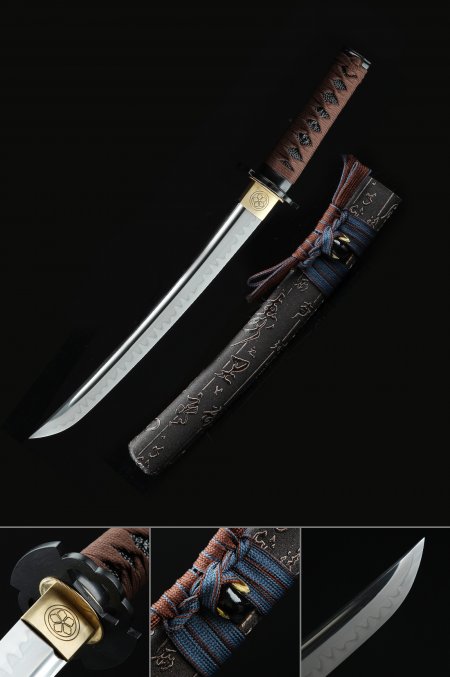
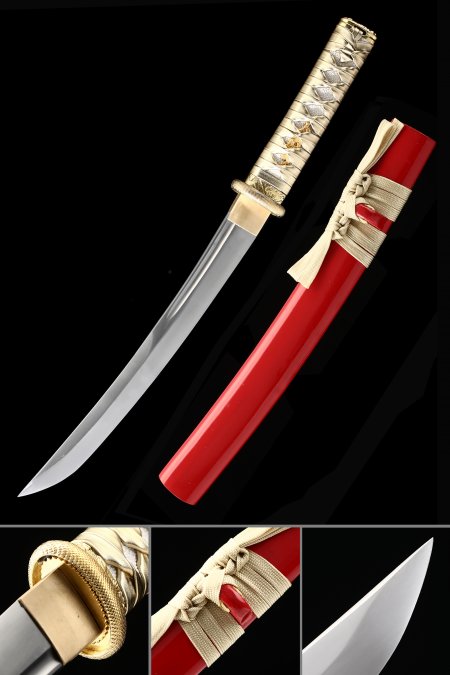
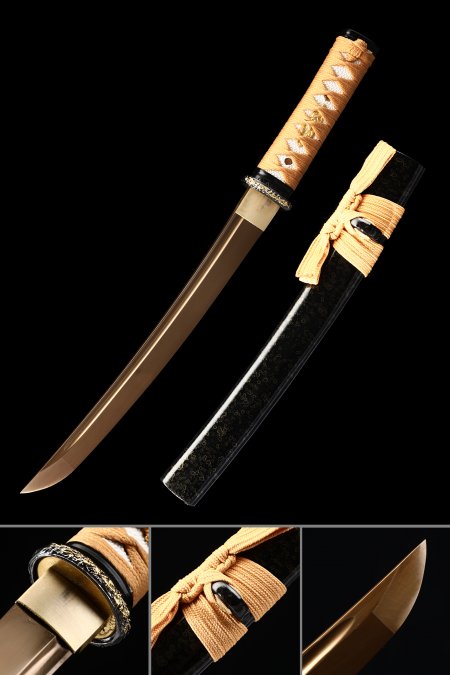
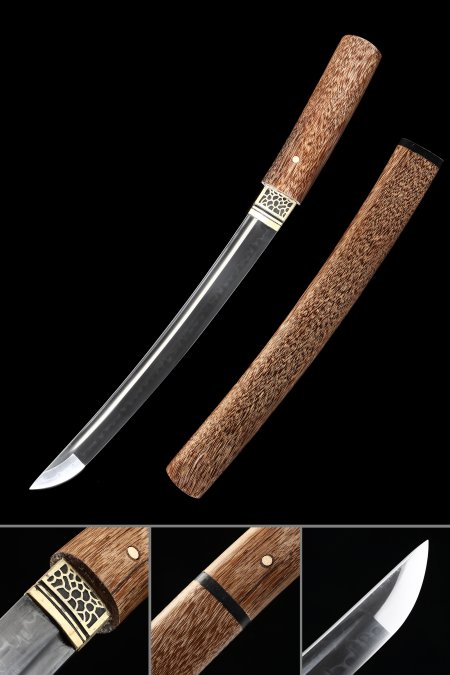
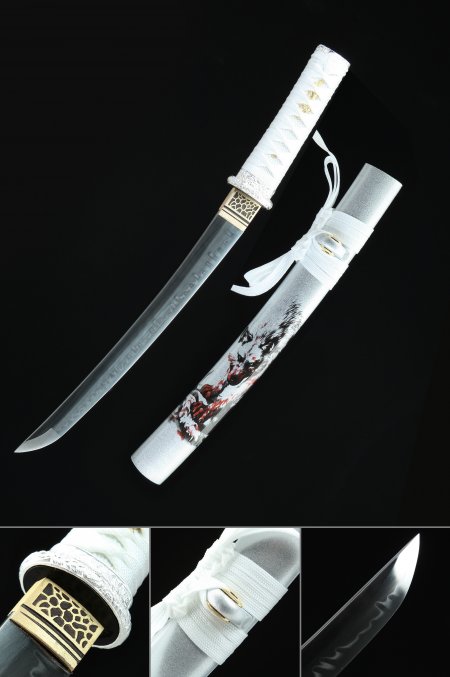
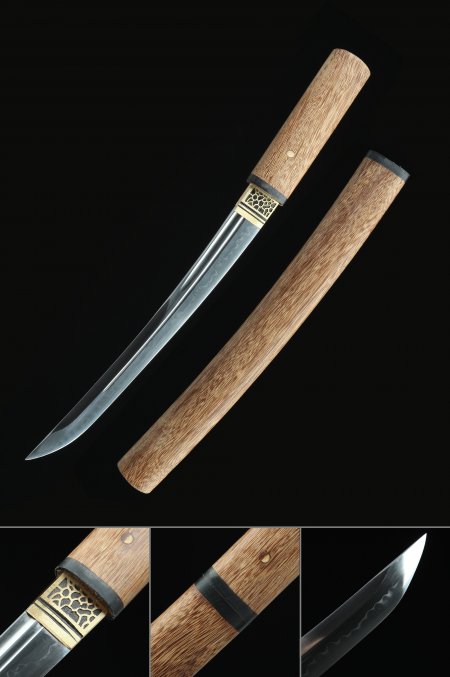
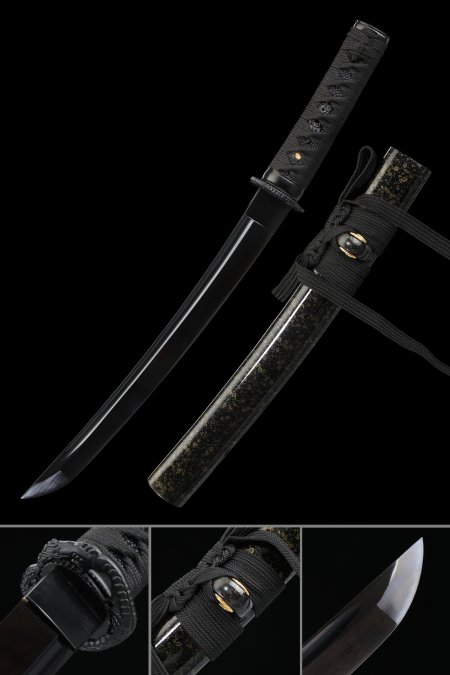
A hamidashi tanto is distinguished by its guard format: a small tsuba with a single notch (the "hamidashi" cutout) that sits flush against the habaki, the blade collar. This is the middle ground between the fully guardless aikuchi tanto and a standard tanto fitted with a full-size tsuba. The hamidashi guard is intentionally compact, typically 2–3 cm in diameter, allowing the hilt assembly to remain sleek while still providing a defined visual separation between handle and blade. In classical Japanese blade culture, this mounting style was associated with refined personal carry pieces, often fitted with higher-quality metalwork than utilitarian short blades. For display collectors today, the hamidashi format is prized because the small tsuba acts as a focal point for decorative engraving, casting, and patination work without dominating the overall composition.