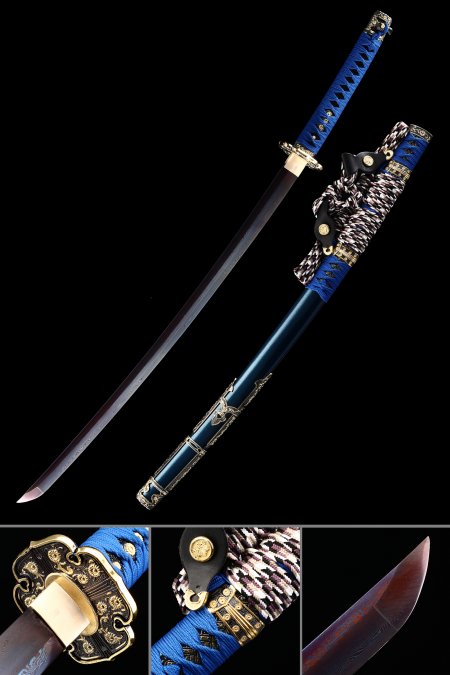
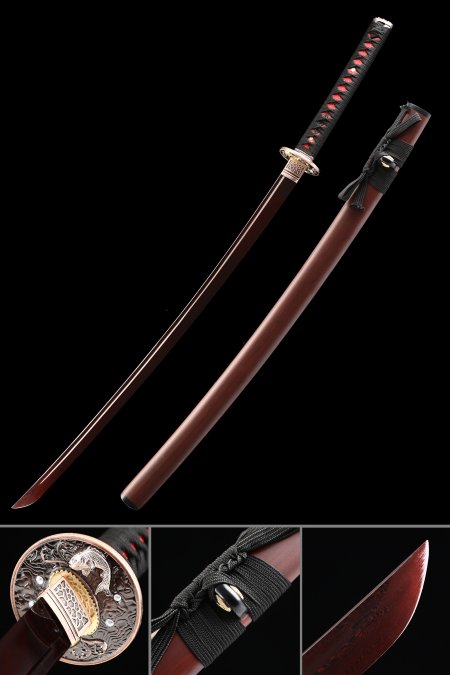
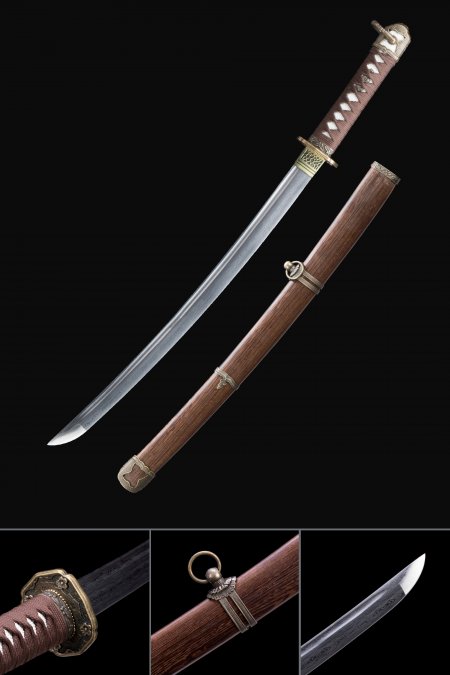
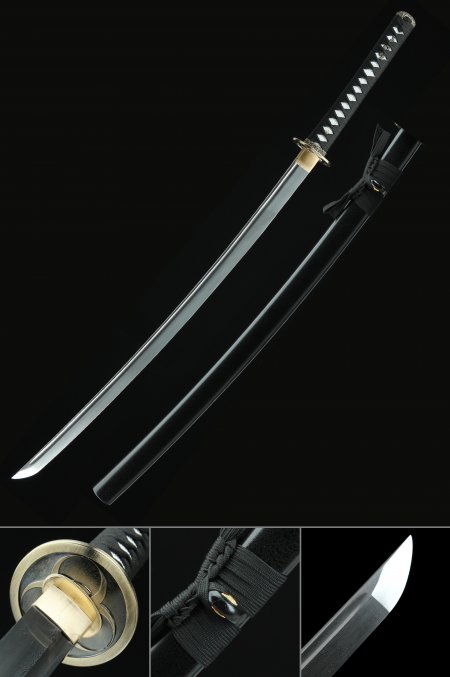
How is the Damascus pattern created on an odachi blade?
Updated Feb 2026
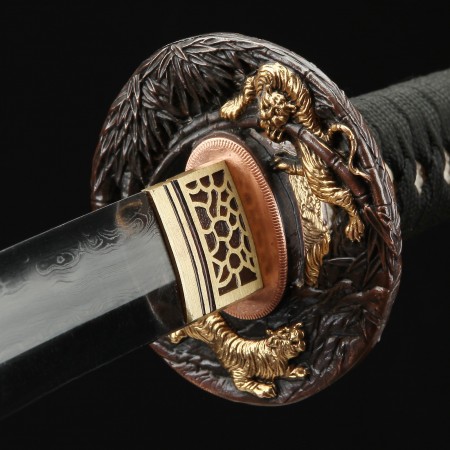
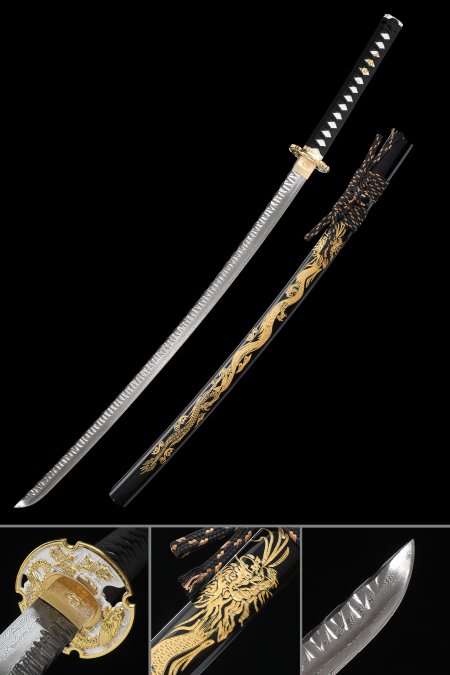
The Damascus pattern on an odachi blade is created through a forge-folding process that begins before the blade takes its final shape. The maker starts by building a Damascus billet - a stack of alternating steel types that is forge-welded together at high heat, then repeatedly folded and re-welded to multiply the layer count. Each fold doubles the number of layers from the previous cycle, so relatively few folds produce very high layer counts: ten folds produces 1,024 layers, and so on. Once the billet reaches the target layer count, it is drawn out to the elongated proportions needed for an odachi blade and shaped through forging, then ground to its final profile. The decisive step is acid etching: when the polished blade is submerged in acid solution, higher-carbon areas darken more than lower-carbon areas, creating the flowing surface patterns that are Damascus steel's defining characteristic. Because the folding process introduces random variation at each stage, no two Damascus odachi blades produce identical patterns, ensuring each piece in this collection is unique. Full-tang construction maintains the Damascus steel through the complete handle assembly.