How is Damascus steel different from regular carbon steel in a straight katana?
Updated Feb 2026
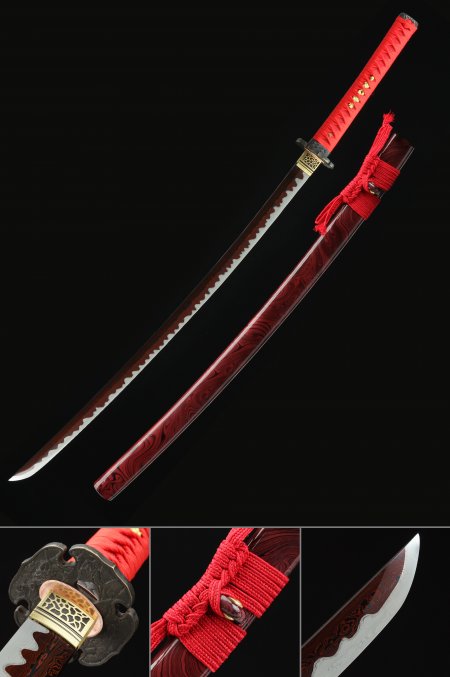
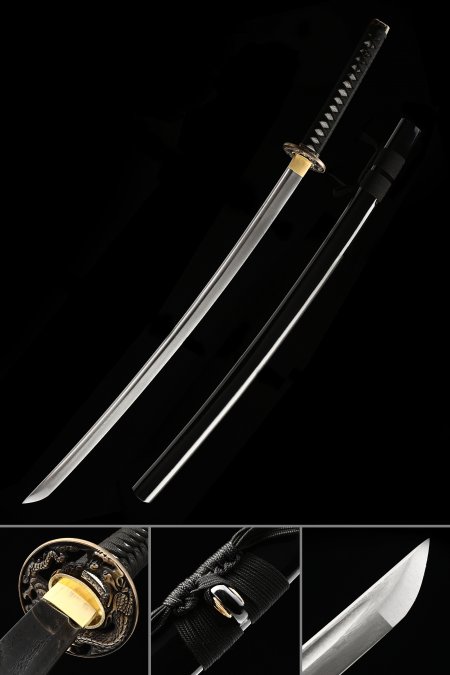
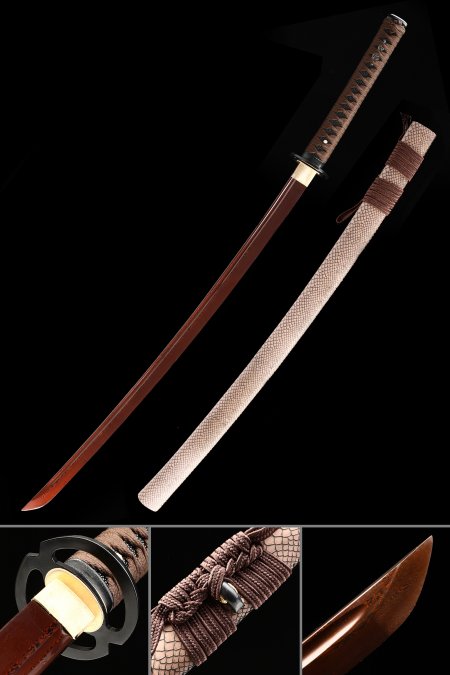
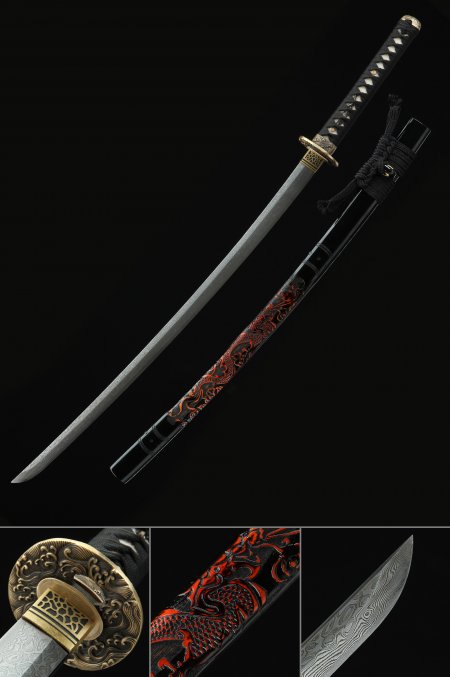
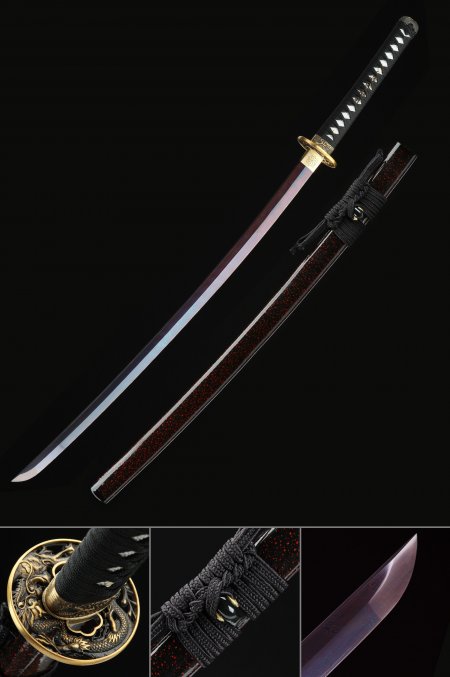
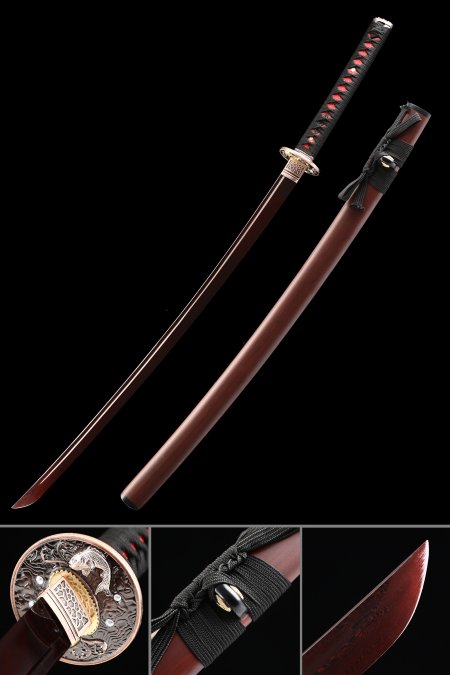
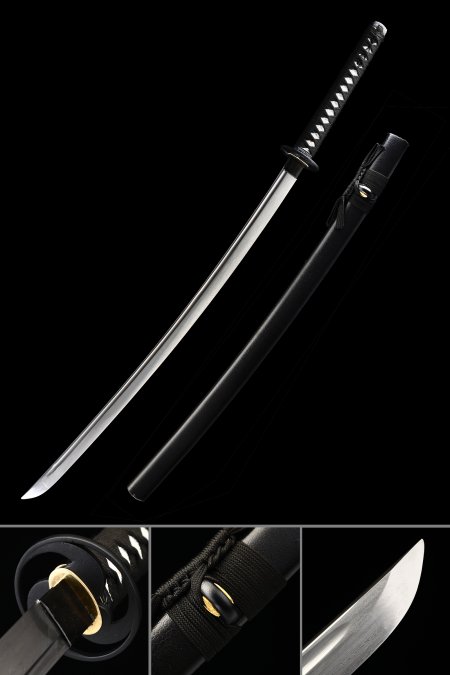
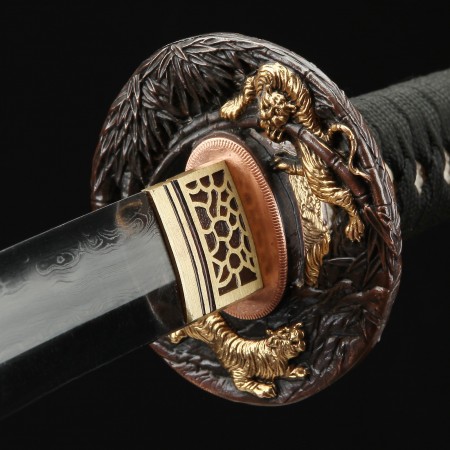
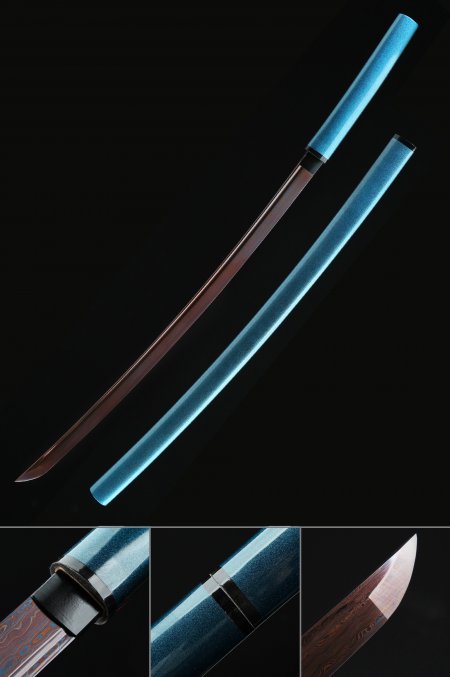
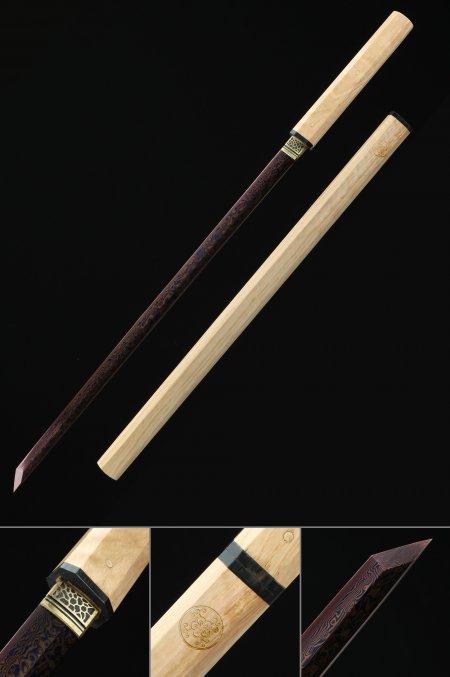
Damascus steel and regular carbon steel produce fundamentally different visual and tactile blade characters, even when both are high-quality grades appropriate to Japanese sword collecting. A regular carbon steel straight katana - whether 1045, T10, or Manganese Steel - has a uniform blade surface whose appearance is determined by the finish applied during polishing: a mirror finish, a satin finish, or a darkened treated finish, all of which appear consistent and uniform across the blade. Damascus steel, by contrast, is produced by folding and forge-welding multiple layers of steel together, then acid-etching the finished blade to reveal the layered structure as flowing, water-like surface patterns. These patterns are genuinely unique to each blade - the folding process introduces variation that cannot be exactly reproduced, so every Damascus straight katana is an individual object rather than one of an identical series. For collectors, this individuality is the core appeal of Damascus steel: you are acquiring a blade that no one else in the world has in exactly the same configuration.