What is Tamahagane steel and why is it significant?
Updated Feb 2026
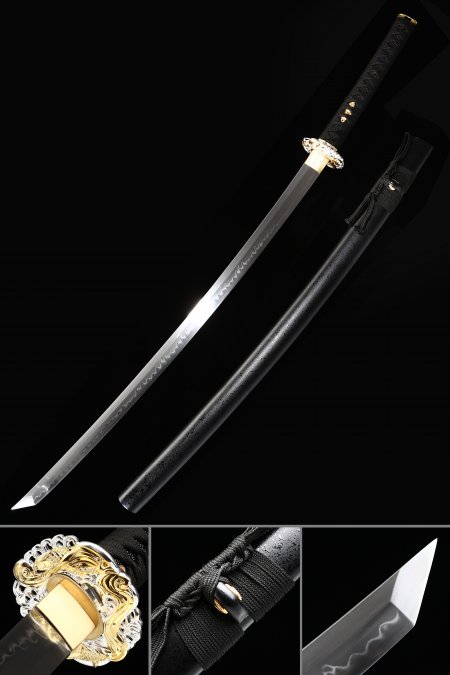
Tamahagane is a traditional Japanese steel produced through a specific smelting process using iron sand and charcoal in a clay furnace called a tatara. The tatara smelting process creates steel with variable carbon content throughout the bloom, which the swordsmith then selects, folds, and works to achieve the specific carbon distribution and grain structure appropriate to the blade being made. Tamahagane is significant in Japanese sword collecting because it is the material most closely associated with the historical tradition of Japanese sword-making - the great historical Japanese swords were made from Tamahagane, and the steel's specific properties including its grain structure and response to clay-tempered heat treatment are what produce the visual characteristics most prized in Japanese blade collecting. A Tamahagane steel katana with a carp-themed tsuba represents a genuine engagement with the traditional Japanese sword material rather than the modern high-carbon steels like T10 and 1060 that are used in the majority of contemporary Japanese sword collectibles. The carp is a significant symbol in Japanese culture, associated with perseverance, determination, and the aspiration to excellence - an appropriate decorative motif for a Tamahagane blade.