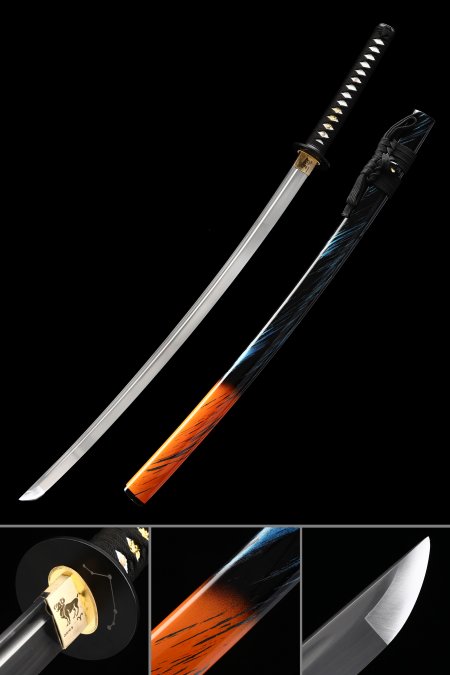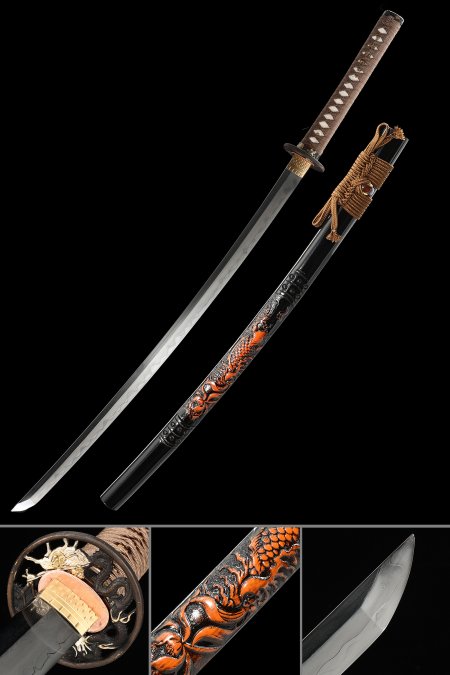
Black Orange Saya Katana

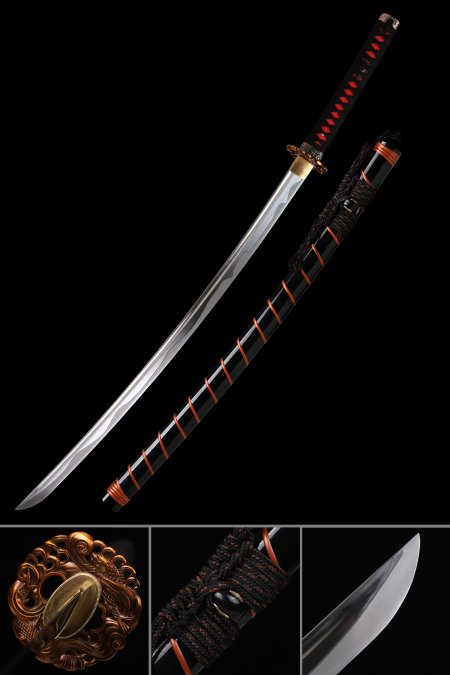
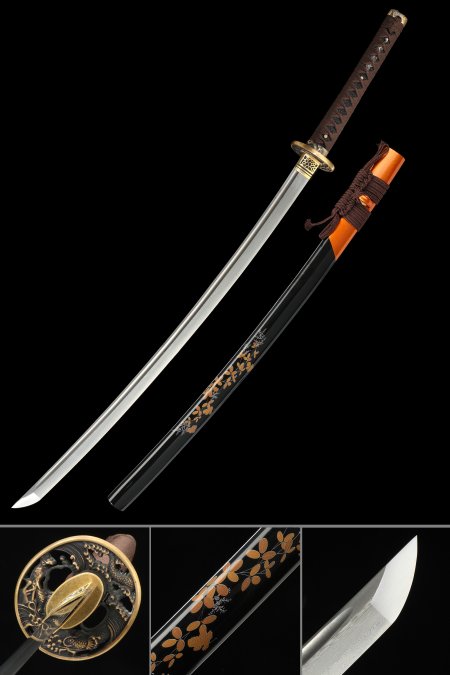
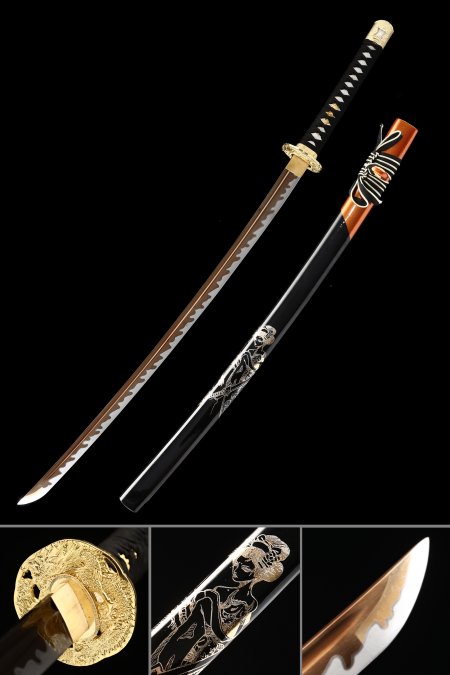
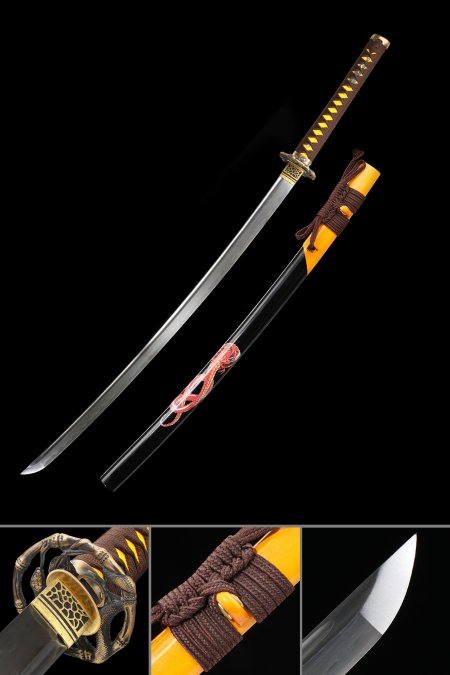
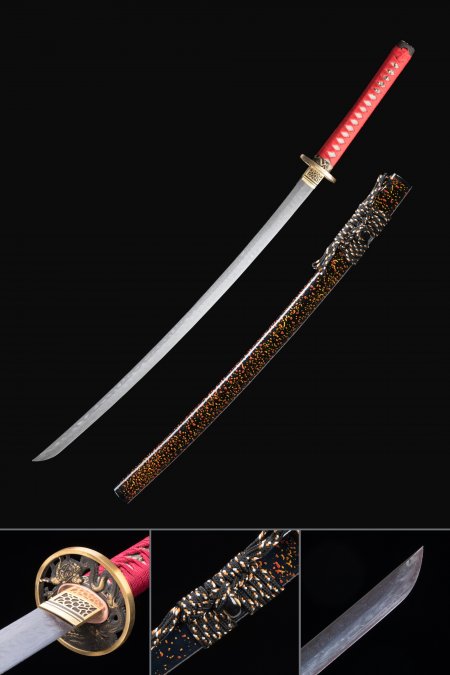
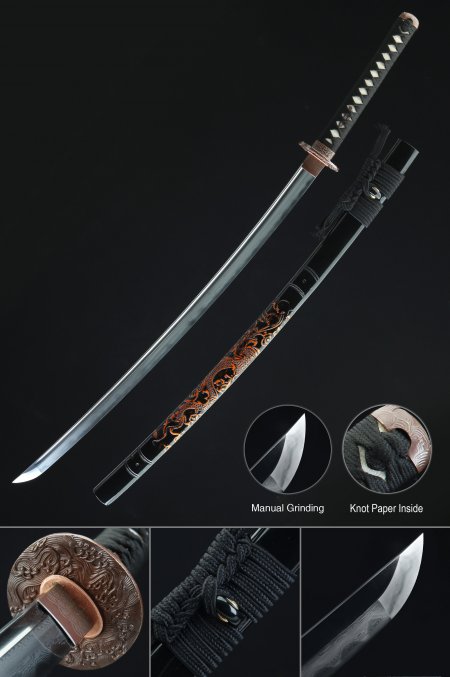
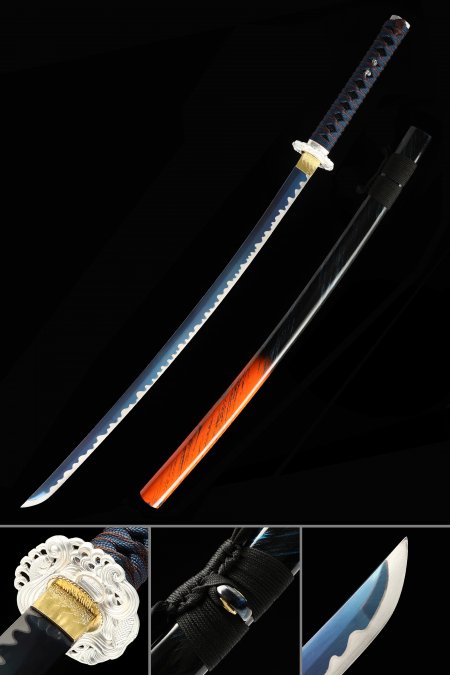
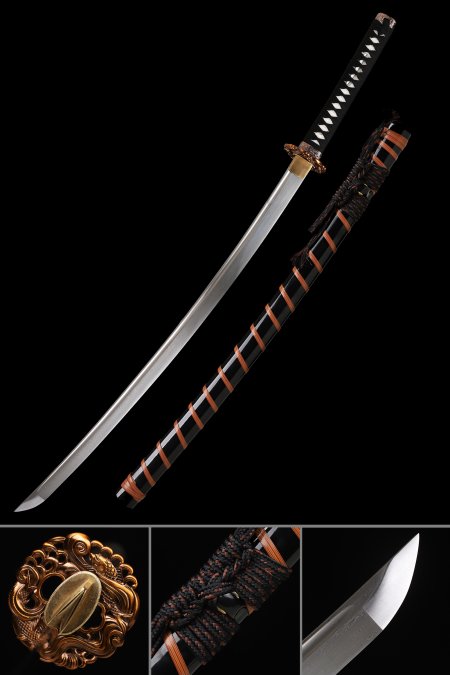
Bold contrast meets traditional craftsmanship in our Black & Orange Saya Katana collection. Each piece features hand-lacquered sayas in striking black and orange finishes, paired with forged blades in Damascus, T10, 1045, or high-manganese steel - making every sword a standout display centerpiece. Complimentary free shipping and hassle-free returns are included with every order.
Showing 10 Products

Frequently Asked Questions

What makes black and orange saya a distinct aesthetic choice?
Black and orange lacquer on a katana saya draws from a long tradition of using high-contrast color to signal status and visual identity in Japanese sword culture. Black urushi-style lacquer provides a deep, light-absorbing base, while the orange panel - whether applied as banding, flame motifs, or dragon relief - creates immediate visual tension. This combination is not arbitrary: orange historically evokes fire and vitality in East Asian decorative arts, making it a natural pairing with dragon and koi tsuba imagery. On a display piece, the contrast ensures the saya reads as a complete artwork rather than simply a protective sheath.
How does Damascus steel differ from T10 in this collection?
Damascus steel in this collection refers to pattern-welded construction, where multiple steel layers are folded and forge-welded together, then acid-etched to reveal a flowing grain pattern on the blade surface. Each Damascus blade carries a unique visual fingerprint. T10 carbon steel, by contrast, is a single high-carbon steel (approximately 1.0% carbon with trace tungsten) that is clay-tempered during heat treatment to produce a visible hamon - the wavy temper line along the edge zone. Where Damascus impresses with surface pattern, T10 impresses with the depth and activity of its hamon. Collectors who value blade surface aesthetics often find both worth owning for different reasons.
Are these katana full-tang, and why does that matter for display?
Several pieces in this collection are explicitly full-tang construction, meaning the steel of the blade extends as a single continuous piece through the entire length of the handle. For display purposes, full-tang construction matters because it ensures the handle-to-blade joint remains stable over years of mounting, repositioning, and handling during cleaning. Partial-tang or rat-tail tang katana can develop looseness at the habaki or tsuka over time, which becomes visible and distracting in a display context. Full-tang also adds meaningful weight distribution that makes the katana feel balanced when taken in hand, which enhances the ownership experience even for pieces never intended to leave the stand.
How should I care for a lacquered saya to preserve its finish?
Lacquered sayas - especially those with layered black and orange finishes or carved relief work - require specific handling to stay pristine. Avoid prolonged exposure to direct sunlight, which can cause the orange pigment to fade and the lacquer to develop hairline crazing over time. Store the katana horizontally in a low-humidity environment; moisture cycling causes wood expansion and contraction that stresses the lacquer layer. When handling, hold the saya by its body rather than gripping the painted or carved sections tightly. For light dust removal, use a soft, dry microfiber cloth - never solvents or furniture polish, which can strip the finish. A light application of Renaissance Wax once or twice a year adds a protective micro-layer without altering the visual appearance.
What display setup works best for a black and orange saya katana?
A horizontal single-tier or two-tier wooden stand is the most common choice and allows the full saya profile - including carved dragon motifs and color banding - to be read at a glance. Position the katana with the cutting edge facing upward and the saya's most detailed panel facing outward. If displaying multiple katana as a group, mixing a Black & Orange Saya piece with contrasting sayas from a Dragon Katana set creates a visually balanced arrangement. Soft accent lighting from above or below enhances the lacquer's depth and makes the orange elements glow. Avoid placing the display directly beneath HVAC vents, as air movement accelerates drying and can loosen lacquer over time.

Customer Reviews