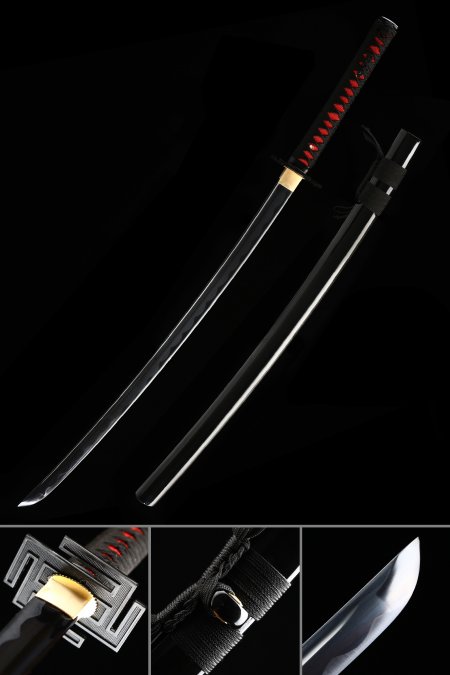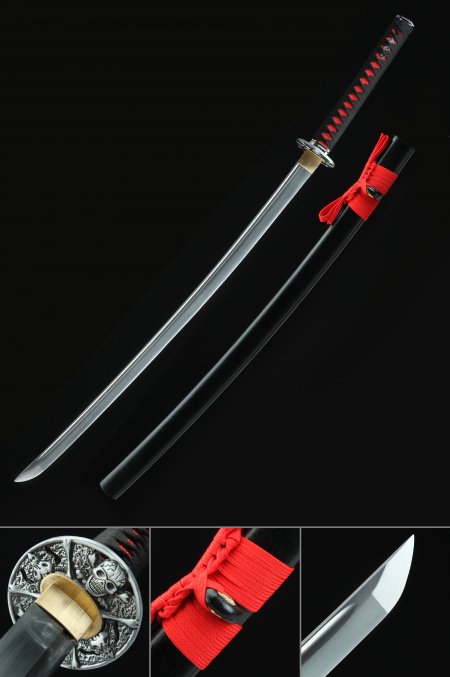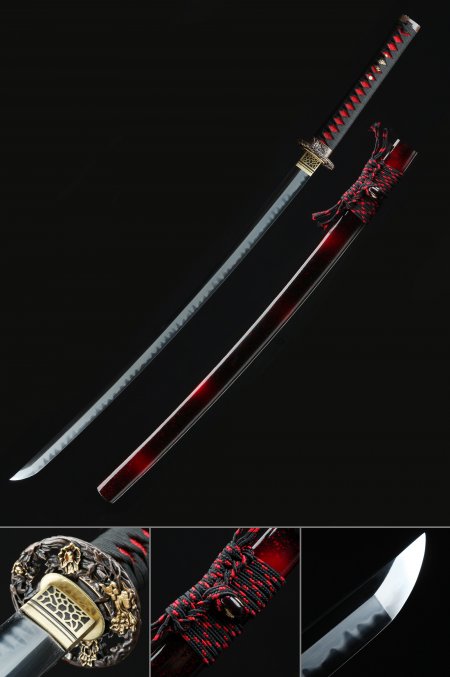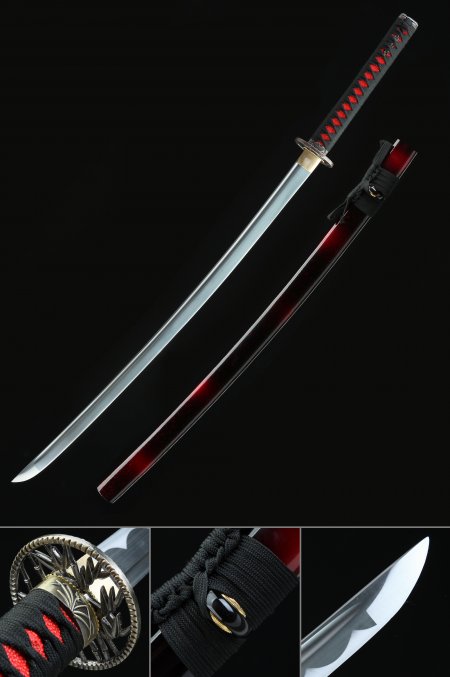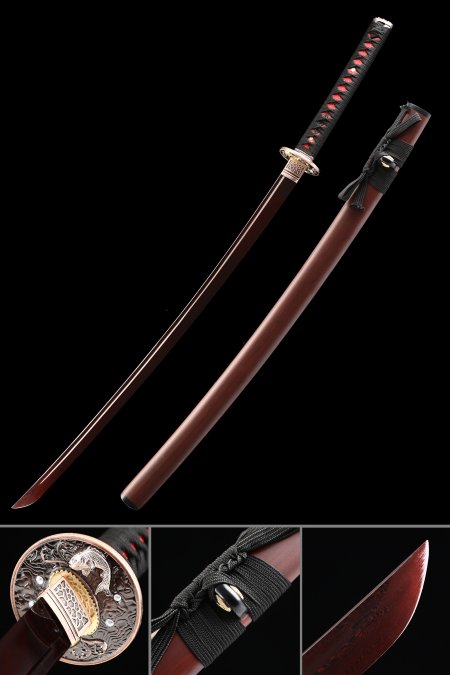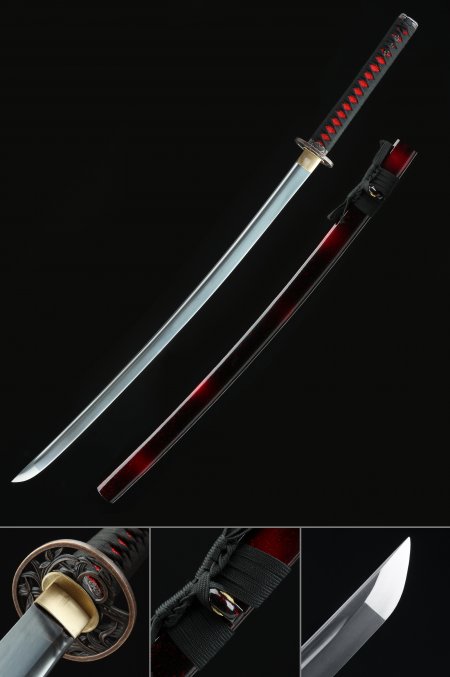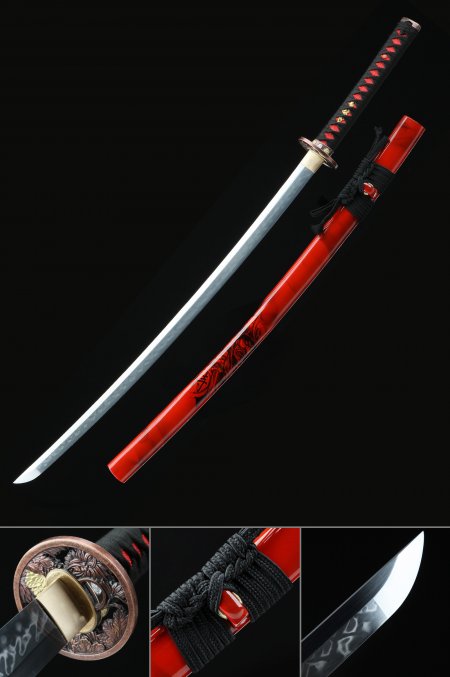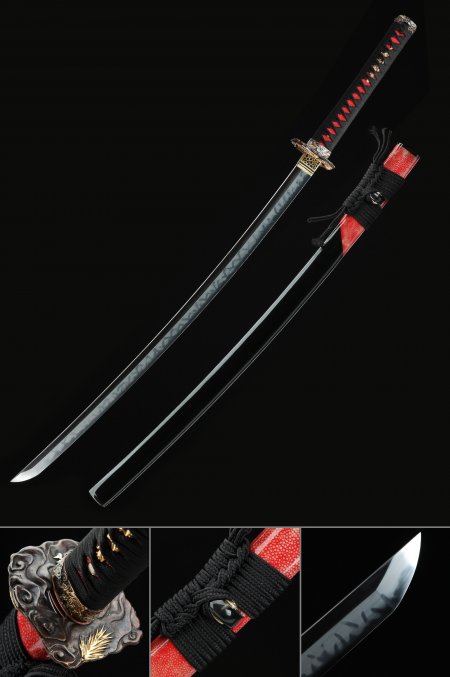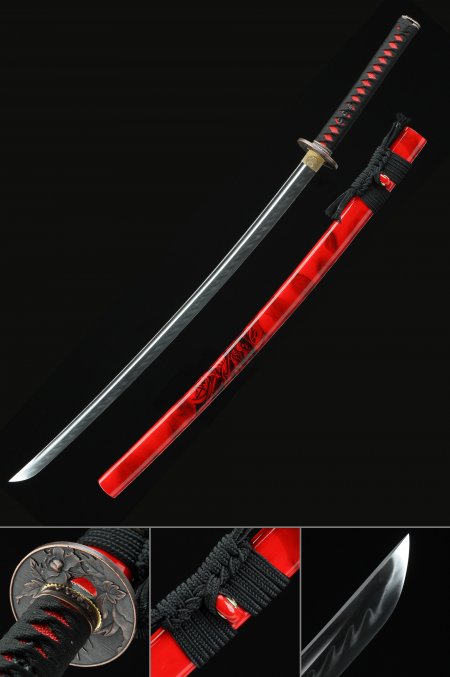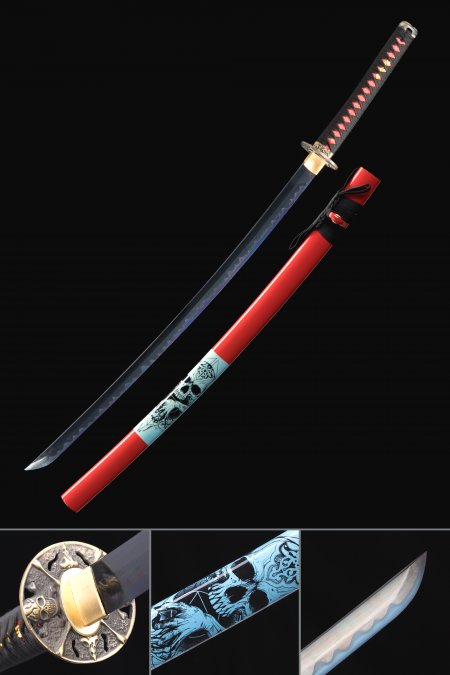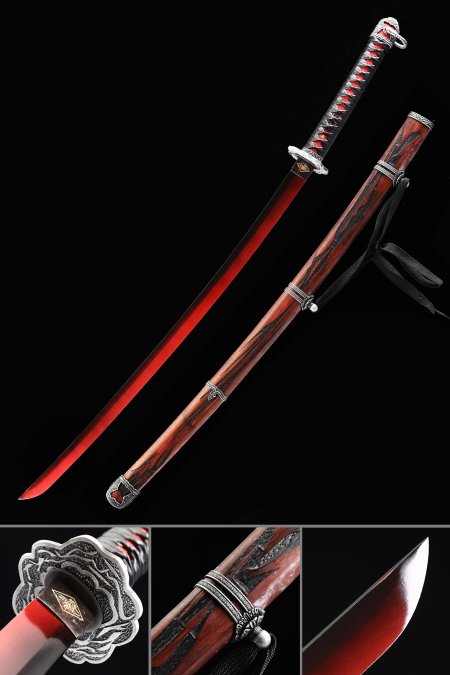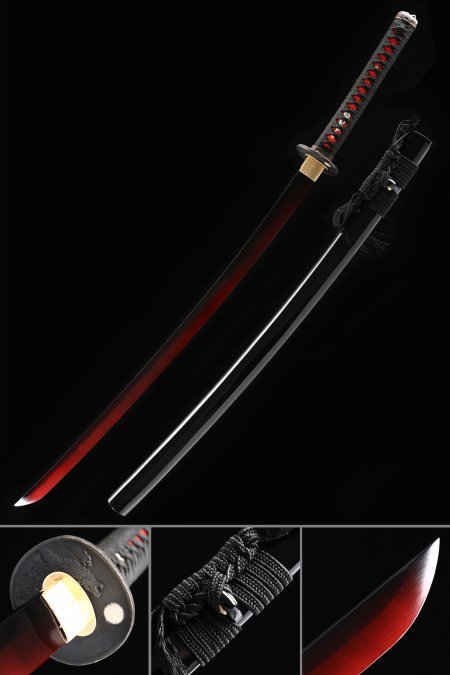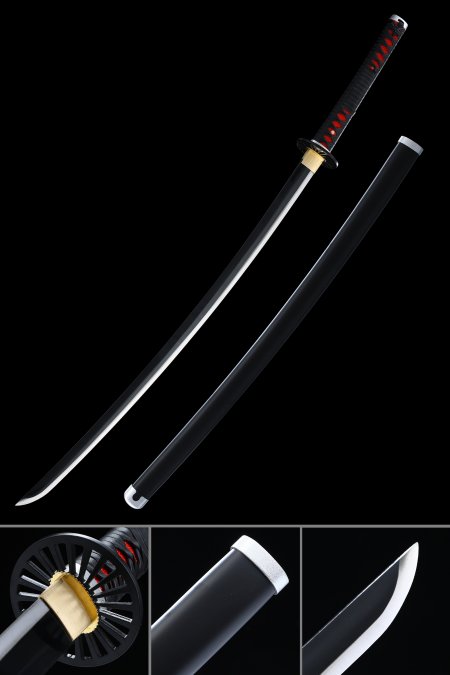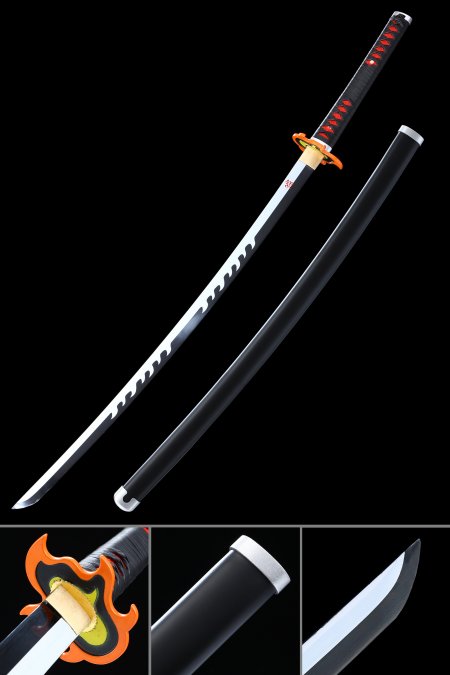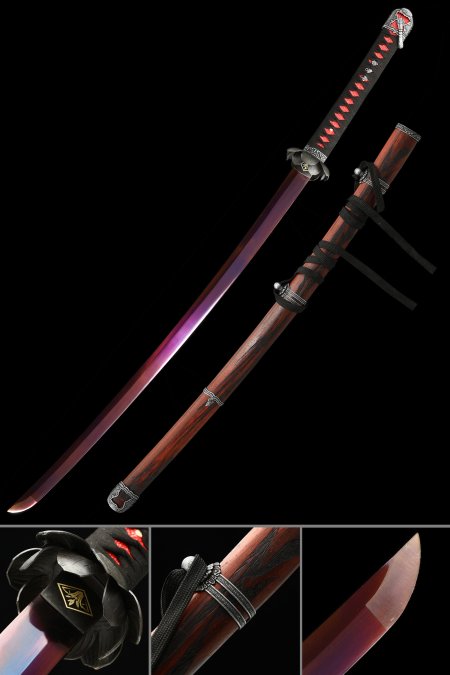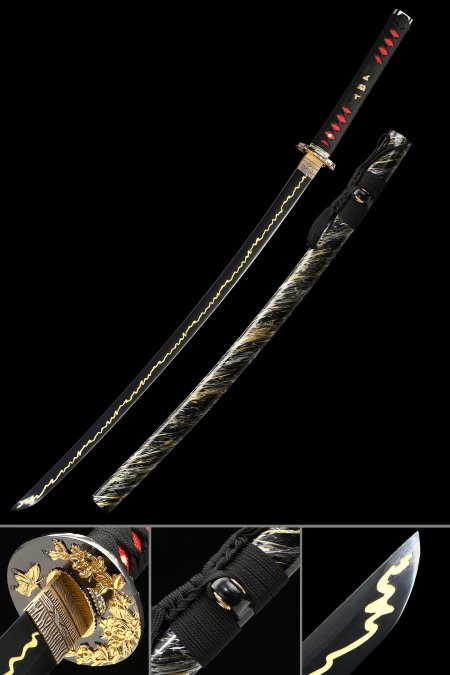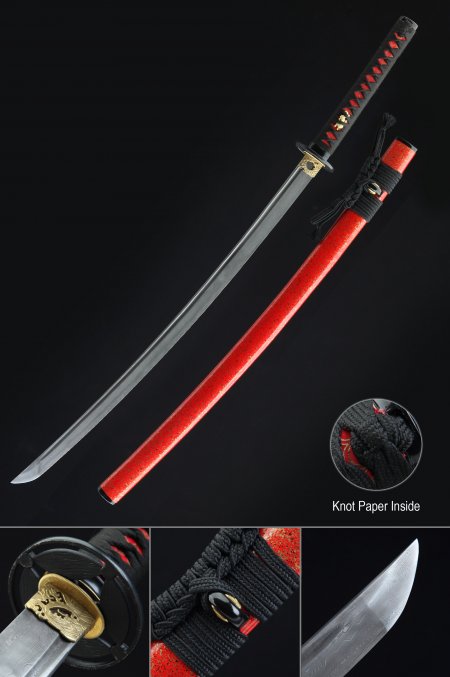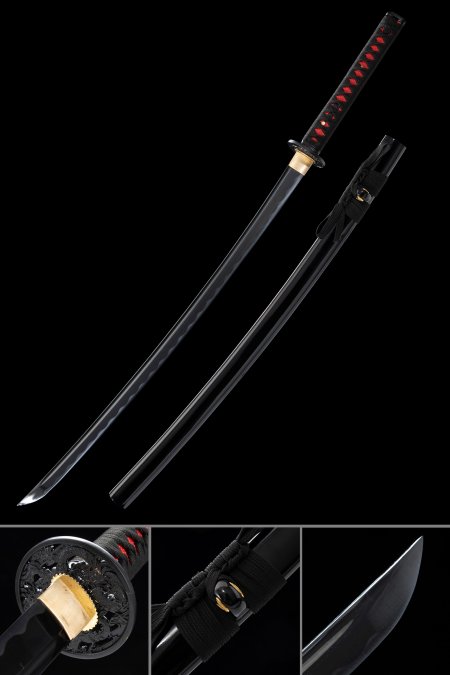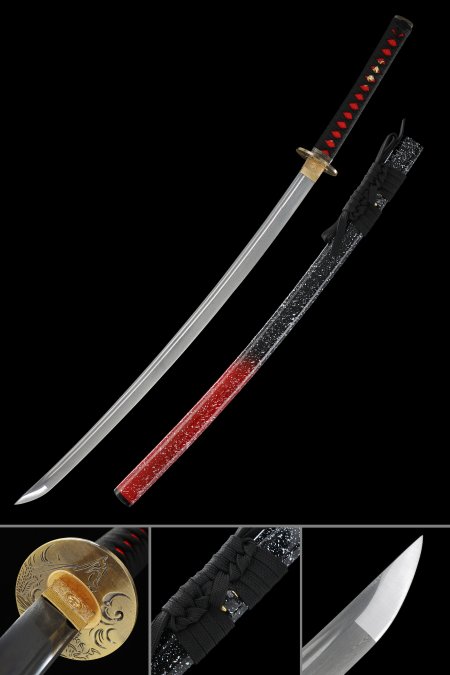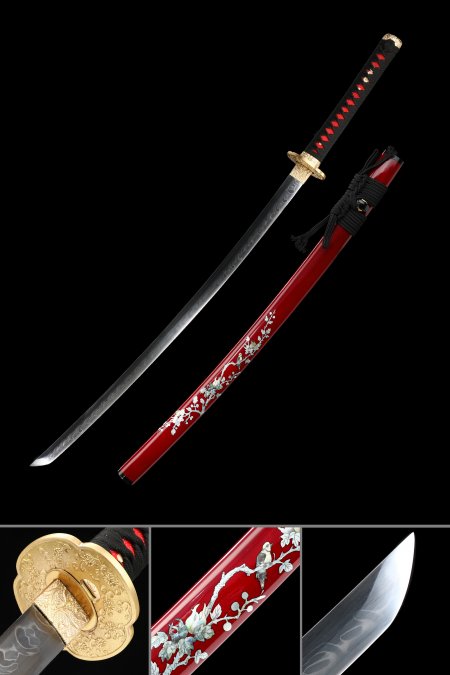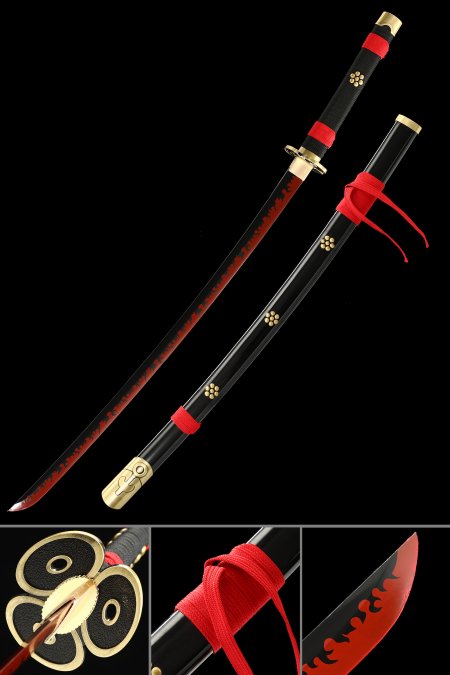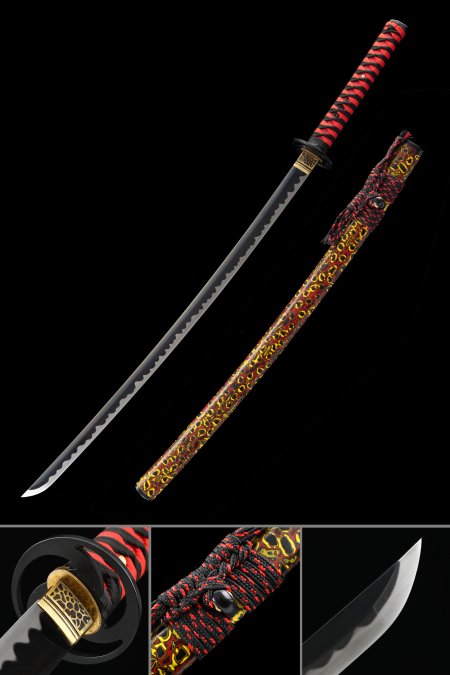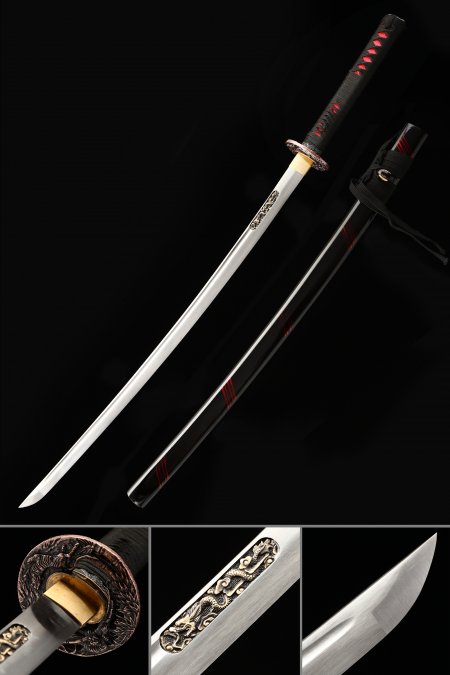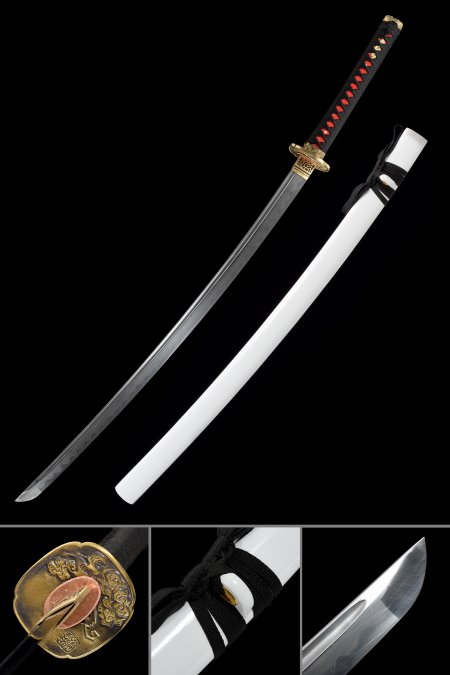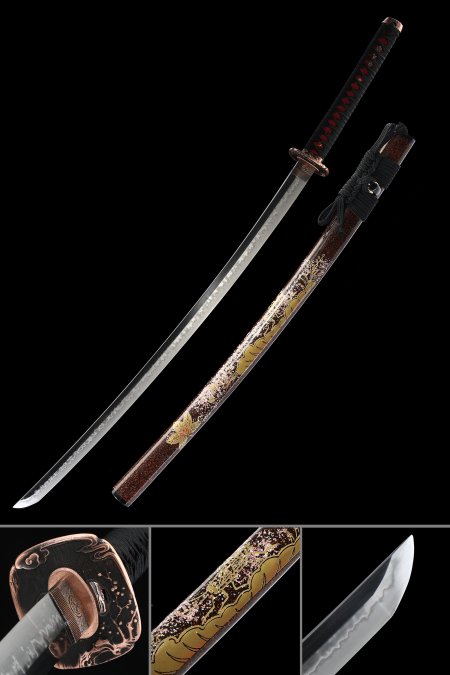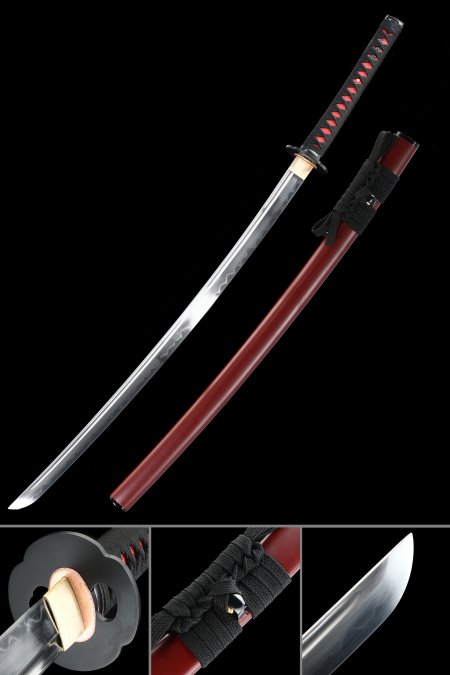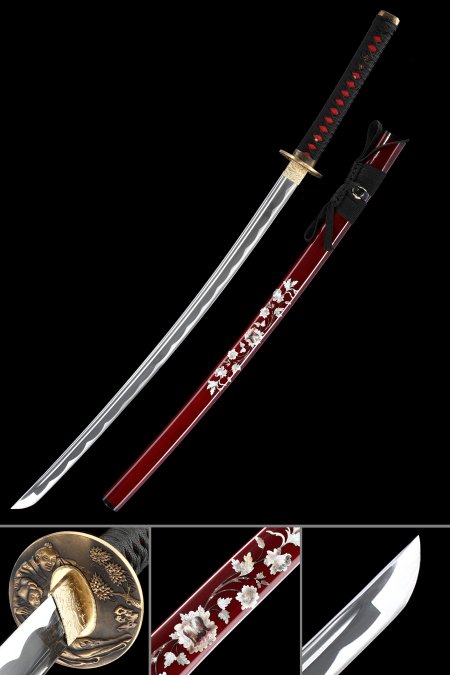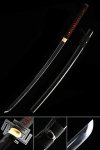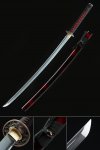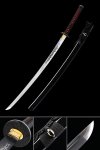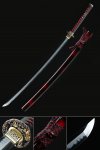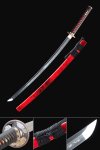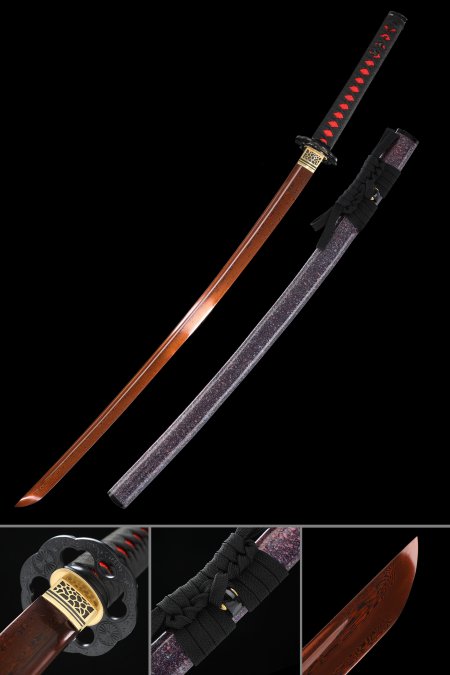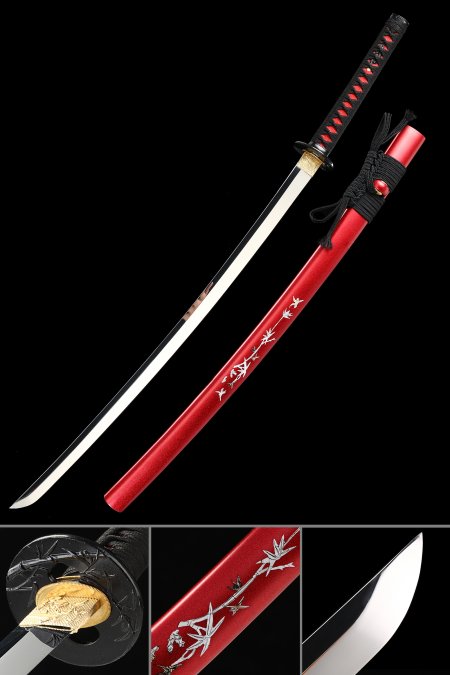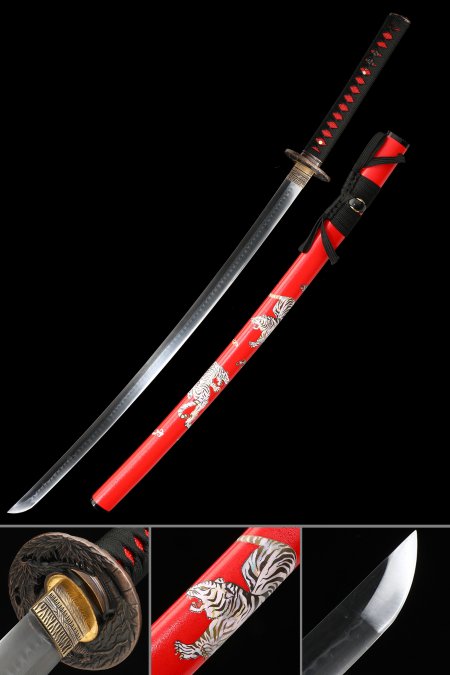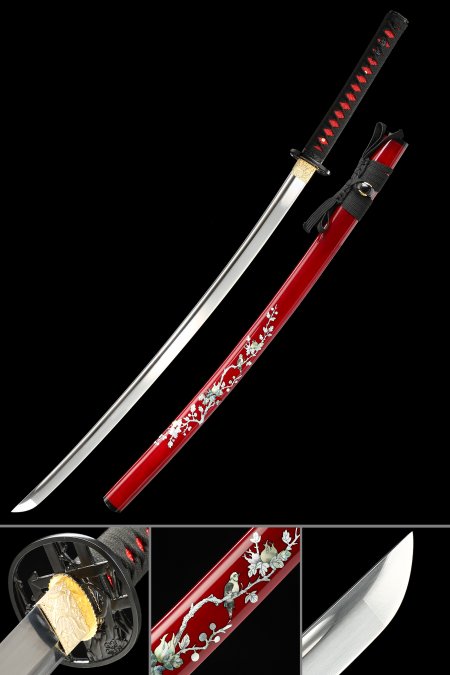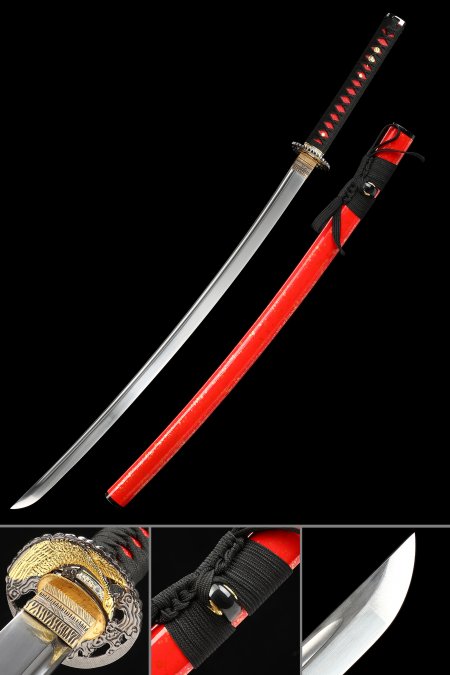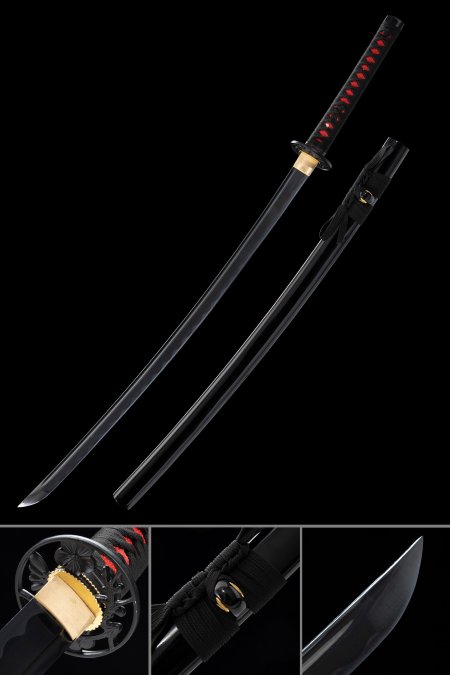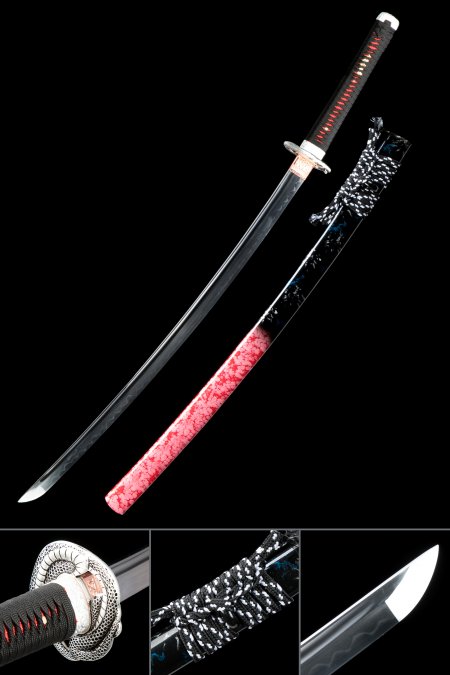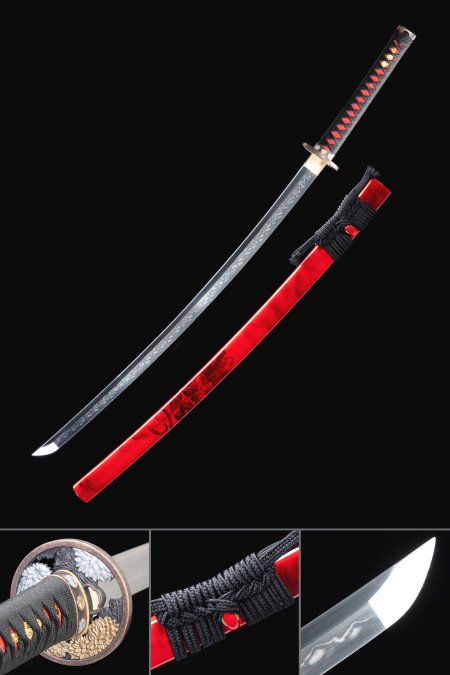
Black Red Handle Katana

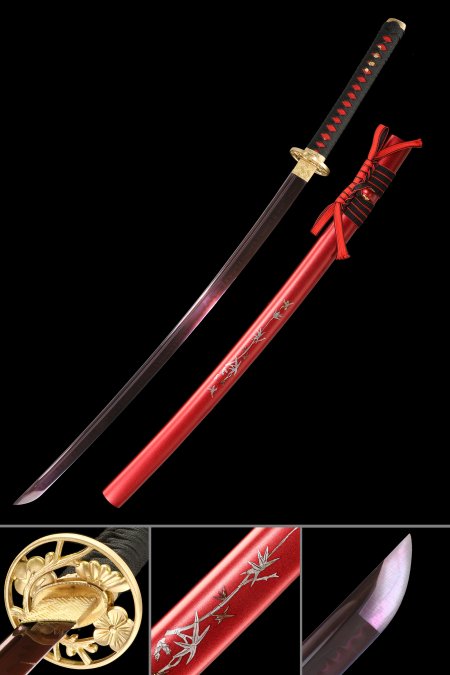
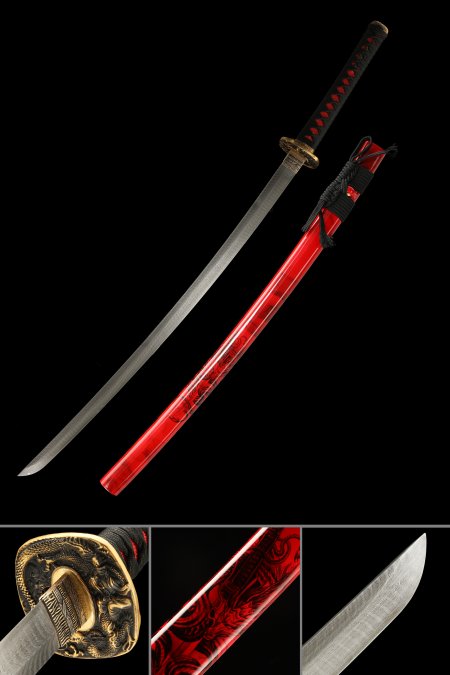
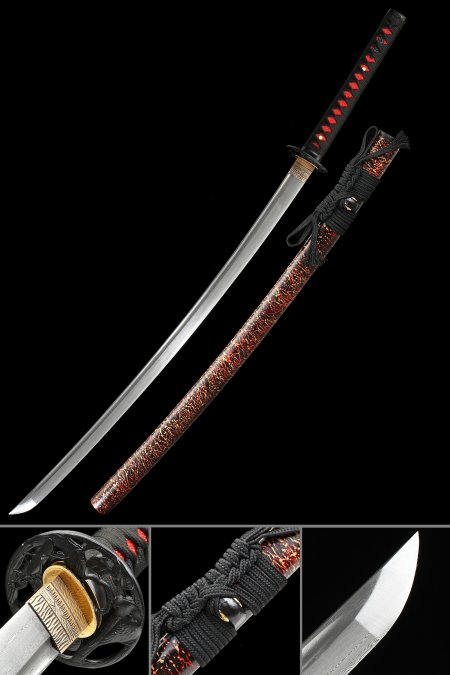
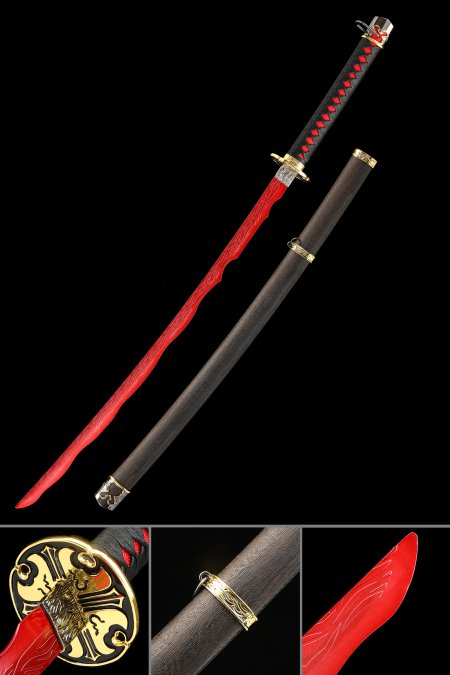
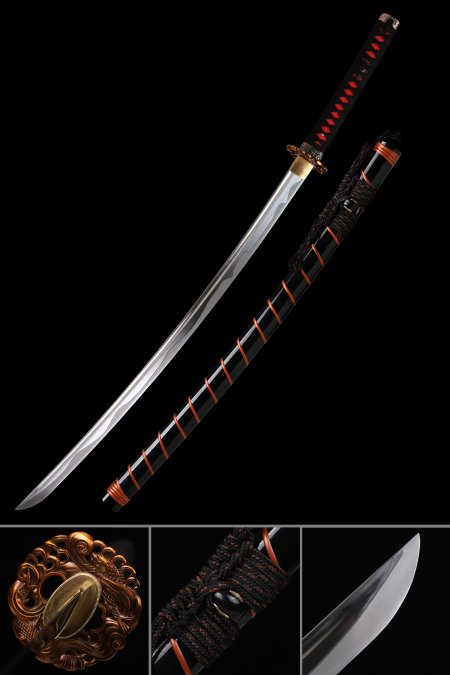
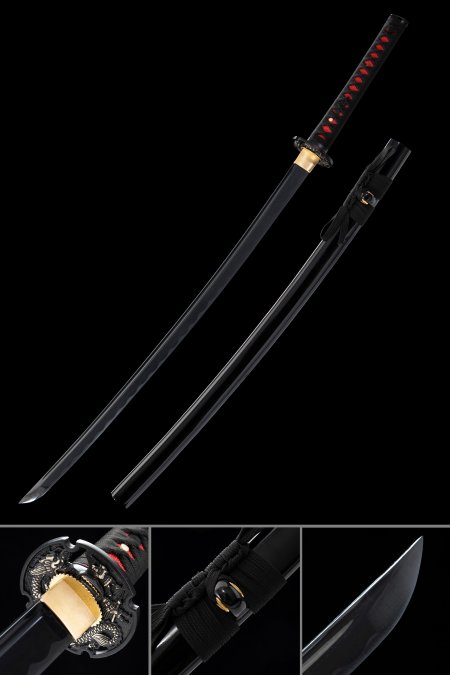
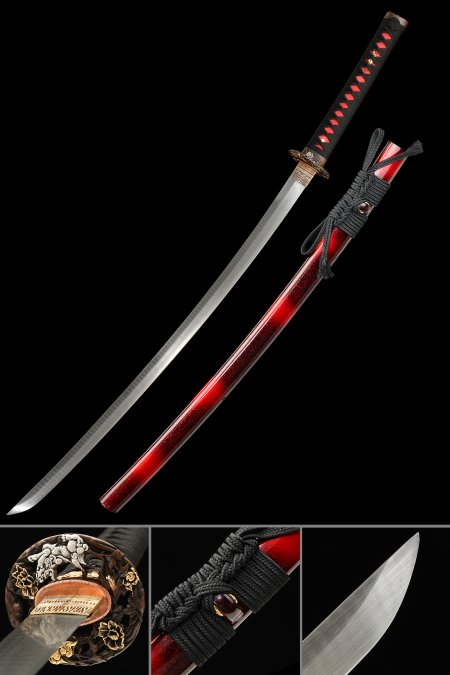
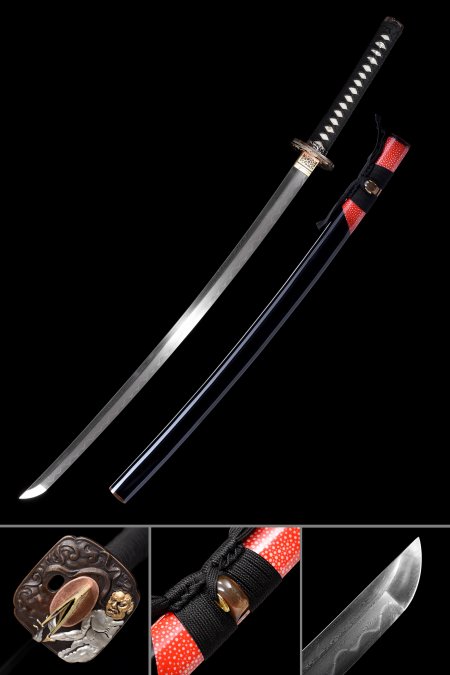
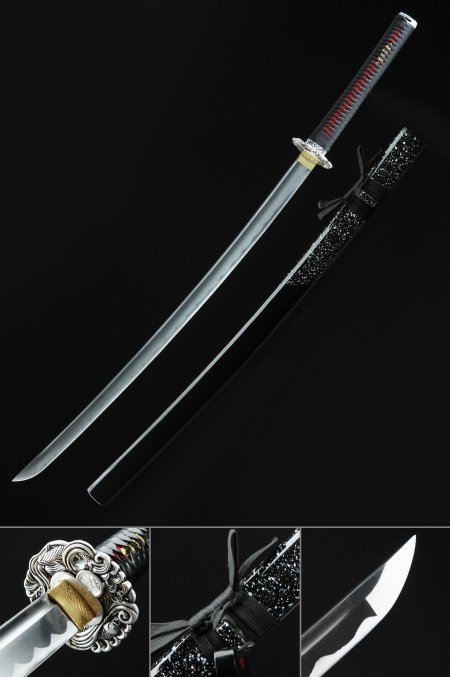
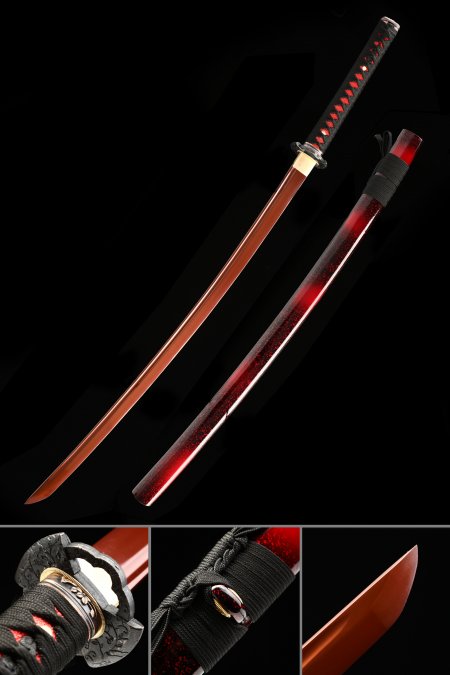
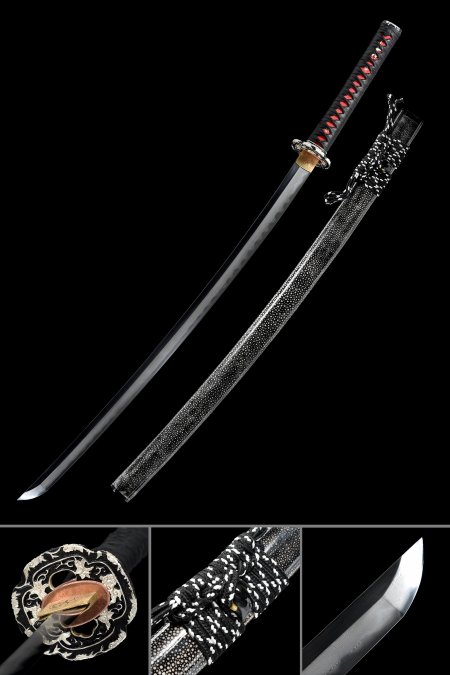
The Black Red Handle Katana collection brings together hand-forged blades dressed in striking crimson and obsidian aesthetics — from T10 clay-tempered steel with authentic hamon to Damascus folded blades, each piece is finished with lacquered hardwood saya, ornate alloy tsuba, and tightly wrapped ito for a display presence that commands any collection. Carbon steel construction and full-tang assembly ensure structural integrity worthy of serious collectors. Every order ships free with hassle-free returns, so building your collection is as effortless as admiring it.
Showing 124 Products

Frequently Asked Questions

What steel types are used in black red handle katana?
This collection spans several carbon steel grades, each with distinct characteristics. 1045 and 1060 high-carbon steel offer a reliable, even temper well-suited to display use and develop a natural patina over time. 1065 manganese steel features a slightly refined grain structure. T10 tool steel is the most prized tier here — it undergoes clay tempering, where a clay coat applied to the spine before quenching creates a differential hardness between edge and spine, producing an authentic hamon temper line visible to the naked eye. Damascus pieces are forged from layered billets of multiple steel types, resulting in surface grain patterns unique to every individual blade. The steel choice directly affects visual character, surface detail, and long-term collectible value.
What makes a T10 clay-tempered katana different from 1060 steel?
The key difference lies in the heat-treatment process and its visible outcome. A 1060 carbon steel katana is typically through-hardened — the blade is quenched uniformly, producing consistent hardness throughout. T10 tool steel used in clay-tempered pieces goes through differential hardening: clay is applied along the spine before the quench, insulating that section and leaving it softer and more flexible, while the uncoated edge hardens fully. The boundary between these two zones forms the hamon — a naturally occurring temper line with a cloudy, activity-rich appearance that collectors study closely. Each hamon is unrepeatable, which is precisely why T10 clay-tempered katana carry higher collectible distinction than standard carbon steel pieces.
How should I maintain and store a lacquered saya katana?
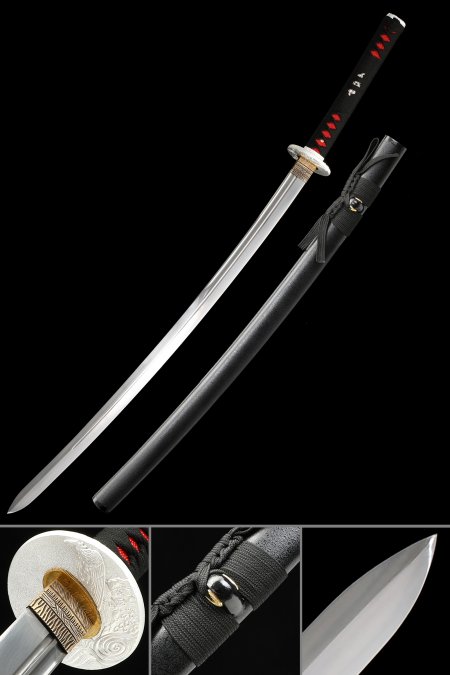
Piano lacquer saya — whether deep red, matte black, or sparkle-finish — requires dry storage away from prolonged direct sunlight, which can fade or crack the finish over time. Avoid rapid temperature changes, which stress the lacquer coat. The blade itself should be lightly coated with choji oil (a traditional Japanese mineral oil blend) every two to three months using a soft cloth; this prevents oxidation and preserves the steel's surface. Never store the blade inside the saya long-term without occasional removal, as trapped moisture can damage both the lacquer interior and the steel. For the ito wrap and samegawa handle grip, occasional wiping with a dry cloth is sufficient — avoid water or solvents on the handle components.
What tsuba designs appear in this collection?
The tsuba selection across these black and red katana covers a wide range of classical and stylized motifs. You'll find koi fish alloy tsuba, gold dragon profiles, orchid relief designs, bamboo patterns, floral copper etching, and lion face guards — all cast in alloy with hand-applied finishing. Tsuba in Japanese sword tradition serves both as a hand guard and a primary canvas for artistic expression, and the designs here reflect that dual role. Collectors often choose a piece based as much on tsuba character as on blade steel, since the guard's motif sets the visual theme for the entire sword. Dragon and floral tsuba tend to suit formal display arrangements, while skull and bamboo designs lean toward more individualized collection themes.
Are these katana good gifts for Japanese sword enthusiasts?
These collectible katana make highly considered gifts for anyone with a genuine interest in Japanese sword aesthetics or samurai history. The black and red color scheme is one of the most visually distinctive in the category, making pieces immediately presentable without additional accessories. For a first-time collector, a 1045 or 1060 full-tang piece with a piano lacquer saya offers strong visual impact at an accessible entry point. For more experienced enthusiasts, a T10 clay-tempered blade with visible hamon and an ornate tsuba represents a meaningful step up in craft. Each piece ships in a display-ready state and pairs naturally with a wall mount or tabletop stand. Consider pairing with a piece from the Dragon Katana collection to build a cohesive two-sword display arrangement.

Customer Reviews

Július Bakša Zilinsky, Slovakia

Mnou zakúpená katana je spracovaná na veľmi dobrej úrovni. Čepeľ vykazuje malé nedostatky v súmernosti, chrbát čepele nemá obidve polovice rovnako široké po celej dlžke a taktiež plochy medzi rebrami a hranami chrbta na oboch bokoch čepele nie sú rovnako široké po celých dlžkach. Nakoľko saya s habaki sú zlícované dosť na tesno, katana sa vyťahuje zo saye dosť ťažko (ale toto sa dá doladiť, nie je to večší problém. Zakončenie rukoväti (Kashira) nebolo nasadené kolmo na os čepele, čo som musel upraviť. Mekugi neboli namontované do rukoväte (Tsuky) moc esteticky.
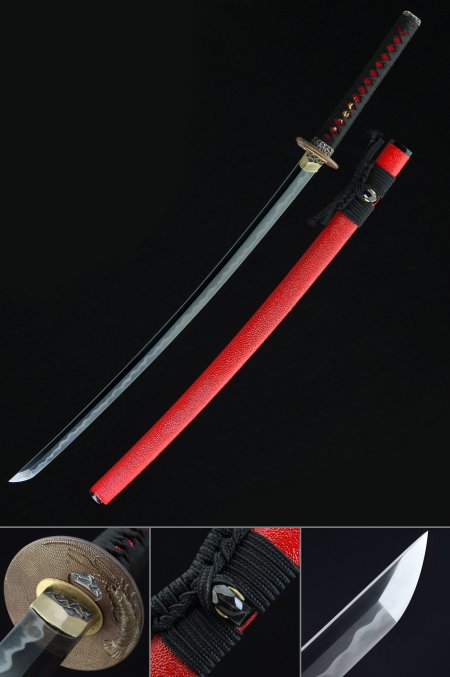
Tamahagane Steel Clay Tempered Katana with Real Hamon in Red Rayskin Saya and Black Cord Tsuka Tamahagane Steel Clay Tempered Katana with Real Hamon in Red Rayskin Saya and Black Cord Tsuka