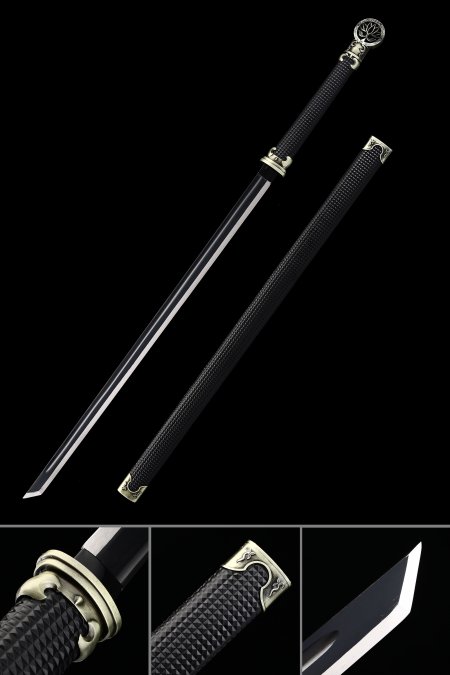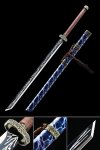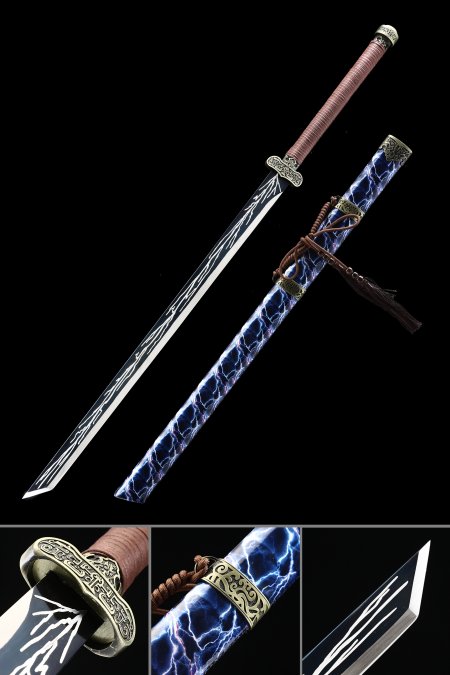
Bronze Tsuba Ninjato

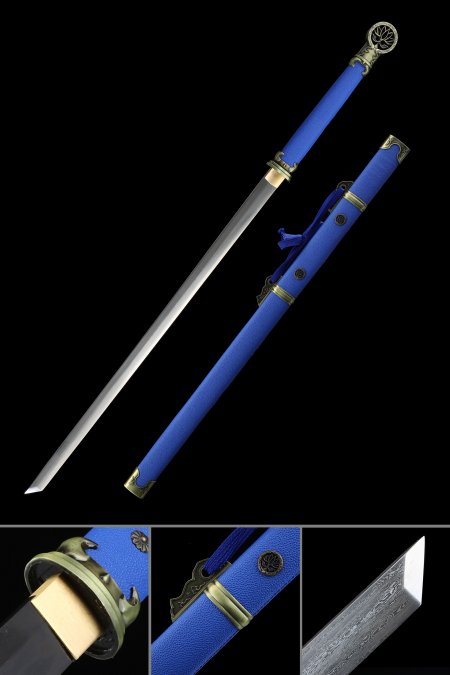
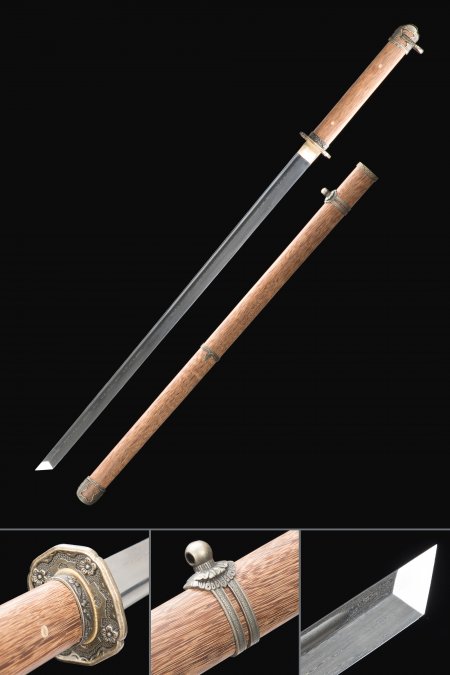
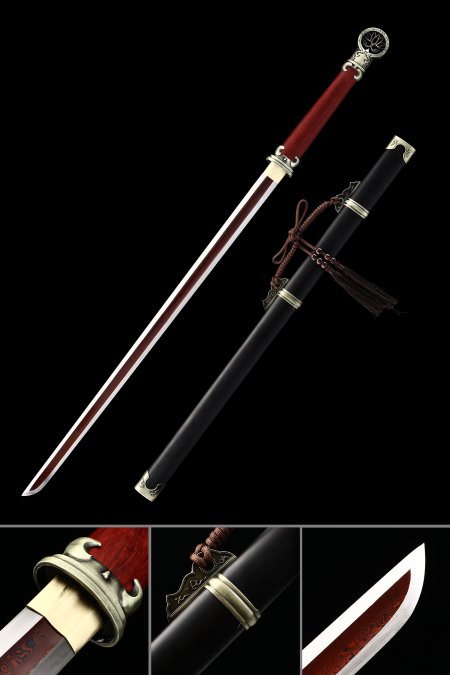
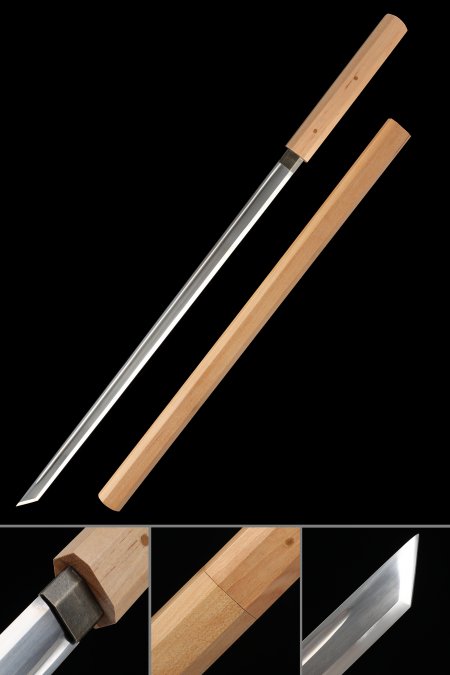
The Bronze Tsuba Ninjato collection brings together straight-bladed Japanese-style swords dressed in richly detailed bronze fittings — from delicate lotus engravings to layered dragon motifs. Each piece is hand-assembled with matched tsuba, fuchi, and kashira in aged bronze tones that complement lacquered hardwood scabbards, leather-wrapped saya, and contrasting ito wraps. These are fully realized display collectibles crafted for the discerning enthusiast who values material integrity and visual cohesion. Free standard shipping is included on every order, backed by our hassle-free return policy.
Showing 8 Products

Frequently Asked Questions

What makes a ninjato different from a katana in design?
The most immediate distinction is blade geometry. A katana features a pronounced curvature (sori) that develops during the differential hardening process, while a ninjato has a straight or near-straight blade — a geometry that must be intentionally maintained throughout forging and grinding. This straight profile changes the visual weight of the sword entirely, giving it a more austere, architectural appearance. The ninjato also typically features a squarish tsuba rather than the round or oval guards associated with katana, and a shorter overall length. For display collectors, these differences mean a ninjato reads as a visually distinct piece even when placed alongside curved Japanese swords, making it a meaningful addition rather than a redundant one.
Why is bronze used for tsuba and fittings instead of iron?
Historically, iron was the dominant material for combat-grade sword fittings, but bronze was employed when artisans prioritized decorative detail and surface expression. Bronze is more castable and easier to engrave with fine relief patterns — lotus petals, dragon scales, geometric latticework — that would be far more difficult to achieve cleanly in wrought iron. It also develops a distinctive warm patina over time that many collectors find more visually appealing than raw iron oxidation. On display collectibles, bronze fittings serve an additional practical function: they are naturally corrosion-resistant in typical indoor environments, requiring minimal maintenance while retaining their aged gold-brown tones for years.
How does Damascus steel patterning appear on a straight blade?
Damascus steel's characteristic surface pattern — produced by forge-welding multiple steel billets and drawing them out repeatedly — is fully visible on straight-bladed swords, and in some ways more prominently so than on curved blades. Without the visual distraction of sori geometry, the flowing wood-grain or ladder patterns in the steel become the dominant surface feature. On the ninjato pieces in this collection, Damascus blades are sometimes finished with oxide treatments (red or black) that enhance contrast between the pattern layers. Collectors should note that these patterns are structural — they reflect the actual material composition of the blade — rather than applied decoration.
How should I store a bronze-fitted ninjato long-term?
Long-term storage requires attention to both the blade and the fittings separately. For the steel blade, apply a thin coat of choji oil or food-grade mineral oil before storage, wiping away any excess to avoid pooling near the habaki or fuchi. Bronze fittings generally do not need oil treatment — in fact, oil can accelerate uneven surface darkening on cast bronze. Store the sword horizontally on a display stand or laid flat within its saya to prevent any stress on the tang-to-handle assembly. If storing in a case, include a small silica gel packet to moderate humidity, and avoid sealed plastic bags, which trap condensation against the blade surface. Inspect the blade every three to six months and re-oil as needed.
Are these ninjato suitable as display gifts for sword collectors?
They are particularly well-suited for gifting to collectors who already own katana or wakizashi, because a ninjato represents a meaningfully different aesthetic rather than a duplicate. The bronze tsuba variants in this collection carry strong visual identity — the lotus and dragon motifs on the guard read as thoughtful design choices rather than generic ornamentation. For gift purposes, pieces with contrasting saya colors (blue PU leather, lacquered black hardwood) photograph well and make an immediate impression when unboxed. If the recipient has a preference for specific steel types — Damascus patterns, high-carbon hamon lines, or manganese finishes — the variety within this collection allows a targeted selection rather than a generic choice.

Customer Reviews

Serhii Nazarov New York, United States

Got it well packed with oiled blade in 2 weeks after order, quality totally equal the price and attractive as on the photos.r
r
Features: very heavy and not so sharp, no I didn't plan to cut the heads with it, only for cosplay, but if I would find something attractive as this with T10 steel, I'd rather prefer it.
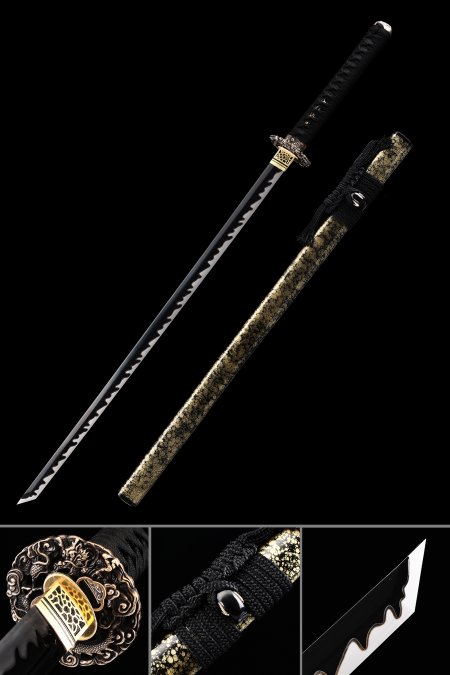
Manganese Steel Ninjato with Black Blade & Dragon Tsuba in Gold-Black Flower Saya Manganese Steel Ninjato with Black Blade & Dragon Tsuba in Gold-Black Flower Saya