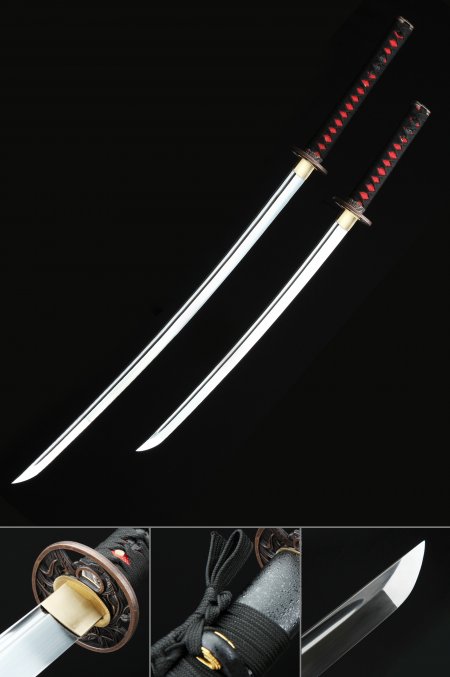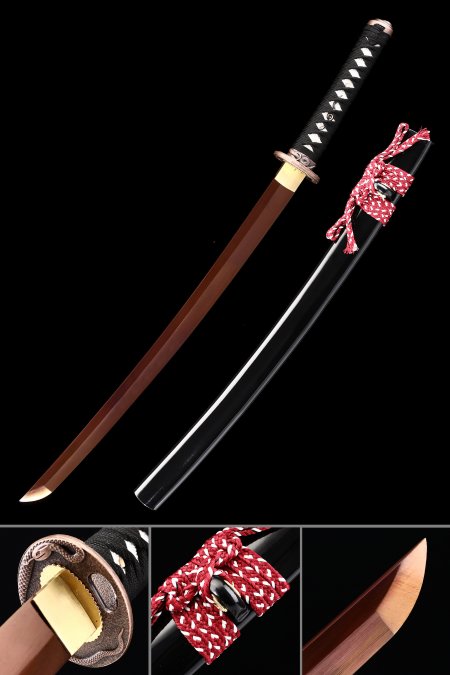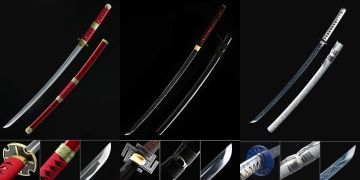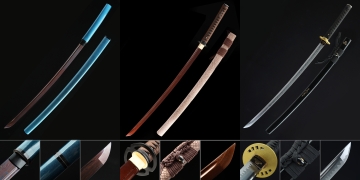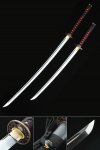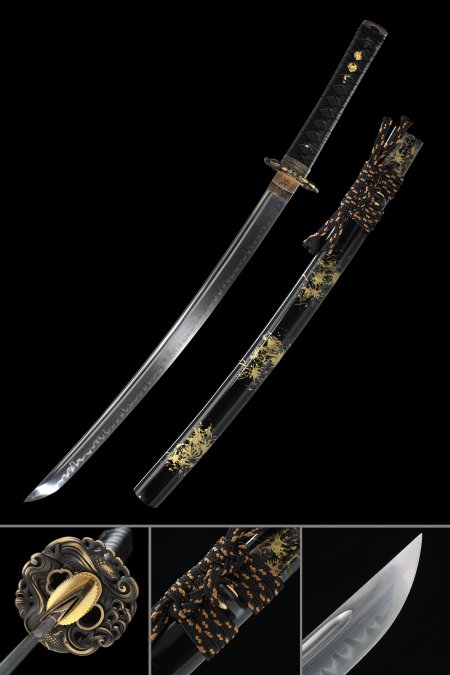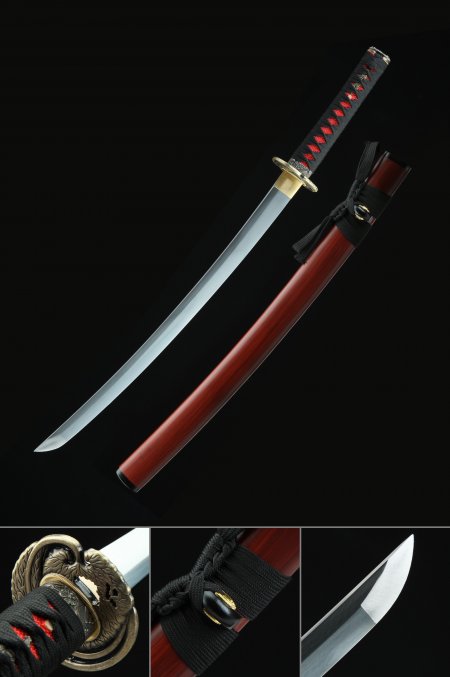
Bronze Tsuba Wakizashi

Bronze tsuba wakizashi bring together the warm, aged character of cast bronze fittings and the refined proportions of the traditional short sword. Each piece in this collection showcases hand-finished bronze guards - from scrollwork patterns to naturalistic motifs - paired with matched saya and ito for a cohesive aesthetic. These are crafted as display-grade collectibles for the discerning enthusiast. Enjoy free standard shipping on every order, plus hassle-free returns.
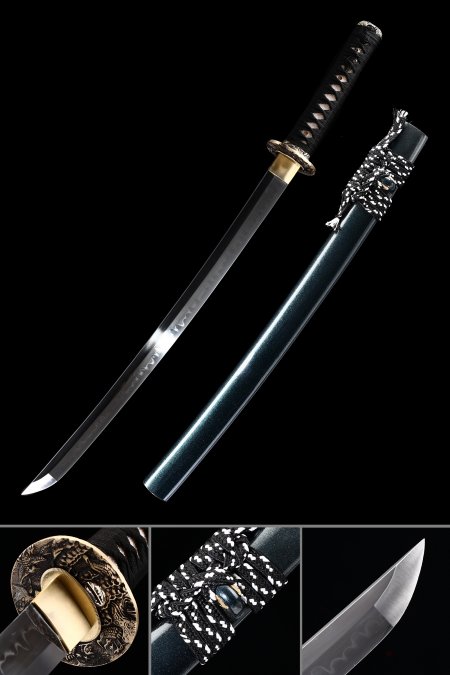
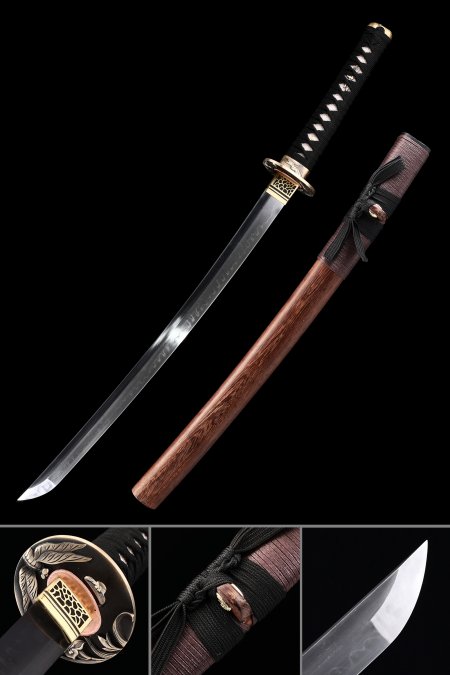
Showing 6 Products

Frequently Asked Questions

What makes bronze tsuba different from alloy tsuba?
Bronze is a copper-tin alloy that has been used in Japanese sword furniture for centuries, valued for its density, workability, and the warm amber-to-chocolate patina it develops over time. Cast bronze allows artisans to achieve finer relief detail than many modern zinc-based alloys, and the finished surface has a visual depth and weight that read as more authentic on a display piece. Alloy tsuba are typically lighter and may have a uniform, slightly artificial sheen. Bronze develops character with age - minor toning and patina shifts are considered desirable by most collectors rather than signs of wear.
What is a real hamon and why do collectors value it?
A real hamon is the temper line produced during the clay tempering process, in which a mixture of clay, charcoal, and sometimes ash is applied unevenly along the blade before it is heated and quenched. The thinner-coated edge cools faster, producing a harder crystalline structure called martensite, while the spine cools more slowly and remains relatively softer. The boundary between these two zones is the hamon, visible as a milky, undulating line running the length of the blade. Because the clay application is done by hand and the quench is never perfectly predictable, every real hamon is unique - no two blades share the same pattern. This individuality is central to why collectors prize clay-tempered pieces over blades with etched or simulated temper lines.
Should I pair a wakizashi with a matching katana for display?
Historically, the katana and wakizashi were worn together as the daisho, and matching their fittings - tsuba motif, ito color, saya finish, and sageo - was an expression of personal identity and social status. For display purposes, a coordinated daisho creates a far more visually compelling presentation than two unmatched pieces. If you already own a bronze tsuba wakizashi, look for a katana whose guard carries a complementary motif or the same metal tone. Conversely, purchasing a matched daisho set from the start ensures that lacquer shades, ito wraps, and guard designs are intentionally harmonized from the manufacturing stage.
How should I maintain the bronze fittings on a display wakizashi?
Bronze fittings on a display wakizashi require very little intervention. Fingerprints and oils from handling can accelerate surface toning, so it is worth wearing cotton gloves when repositioning the piece. If you prefer to slow patina development, a very light application of renaissance wax or a similar microcrystalline wax will create a barrier without altering the appearance. Most collectors, however, choose to let bronze age naturally - the deepening patina enhances the antique character of the piece. Avoid abrasive polishes, which will remove the surface finish applied during manufacturing and expose raw metal that tones unevenly. Store the piece away from direct sunlight and high humidity to prevent accelerated oxidation.
What is the difference between T10 and manganese steel in wakizashi?
T10 is a high-carbon tool steel containing approximately 1.0% carbon along with a small amount of silicon and tungsten, which improves wear resistance. It is the preferred choice for clay tempering because its carbon content responds well to differential quenching and reliably produces a visible hamon. The trade-off is that T10 requires more attentive care - it will develop surface rust if left unprotected. Manganese steel, by contrast, contains manganese as its primary alloying element, which enhances toughness and provides slightly better corrosion resistance for low-maintenance display use. Manganese steel blades typically present with a polished, even finish without a natural hamon. The choice between them largely comes down to whether you prioritize the visual authenticity of a real temper line or a more forgiving, lower-maintenance display piece.

Customer Reviews

Joseph Elder Ohio, United States

Overall a good product. The blade is excellent, and overall workmanship is quite good.r
Two problems observed:r
The Habaki is loose - it slides back and forth on the blade with a noticeable gap between the notch on the blade and the Seppa.r
The Tsuka-Ito is a bit looser than it should be.r
While I can repair both of these I should not have to do so. The assembly should not have passed inspection.

T10 Folded Clay Tempered Wakizashi Sword with Real Hamon in Brown Rosewood Saya and Copper Tsuba T10 Folded Clay Tempered Wakizashi Sword with Real Hamon in Brown Rosewood Saya and Copper Tsuba
Adam Barbee Illinois, United States

Over all, beautiful blade, fit and finish could be a little better, packaging needs more, the saya had a small chip on the end, the habaki is very loose, and the fuchi is loose, also the tang rocks in the hand when swung, I do understand the price point but everything should still be nice and tight. Other than those issues this is beautiful overall

T10 Folded Clay Tempered Wakizashi Sword with Real Hamon in Brown Rosewood Saya and Copper Tsuba T10 Folded Clay Tempered Wakizashi Sword with Real Hamon in Brown Rosewood Saya and Copper Tsuba