What makes a lion tsuba significant on a wakizashi?
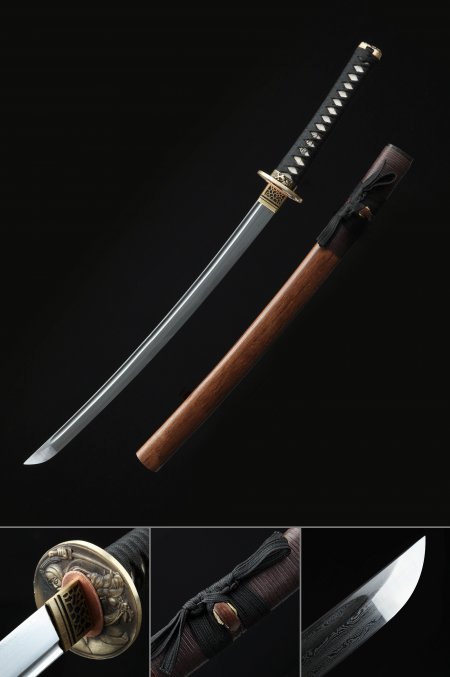
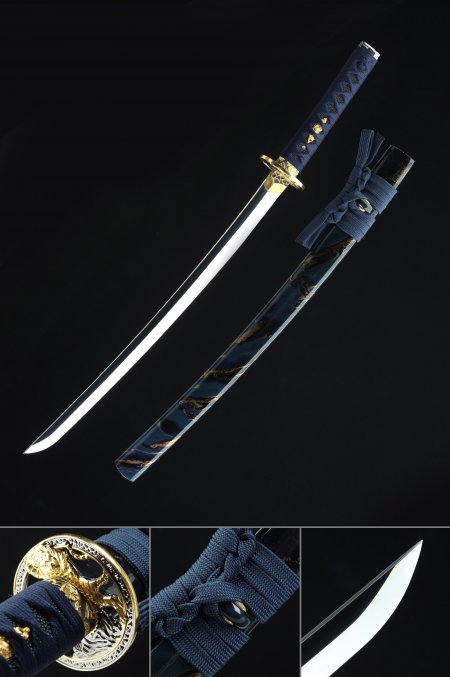
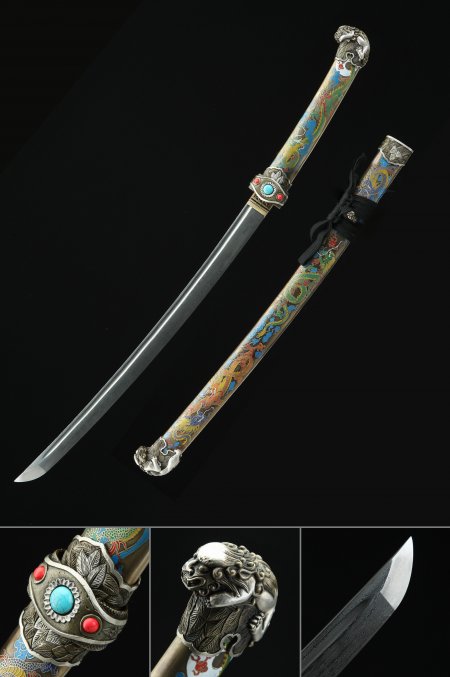
The tsuba — or sword guard — is the most visually prominent fitting on any Japanese sword mounting, and the choice of motif carries deliberate symbolic weight. The lion, known as shishi in Japanese decorative arts, represents courage, nobility, and protective power. On a wakizashi, where the shorter blade already signals a more intimate, refined aesthetic compared to the katana, a sculptural lion tsuba elevates the piece into the realm of decorative art. Collectors value these guards not only for their visual impact but for the craftsmanship involved: a well-cast copper or gemstone-set lion tsuba requires skilled metalwork that is fully distinct from the blade-making process itself, making each complete mounting a collaboration between two separate artisan traditions.
How does Damascus steel differ from T10 in these wakizashi?
Damascus pattern steel is created by forge-welding layers of different steel alloys and folding them repeatedly, then etching the finished blade to reveal flowing, high-contrast surface patterns. Each blade is visually unique, which appeals strongly to collectors who prioritize aesthetic individuality. T10 tool steel takes a different approach — it is a high-carbon steel with added silicon that responds exceptionally well to clay tempering, producing a clearly defined hamon (temper line) along the edge. Where Damascus impresses with surface movement and layered complexity, T10 rewards examination of the steel's internal qualities: grain structure, hamon activity, and the interplay of light across a traditionally finished surface. Neither is superior in an absolute sense — the choice reflects personal collecting philosophy.
Can the gemstone-set tsuba be damaged during display?
Gemstone-set tsuba are designed for static display and should be treated accordingly. The stones — typically semi-precious or decorative cabochons set into cast metal — are held in place by prong or bezel settings that are secure under normal handling but vulnerable to impact or pressure. Avoid placing the sword where it might be knocked over or where the tsuba bears sustained lateral pressure. When cleaning, use a soft dry cloth around the settings rather than liquids, which can loosen adhesive-assisted mounts over time. A display stand that supports the sword horizontally distributes weight evenly and prevents the fittings from bearing unnecessary stress. Kept this way, a gemstone tsuba retains both its visual integrity and long-term collector value.
What display setup works best for a wakizashi collection?
Wakizashi display best on horizontal two-tier sword stands, either solo or paired with a katana for a traditional daisho-style presentation. The shorter blade length — typically between 24 and 32 inches overall — suits tabletop or shelf displays that would be overwhelmed by a full-length katana. For lion tsuba pieces specifically, positioning the stand so the tsuba faces outward allows the sculptural detail to remain visible rather than resting against a support arm. Wall-mounted horizontal racks work equally well and save surface space. Whichever format you choose, avoid direct sunlight, which gradually fades lacquered saya and can stress the wood beneath. A consistent indoor humidity level between 45–55% is ideal for preserving both the steel and the organic materials in the koshirae.
Is a lion tsuba wakizashi a good choice as a collector's gift?
For someone with an established interest in Japanese sword aesthetics or East Asian decorative arts, a lion tsuba wakizashi makes a genuinely distinctive gift — far more considered than a generic display sword. The combination of a culturally meaningful motif, hand-forged blade steel, and coordinated koshirae elements like a carved dragon saya gives the recipient multiple points of appreciation and conversation. It works well as a milestone gift for collectors adding a short sword to complement an existing katana, or as a standalone display piece for someone furnishing a study, library, or dedicated display room. If the recipient has a specific preference for blade steel, the choice between Damascus and T10 carbon steel is worth noting — both are visually compelling but reward different sensibilities.